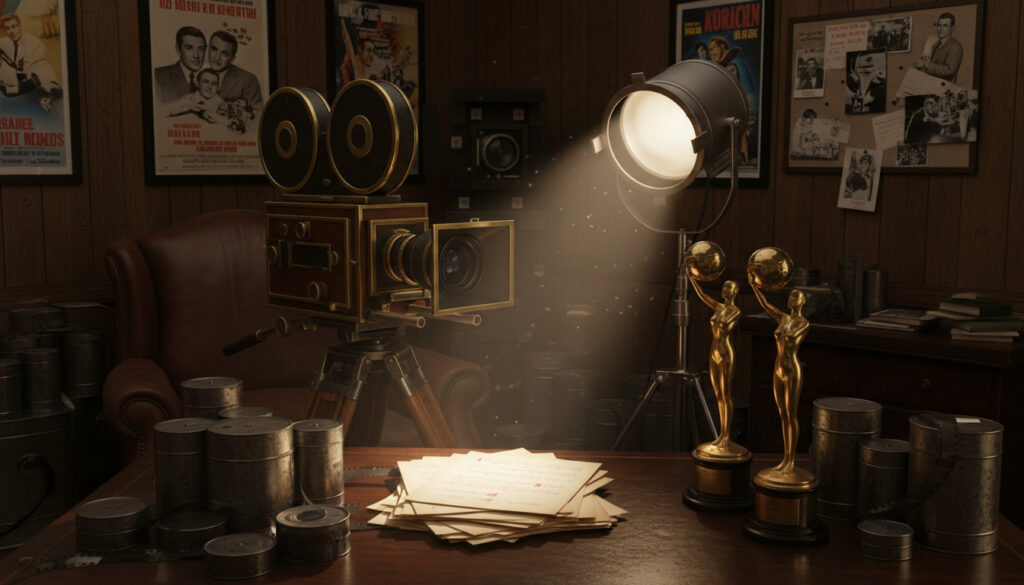
Sam Taylor-Johnson – Biography Films and Career
Sam Taylor-Johnson occupies a unique position at the intersection of contemporary art and commercial cinema. Born Samantha Louise Taylor-Wood on March 4, 1967, in London, she emerged from the Young British Artists movement to establish herself as a filmmaker whose work spans independent biopics and mainstream studio productions.
Her professional trajectory defies easy categorization. After gaining recognition in the 1990s for conceptual photographic and video works exhibited at major international institutions, she pivoted to narrative filmmaking with a directness that surprised critics and audiences alike. Records indicate she maintains active practices in both visual art and motion picture direction, operating from studios in London while developing new cinematic projects.
Throughout her career, she has consistently explored themes of isolation, celebrity, and the construction of identity. From her Turner Prize-nominated installations to her direction of the Amy Winehouse biopic Back to Black, her work reflects a sustained meditation on the boundaries between public persona and private self.
Who is Sam Taylor-Johnson?
- Studied at Goldsmiths College, University of London, shifting from sculpture to time-based media in the early 1990s
- Rose to prominence within the Young British Artists (YBA) movement alongside Damien Hirst and Tracey Emin
- Received the Illy Café Prize for Most Promising Young Artist at the 1997 Venice Biennale
- Earned a nomination for the 1998 Turner Prize for her contributions to contemporary art
- Transitioned from gallery-based conceptual work to feature filmmaking without formal cinema training
- Awarded an OBE (Officer of the Order of the British Empire) for services to the arts
- Maintains exhibition history at institutions including the Guggenheim and Tate galleries
| Fact | Details |
|---|---|
| Full Name | Samantha Taylor-Johnson (née Taylor-Wood) |
| Birth Date | March 4, 1967 |
| Birth Place | London, England |
| Age | 57 (as of 2024) |
| Education | Goldsmiths College, University of London |
| Primary Profession | Filmmaker, Photographer, Visual Artist |
| Spouse | Aaron Taylor-Johnson (married 2012) |
| Children | Details not publicly confirmed |
| Honor | Officer of the Order of the British Empire (OBE) |
| Website | samtaylorjohnson.com |
Her early reputation rested on technically accomplished video installations and photographic series that frequently employed slow motion and sound design to explore emotional states. Documentation confirms she began incorporating celebrity subjects—including Robert Downey Jr., David Beckham, and Elton John—into her visual art practice during this period, examining the isolation inherent in public visibility.
What films has Sam Taylor-Johnson directed?
Feature Films
Taylor-Johnson’s feature debut, Nowhere Boy (2009), chronicled the adolescence of John Lennon. The film premiered at the London Film Festival and received a BAFTA nomination for Outstanding Debut by a British Writer, Director or Producer. Critics responded favorably to her handling of the musical biopic format, establishing her viability as a narrative filmmaker.
Her sophomore feature, Fifty Shades of Grey (2015), marked a significant commercial departure. The film achieved record-breaking opening figures for a female director, though subsequent reports indicate she experienced significant creative friction with author E.L. James, ultimately declining to direct subsequent installments.
She returned to literary adaptation with A Million Little Pieces (2018), based on the James Frey memoir, serving as director, producer, and co-writer. More recently, she directed Back to Black (2024), a biographical portrait of Amy Winehouse that began filming in London during January 2023.
Short Films and Early Work
Prior to her feature career, Taylor-Johnson directed Death Valley (2006), a segment of the anthology film Destricted. Her short Love You More (2008), produced by Anthony Minghella, earned nominations for the BAFTA Award for Best Short Film and the Palme d’Or for Best Short Film at Cannes, while winning at Sundance.
Television Direction
Her credits include two episodes of the Netflix series Gypsy (2017), for which she also served as executive producer on the pilot. She subsequently directed episodes of Amazon’s Solos (2021) and Hunters (2023). When considering performers for her projects, she has worked with diverse talent ranging from established dramatic actors to those with comedic backgrounds, such as those profiled in Peter Serafinowicz Movies and TV Shows – Full Filmography Guide.
Aggregate scores reveal significant divergence between critical and audience responses to her films. While Nowhere Boy maintains an 81% critics’ approval rating, Back to Black registers 35% with critics yet 84% with audiences, illustrating the polarized reception that characterizes her commercial work.
Who is Sam Taylor-Johnson’s husband?
Meeting on Set
Taylor-Johnson met actor Aaron Taylor-Johnson during the production of Nowhere Boy in 2009, where the then-twenty-year-old performer portrayed John Lennon. Despite a twenty-three-year age difference, the pair formed a professional and personal connection during filming. Their relationship began following the conclusion of her previous marriage.
Marriage and Collaboration
The couple married in 2012, with both parties adopting the compound surname Taylor-Johnson. Documentation of their relationship indicates they maintain a collaborative working dynamic while preserving strict boundaries regarding their family life. They have appeared together at industry events while limiting discourse regarding their domestic arrangements.
While public records confirm the marriage, specific details regarding children remain absent from verified sources. The couple has elected not to disclose the number or identities of offspring, reflecting a deliberate separation between public professional visibility and private family matters.
What is Sam Taylor-Johnson’s net worth?
Financial disclosures regarding Taylor-Johnson’s personal wealth remain unavailable through public records. While various unverified estimates suggest figures ranging between $20 million and $30 million, no authoritative sources confirm these valuations. She has not addressed questions regarding her net worth in verified interviews, and credible biographical databases do not list specific financial holdings.
No official documentation confirms Taylor-Johnson’s exact net worth. Figures circulating online represent speculative calculations rather than audited financial statements. Professional earnings from her films and art sales remain private, as do any investment portfolios or property holdings.
How did Sam Taylor-Johnson’s career develop over time?
- : Born in London, England
- : Enrolled at Goldsmiths College; transitioned from sculpture to photography and time-based media
- : Awarded Illy Café Prize for Most Promising Young Artist at the Venice Biennale
- : Nominated for the Turner Prize
- : Released short film Death Valley as part of the Destricted anthology
- : Love You More receives BAFTA and Palme d’Or nominations; wins at Sundance
- : Directs debut feature Nowhere Boy; meets Aaron Taylor-Johnson
- : Marries Aaron Taylor-Johnson
- : Directs Fifty Shades of Grey
- : Releases A Million Little Pieces
- : Releases Back to Black biopic
What information about Sam Taylor-Johnson is verified versus uncertain?
Established Facts
- Birth date (March 4, 1967) and birthplace (London) confirmed via official records
- Educational background at Goldsmiths College documented
- Complete filmography verified through IMDb and studio records
- Marriage to Aaron Taylor-Johnson (2012) confirmed via public records
- Exhibition history at Guggenheim, Hirshhorn, and Tate galleries documented
- OBE honor and 1998 Turner Prize nomination verified by official channels
Uncertain or Private Details
- Exact number of children not confirmed in available sources
- Specific net worth remains undisclosed and unverified
- Future project commitments remain speculative pending official announcements
- Specific financial terms of film contracts not public
- Details regarding current art studio locations and practices remain private
How does Sam Taylor-Johnson’s artistic background influence her films?
Taylor-Johnson’s formation within the Young British Artists movement fundamentally shaped her approach to cinematic composition. Her early video installations employed extended duration and minimal action to create meditative spaces, a technique that translates into her filmic use of silence and observational framing. Archival records indicate her continued interest in the technical aspects of image-making, including collaboration with cinematographer Polly Morgan on Back to Black.
Her conceptual art background manifests in her recurring engagement with performance and constructed identity. Where her early photographs examined the performative aspects of celebrity through static portraiture, her films explore similar territory through narrative means. This evolution from gallery-based time-based media to theatrical feature production represents a rare trajectory within the British cultural landscape, bridging the traditionally separate spheres of fine art and commercial entertainment.
What has Sam Taylor-Johnson said about her work?
In discussing her transition between media, Taylor-Johnson has emphasized the continuity between her visual art practice and film direction. Interview footage captures her describing the process of overcoming institutional resistance when pursuing Nowhere Boy, noting the skepticism she faced as a visual artist entering narrative filmmaking.
Art and film are intertwined. The camera is simply a tool for exploring the same questions I’ve always been interested in—how we present ourselves, what we hide, and how we endure.
— The Guardian, Interview
Regarding her collaboration with performers, she has discussed the importance of creating protected environments for actors to access vulnerable emotional states, a methodology that reflects her background in constructing controlled conditions for her earlier video portraits.
Summary
Sam Taylor-Johnson represents a singular figure in contemporary British culture, maintaining simultaneous practices in visual art and commercial cinema. Her directorial work—from the critically acclaimed Nowhere Boy to the commercially significant Fifty Shades of Grey and the recent Back to Black—demonstrates a consistent visual sensibility derived from her YBA origins. Married to actor Aaron Taylor-Johnson since 2012, she continues to operate at the intersection of gallery and cinema contexts, with her approach to directing reflecting the conceptual rigor of her early installation work. Audiences interested in the broader landscape of performers working across similar terrain may also consult Maya Hawke Movies and TV Shows – Complete List with Ratings for comparative context.
Frequently Asked Questions
What is Sam Taylor-Johnson primarily known for?
She is known for her transition from the Young British Artists movement to feature film direction, notably helming Nowhere Boy (2009), Fifty Shades of Grey (2015), and Back to Black (2024).
Where did Sam Taylor-Johnson study?
She studied at Goldsmiths College, University of London, where she began as a sculptor before shifting to photography, film, and video in the early 1990s.
Did Sam Taylor-Johnson direct the Fifty Shades sequels?
No. Despite the first film’s commercial success, she declined to direct the sequels due to reported creative differences with author E.L. James.
What awards has Sam Taylor-Johnson received?
She received an OBE, the 1997 Illy Café Prize at the Venice Biennale, and a 1998 Turner Prize nomination. Her short Love You More won at Sundance.
How did she approach the Amy Winehouse biopic?
For Back to Black, she collaborated with cinematographer Polly Morgan to create a visual language capturing the singer’s London environment, filming on location beginning January 2023.
Is she still active as a visual artist?
Yes. She maintains her art practice alongside filmmaking, with works held in permanent collections including the Tate and the Guggenheim.
More related posts
 Shannen Doherty: Cause of Death, Net Worth, Family
 Silver Bangles for Women: Trends, Authenticity & Buying Guide
 Low Rise Jeans Guide: Fit, Body Types, Styling & Brands
 Best Samsung 65 Inch TV: Ireland Prices & Reviews
 Billy Hargrove: Victim or Villain in Stranger Things
 James Milner: Career, Stats, Retirement & Net Worth
 5 Foot 5 in CM: 165.1 cm Exact Conversion + Chart