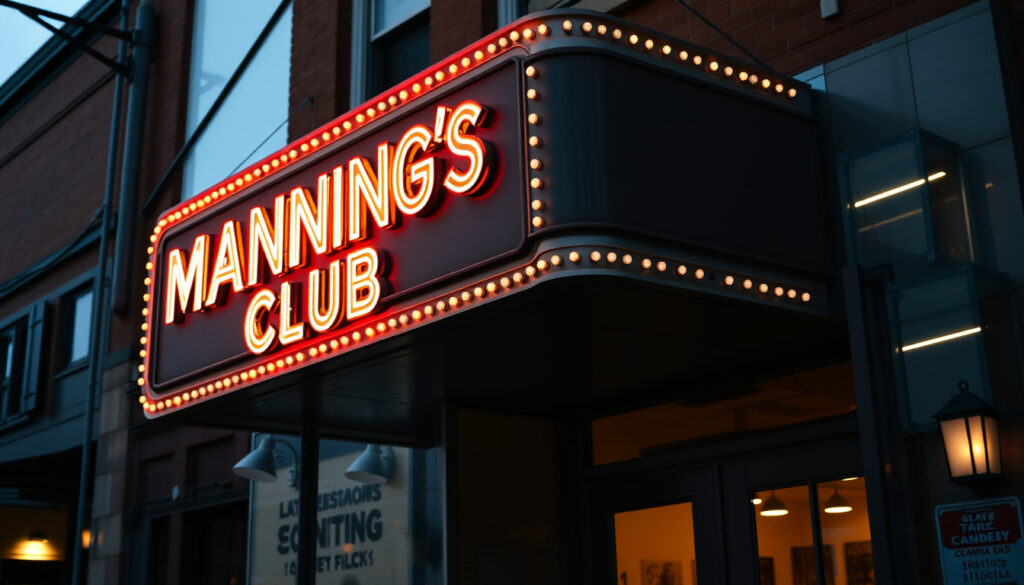
Bernard Manning: Club Conversion and Comedy Legacy
Bernard Manning’s name still lands like a punchline in the middle of a tense room — some remember the laughter, others the flinch. This article traces his path from working-men’s clubs to national television, and follows the surprising second act of the venue he ran for nearly five decades.
Birth: 13 August 1930 ·
Death: 18 June 2007 (aged 76) ·
Occupation: Comedian, nightclub owner ·
Notable venue: Embassy Club, Manchester ·
Television peak: 1970s ·
Cause of death: Heart failure, diabetes, kidney failure
Quick snapshot
- Born in Manchester, 1930 (Manchester Evening News).
- Left school at 14 (Manchester Evening News).
- Worked in tailoring before comedy (Manchester Evening News).
- Television debut in 1970s (Manchester Evening News).
- Regular on ‘The Comedians’ and ‘Who Do You Do’ (Manchester Evening News).
- Owned and operated the Embassy Club from 1959 (BBC News).
- Criticized for racist and sexist jokes (Evening Standard).
- Banned from some networks later in career (Evening Standard).
- Defended by some as ‘just a comedian’ (Manchester Evening News).
Seven key facts, one pattern: Manning’s life and career were anchored to a single address in north Manchester — the Embassy Club — where his public persona and private reality were never quite the same thing.
The table below lays out the biographical data that anchors his story.
| Label | Value |
|---|---|
| Full name | Bernard John Manning |
| Born | 13 August 1930, Manchester, England (Manchester Evening News) |
| Died | 18 June 2007, Manchester, England (Manchester Evening News) |
| Occupation | Comedian, nightclub owner |
| Years active | 1950s–2007 |
| Spouse | Vera Manning (married until her death) |
| Children | One son, Bernard Manning Jr. (Chortle) |
| Net worth at death | Estimated £1–2 million |
The implication: a man whose life was lived in public left several key financial details opaque.
What impact did Bernard Manning have on British comedy?
The rise of working men’s club comedy
Manning emerged from the working men’s club circuit that dominated northern entertainment in the 1950s and 1960s. After buying a former billiards hall in Harpurhey, he founded the Embassy Club in 1959 (BBC News). The venue became a pipeline from club stages to television studios. Manning was said by the comedy news site Chortle to have been the chief performer at the Embassy for 40 years, anchoring a style that favoured quick, punchy gags over crafted narratives.
Manning’s television career and controversy
His television breakthrough came in the 1970s with appearances on ITV’s The Comedians and the impression show Who Do You Do. The Evening Standard described him as a blunt, often crude and always controversial standup comic. The same material that filled seats at the Embassy drew condemnation from critics who called his jokes racist and sexist. By the 1980s, his television appearances had declined as broadcasters distanced themselves from his style.
Comparison with other comedians of the era
Unlike contemporaries such as Benny Hill or Kenny Everett, Manning never attempted absurdist sketches or character comedy. His act was a direct address — a monologue delivered from a club stage, not a television studio. The trade-off: he built a loyal audience that followed him to the Embassy, but he never crossed over into the mainstream family entertainment that sustained other 1970s comedians. His influence is still cited by some comics who defend the right to offend, while others point to his routines as the limit case of what British comedy has moved past.
Manning became a national name through television, but his most durable audience never left Manchester. The Embassy Club was both his launchpad and his ceiling — the stage that made him famous and the room that kept him local.
The pattern: his television fame was real, but it was the club that defined his reach and limits.
What happened to the Embassy Club in Manchester?
Bernard Manning’s ownership and operation
Manning bought the former billiards hall in Harpurhey in 1959 and turned it into a comedy and cabaret venue that operated for more than four decades (Manchester Evening News). The club attracted major acts — Manchester Evening News reports that even The Beatles performed there in the early 1960s. Manning controlled the venue personally, and after his death, his son Bernard Jr. took over operations (Chortle).
Closure and sale of the venue
The Embassy Club closed shortly after Manning’s death in 2007. According to Chortle, the venue’s final comedy night took place on the Friday before preparations for demolition began. Manchester City Council acquired the club and the surrounding land (BBC News), and the current operators were scheduled to vacate by 31 March 2026.
Plans to convert into a health centre
The site is slated for demolition to make way for a health centre and community hub for Harpurhey residents (BBC News). The planned facility is expected to be one of the largest health centres in Manchester, and the redevelopment is linked to wider regeneration plans that include more than 300 new homes in north Manchester (Manchester Evening News). The planning application had already been submitted when BBC reported the story.
Harpurhey residents gain a significant health facility, but the neighbourhood loses a venue that — for all its associations — was one of the few large entertainment spaces in north Manchester. The trade-off is infrastructure for memory.
The catch: a building that held laughter and controversy will now hold examination rooms and prescriptions.
Who owns the Embassy Club Manchester?
Current ownership after Manning’s death
Ownership of the Embassy Club passed to Manning’s estate after his death. His son Bernard Manning Jr. ran the club in the years that followed (Chortle). Manchester City Council subsequently acquired the property and the surrounding land as part of the redevelopment plan (BBC News).
History of ownership changes
Manning held the club under his personal control from 1959 until his death — nearly five decades of single-family ownership. The transition from private ownership to public authority acquisition is the decisive shift: a commercial entertainment venue becomes civic health infrastructure.
Legal disputes and public records
Specific details of Manning’s will and the distribution of his assets are not fully public. What is clear from the timeline is that the club did not remain under family ownership long after Manning’s death. The building was sold to developers and then acquired by the council for the health centre project (BBC News).
What this means: the club moved from a personal fiefdom to public asset in less than two decades.
What was the cause of death for Bernard Manning?
Health issues leading to death
Manning had been treated for a kidney problem before his death. The cause was heart failure, complicated by diabetes and kidney failure (Manchester Evening News). The combination of conditions reflected a long-term decline that had been noted by friends and colleagues in the years prior.
Date and location of death
Manning died on 18 June 2007 at North Manchester General Hospital at age 76 (Manchester Evening News). The hospital sits less than two miles from the Embassy Club — a proximity that drew local headlines about the end of an era for Harpurhey.
Family statements and public response
His death was widely reported in British media, with obituaries noting both his television fame and his controversies. The Evening Standard ran an obituary that captured the ambivalence: a comedian who drew paying crowds but could not be broadcast without warning labels. His son Bernard Jr. continued running the club for a period after Manning’s death.
Manning died in the same neighbourhood where he built his career, in a hospital that will soon be joined by the health centre replacing his club. For residents, the geography of Manning’s life and death is now written into the built environment of north Manchester.
What is the legacy of Bernard Manning today?
Debate over comedic merit versus offensiveness
The split is sharp. Supporters argue Manning was a product of his time and a master of the working men’s club format. Detractors point to routines that targeted ethnic minorities, women, and gay people with language that even 1970s standards found coarse. The Evening Standard noted that Manning was the man they couldn’t gag — a performer who turned censorship into a selling point.
Cultural shift in British comedy standards
British comedy has moved decisively away from Manning’s approach. Broadcasters now enforce guidelines that would make his television appearances impossible. Yet the demand for that style hasn’t disappeared — it has migrated to settings with fewer gatekeepers: streaming clips, unmoderated social media, and private club nights. The Embassy Club’s conversion into a health centre is therefore not just a property story; it is a physical symbol of a culture that no longer has a room for Manning’s act.
Memorials and references in popular culture
Manning appears in documentaries about 1970s comedy as a figure who was said to have donated thousands of pounds to fundraising for medical research through shows at the Embassy Club (Manchester Evening News). That charitable side — a fact rarely mentioned in the same sentence as his stage material — adds a layer of contradiction that makes legacy judgments harder. The club’s closure in 2007 and its ongoing demolition have prompted local nostalgia pieces in Manchester Evening News, with coachloads of visitors remembered from the club’s prime decades.
Manning’s defenders and critics are both right: he was a generous local figure and a performer whose material is indefensible by current standards. The health centre on the club site forces a choice — preserve a building tied to that contradiction, or replace it with something that serves a community’s present needs.
Confirmed facts
- Bernard Manning was born 13 August 1930 and died 18 June 2007 (Manchester Evening News).
- He owned the Embassy Club, Manchester, from 1959 (BBC News).
- The club is being converted into a health centre (BBC News).
- He was married to Vera Manning and had a son, Bernard Manning Jr. (Chortle).
- The venue attracted major entertainment acts including The Beatles (Manchester Evening News).
What’s unclear
- Exact net worth at death varies across sources (estimates range £1–2 million).
- Specific details of his will and distribution of assets are not fully public.
- The precise timeline of the Embassy Club’s final years of operation is not fully documented.
Timeline
- 1930 — Born in Manchester (Manchester Evening News).
- 1959 — Opened the Embassy Club in Manchester (BBC News).
- 1971–1975 — Regular on television shows ‘The Comedians’ and ‘Who Do You Do’ (Manchester Evening News).
- 1980s — Decline in television appearances due to controversy (Evening Standard).
- 2007 — Died on 18 June. Embassy Club closed (Chortle).
- 2022 — BBC reports club ‘to become health centre’ (BBC News).
“I tell jokes. You either like them or you don’t. But don’t tell me I’m not allowed to say something because somebody somewhere might be offended.”
Bernard Manning, from a 2004 interview (Manchester Evening News)
“The redevelopment will provide much-needed health infrastructure for Harpurhey, replacing a venue that has been unused for years.”
BBC News report on club conversion (BBC News)
The Embassy Club’s final transformation is a fitting cap to a career built on contradiction. A venue that once hosted The Beatles and Bernard Manning’s most controversial routines will become a health centre serving the same north Manchester community that filled its seats. For Harpurhey residents, the choice is clear: a new health facility that addresses chronic local needs, or the preservation of a building whose best days were already decades behind it.
The pattern: Manning’s story ends not with a punchline, but with a planning application.
manchestersfinest.com, rochvalleyradio.com, manchestereveningnews.co.uk, facebook.com, facebook.com, en.wikipedia.org, manchestereveningnews.co.uk, manchestereveningnews.co.uk, nyhedspunkt.dk
Frequently asked questions
What was the downfall of Benny Hill?
Benny Hill’s television career declined in the late 1980s as broadcasters moved away from slapstick comedy perceived as outdated. Thames Television cancelled his show in 1989 due to declining ratings and changing audience tastes.
Who did Benny Hill leave all his money to?
Benny Hill died without a will in 1992. His estate was distributed among his surviving relatives, including his brother and sisters, as per UK intestacy laws. Some funds also went to charity.
What year did Benny Hill come out?
This question appears to be based on a misunderstanding. Benny Hill was never publicly known as a member of the LGBTQ+ community and did not “come out” in any public sense.
What is the number one British comedy?
There is no single official ranking. Surveys and polls frequently place Fawlty Towers, The Office, Monty Python’s Flying Circus, and Only Fools and Horses among the top British comedies of all time.
Who was the founding father of comedy?
Aristophanes, the ancient Greek playwright who wrote satirical comedies in the 5th century BCE, is often called the “Father of Comedy” for his influential works such as Lysistrata and The Clouds.
Why is Aristophanes called ‘The Father of Comedy’?
Aristophanes is credited with establishing the conventions of comedic theatre — satire, parody, absurdity, and social commentary — in his surviving plays, which influenced generations of comedians and writers.
Related reading
More related posts
 Bobby Norris: TOWIE Exit, Feud, and Surgery Update
 Robert Wagner: Accusations, Natalie Wood Death, and Life Today
 Natalie Appleton 2026: Husband, Music, and Sister Nicole
 Lee Van Cleef: Biography, Death, Net Worth & Trivia
 Alex Hartley: Career, Retirement and BBC Commentary
 Reza Pahlavi: Biography, Role, and Political Influence
 Lauren Lapkus Biography: Movies, TV Shows, Divorce
 James Tarkowski: Biography, Stats, Career & Personal Life