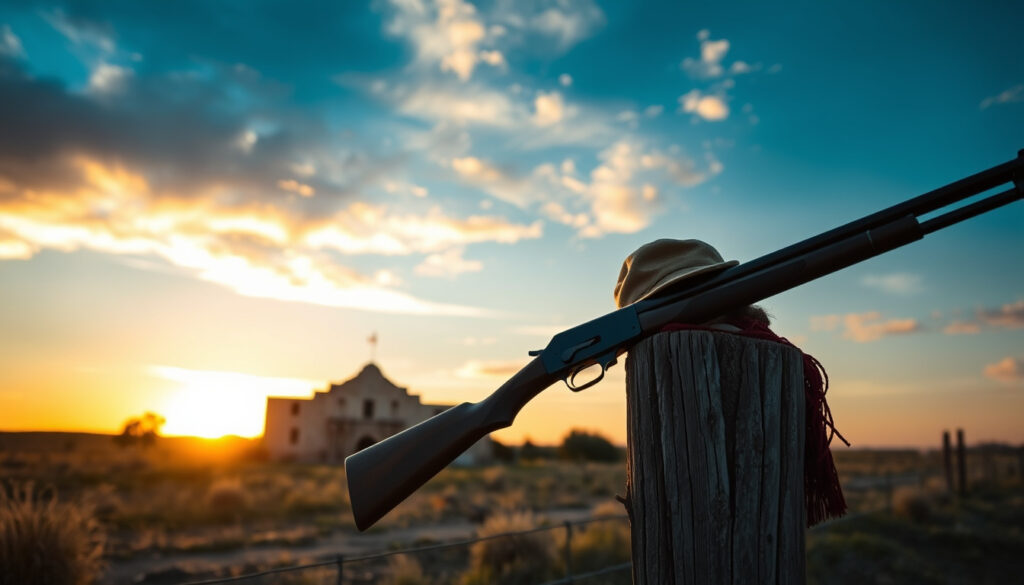
Davy Crockett: Facts, Alamo Death, and Legacy
There’s a reason Davy Crockett’s name still echoes in American history classrooms and pop culture alike. Here’s what we actually know — and what remains disputed.
Born: August 17, 1786 · Died: March 6, 1836 · Known For: Frontiersman, U.S. Congressman, Alamo defender · Famous Quote: “Be sure you’re right, then go ahead” · Disney TV Series: 1954–1955
Quick snapshot
- Born in eastern Tennessee on August 17, 1786 (Texas State Historical Association, official state encyclopedia)
- Little formal education; worked as a farmer and laborer (Britannica, reference publisher)
- Enlisted in the Tennessee militia during the Creek War (American Battlefield Trust, historical preservation organization)
- Served in the Tennessee state legislature (1821–1825) (Texas State Historical Association)
- Elected to the U.S. House of Representatives (1827–1831, 1833–1835) (Britannica)
- Opposed the Indian Removal Act, leading to his defeat in 1835 (American Battlefield Trust)
- Traveled to Texas in 1835 to support the revolution (The Alamo, official history page)
- Joined the Alamo garrison in February 1836 (The Alamo)
- Died on March 6, 1836, during the final assault (American Battlefield Trust)
- Folk hero known as “King of the Wild Frontier” (Smithsonian Magazine, history and culture publication)
- 1950s Disney TV series and song revived his fame (Britannica)
- Coonskin cap became a cultural icon (Smithsonian Magazine)
The following table summarizes Crockett’s personal details.
| Attribute | Value |
|---|---|
| Full name | David Crockett |
| Born | August 17, 1786, eastern Tennessee |
| Died | March 6, 1836, San Antonio, Texas |
| Occupation | Frontiersman, soldier, politician |
| Spouse | Polly Finley (m. 1806–1815), Elizabeth Patton (m. 1816) |
| Children | Six (including John Wesley Crockett, U.S. Congressman) |
| Most famous quote | “Be sure you’re right, then go ahead” |
| Known for | Bear hunting, coonskin cap, death at the Alamo |
What was Davy Crockett most famous for?
Davy Crockett’s fame rests on three distinct roles: frontiersman, U.S. Congressman, and folk hero who died at the Alamo. The Texas State Historical Association describes him as “a frontiersman, congressman, and defender of the Alamo.” His bear-hunting exploits and coonskin cap became symbols of rugged American individualism, especially after the 1950s Disney series.
What is Davy Crockett’s most famous quote?
- “Be sure you’re right, then go ahead” — attributed to Crockett in his autobiography (Britannica)
- “You may all go to hell, and I will go to Texas” — reportedly said before heading to Texas in 1835 (Smithsonian Magazine)
The first quote is the one most widely associated with his personal motto. The second, while popular, lacks a verified primary source.
Crockett’s fame was already self-made through his autobiography and political career, but the Disney treatment inflated it to national myth — a pattern that later shaped how other American folk heroes were marketed.
Did Davy Crockett survive the Alamo?
No credible evidence supports the idea that Crockett survived. All American Battlefield Trust accounts and Texas State Historical Association records agree he was killed on March 6, 1836.
What were Davy Crockett’s last words?
- Popular legend claims he shouted something like “I’m a bear” or “I’m Davy Crockett” — but no reliable eyewitness record exists (Smithsonian Magazine)
- Mexican accounts of the battle do not mention any last words by Crockett
Because the battle was chaotic and few defenders survived to tell their stories, his actual last words remain unknown.
How did Davy Crockett die?
- The traditional story: Crockett died fighting, swinging his rifle as the Mexican army overran the Alamo (American Battlefield Trust)
- An alternative account (from the diary of Mexican officer José Enrique de la Peña) claims Crockett was captured and executed after the battle (Texas State Historical Association)
- Historians are divided; the de la Peña diary’s authenticity has been questioned
If Crockett died fighting, he fits the heroic martyr narrative. If he was executed, that too made him a martyr — but one silenced rather than killed in action. The ambiguity itself has fueled the legend.
Why was Davy Crockett at the Alamo?
- He traveled to Texas after losing his seat in Congress, largely due to his opposition to the Indian Removal Act (American Battlefield Trust)
- He arrived in San Antonio in February 1836 and enlisted in the Volunteer Auxiliary Corps for a six-month term (The Alamo official history page)
- He reportedly wanted to serve as a “high private” rather than an officer (The Alamo)
The implication: Crockett’s presence in Texas was a combination of political exile and genuine sympathy for the Texan cause.
Why do we remember the Alamo?
The Alamo became a symbol of sacrifice and resistance. The battle cry “Remember the Alamo!” rallied Texan forces later in the revolution. Crockett’s death — regardless of exactly how it happened — sealed his place in the story.
Why do they say “never forget the Alamo”?
- The phrase emerged as a rallying cry during the Texas Revolution after the fall of the Alamo (Britannica)
- It was used by Sam Houston’s army at the Battle of San Jacinto, where they defeated Santa Anna and secured Texas independence
- Today it’s a shorthand for remembering the cost of liberty and the individuals who died there
Why this matters: For Texans and Americans, the Alamo is a touchstone of identity. Crockett’s name is often the first mentioned when the battle is taught, linking one man’s story to a larger cause. (Related reading: JFK Junior: Life, Death, and Unanswered Questions similarly explores how unresolved deaths shape public memory.)
Did Davy Crockett and Daniel Boone live at the same time?
Yes — but barely. Daniel Boone was born in 1734 and died in 1820, while Crockett was born in 1786 and died in 1836. That means their lives overlapped for about 34 years. However, there is no recorded interaction between the two frontiersmen.
Seven key points, one pattern: Both men became folk heroes, but their careers played out in different eras and regions.
| Attribute | Daniel Boone | Davy Crockett |
|---|---|---|
| Born | 1734 (Britannica) | 1786 (TSHA) |
| Died | 1820 | 1836 |
| Primary region | Kentucky, Missouri | Tennessee, Texas |
| Military role | Militia scout, led expeditions | Militia soldier, Alamo defender |
| Political career | None | U.S. Congressman, state legislator |
| Known for | Exploring Kentucky, founding Boonesborough | Bear hunting, coonskin cap, Alamo death |
| Folk hero status | Romanticized as a solitary woodsman | Romanticized as “King of the Wild Frontier” |
| Date of first biographical fame | 1784 (John Filson’s book) | 1830s (autobiography, then 1950s TV) |
The pattern: Both were real frontiersmen whose exploits were amplified by popular media of their times. Crockett’s 20th-century Disney reboot gave him a second life that Boone never received. (Another figure with a similar media afterlife: Lee Van Cleef, whose screen persona reshaped his legacy.)
When did Davy Crockett come out?
The Disney TV series “Davy Crockett, King of the Wild Frontier” aired in three episodes from 1954 to 1955. A feature film compilation was released in 1955. The series sparked a national craze: coonskin cap sales skyrocketed, and the theme song “The Ballad of Davy Crockett” became a hit.
- First episode aired on ABC on December 15, 1954 (Britannica)
- The film version released in theaters on May 25, 1955
- The ballad, performed by Fess Parker (who played Crockett) and others, reached No. 1 on Billboard
The catch: Crockett’s modern fame is inseparable from this Disney product. The historical figure and the fictionalized character are now mixed in the public imagination.
Timeline of Davy Crockett’s life
- — Born in Greene County, Tennessee (Texas State Historical Association)
- — Served in the Creek War under Andrew Jackson (American Battlefield Trust)
- — Served in the Tennessee state legislature (Texas State Historical Association)
- — First term in U.S. House of Representatives (Britannica)
- — Defeated for re-election after opposing Indian Removal Act (American Battlefield Trust)
- — Left Tennessee for Texas; joined the Texas Revolution (The Alamo)
- — Killed at the Battle of the Alamo (American Battlefield Trust)
- — Disney TV series “Davy Crockett” airs, sparking national craze (Britannica)
The timeline underscores the gap between the historical man and the myth.
Confirmed facts vs. what remains unclear
Confirmed facts
- Davy Crockett was born in 1786 and died at the Alamo in 1836 (Texas State Historical Association)
- He served as a U.S. Congressman from Tennessee (Britannica)
- He opposed the Indian Removal Act (American Battlefield Trust)
- He was a famous bear hunter and frontiersman (The Alamo)
What’s unclear
- Whether Crockett was executed after the battle or died fighting (Texas State Historical Association)
- The exact wording of his last words (Smithsonian Magazine)
- The authenticity of the saying “You may all go to hell, and I will go to Texas” (Smithsonian Magazine)
- The extent of his participation in the Creek War (American Battlefield Trust)
This distinction helps readers separate verified history from ongoing debate.
Key quotes and their context
“Be sure you’re right, then go ahead.”
— Attributed to Davy Crockett in his autobiography, A Narrative of the Life of David Crockett (1834)
“You may all go to hell, and I will go to Texas.”
— Reportedly said before leaving for Texas in 1835; source is a letter later published
“I’m a bear!”
— Popular legend claims these were his last words during the Alamo attack; no reliable source supports it
The first quote is widely accepted as authentic. The second is plausible but unverified. The third is pure myth.
Bottom line: Davy Crockett is what the historical record says, not the Disney cartoon. For parents teaching American history: present the verified facts first, then explain how Hollywood reshaped the story. For history enthusiasts: the Alamo death controversy remains an open case worth exploring.
en.wikipedia.org, study.com, americanantiquarian.org, thekojonnamdishow.org, youtube.com, study.com, ebsco.com, suomiajassa.fi
For a more detailed Davy Crockett biography, including examination of the controversy surrounding his final moments, see detailed Davy Crockett biography.
Frequently asked questions
What is a Davy Crockett coonskin cap?
A hat made from raccoon fur, with a tail hanging down. It became a popular children’s toy after the Disney series.
Did Davy Crockett really wear a coonskin cap?
Yes, but not exclusively. He wore a variety of frontier hats; the coonskin cap was emphasized by Disney for visual recognition.
How many children did Davy Crockett have?
Six — three from his first wife Polly Finley and three from his second wife Elizabeth Patton. One son, John Wesley Crockett, became a U.S. Congressman.
What is the Davy Crockett nuclear weapon?
A Cold War-era recoilless rifle that fired a low-yield nuclear warhead (the M-388). It was named after Crockett as a symbolic link to the frontier spirit.
Who played Davy Crockett in the Disney series?
Fess Parker portrayed Crockett in the initial TV episodes and the 1955 film. Buddy Ebsen also played him later.
What is the Ballad of Davy Crockett?
The theme song written by George Bruns and Tom Blackburn for the Disney series. It became a hit record and reinforced the folk hero image.
Where is Davy Crockett buried?
His exact burial site is unknown. A cenotaph in San Antonio honors him and other Alamo defenders. Some accounts suggest his body was cremated with others.
What did Davy Crockett do before politics?
He worked as a farmer, laborer, and soldier. He served in the Tennessee militia during the Creek War, then settled into farming and local politics.
Ultimately, Davy Crockett’s story reminds us that history and myth often intertwine, and it’s up to each generation to separate them.
More related posts
 Scott Adkins: Martial Artist, Actor, and Action Star
 Virat Kohli: Net Worth, Ex-Girlfriends & Retirement 2025
 Ellen DeGeneres: Post-Show Life, Health & Controversy
 Victoria Wood: Private Cancer, Comedy Legacy & Family
 David Tennant TV Shows: List of Roles and New Series
 Robert Carlyle Now: Net Worth, Friendships, and Latest Projects in 2026
 James Milner: Career, Stats, Retirement & Net Worth
 Chris Tucker: Net Worth, Quit Reason and Comeback 2024