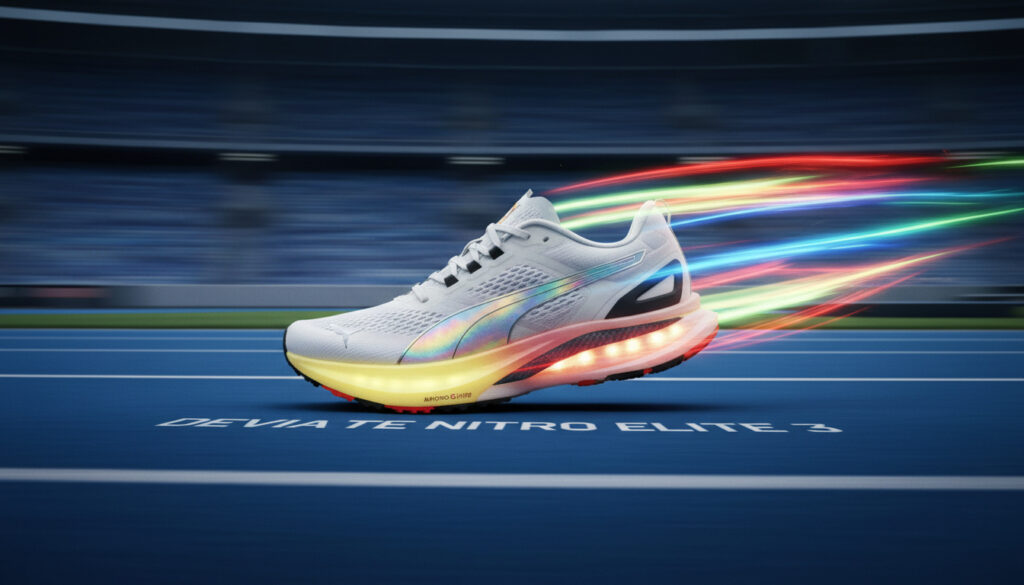
Puma Deviate Nitro Elite 3 – Specs, Performance and Review
The Puma Deviate Nitro Elite 3 arrived in early 2024 as a substantial revision to the brand’s flagship racing super shoe, debuting on the feet of podium finishers at the US Olympic Marathon Trials. With an upgraded A-TPU foam compound claiming 93% energy return and a redesigned carbon fiber plate, this $230 marathon racer aims to challenge established leaders in the high-performance footwear category.
Positioned between daily trainers and record-breaking specialists, the third iteration addresses criticisms of its predecessor while maintaining a price point approximately $55 below Nike’s Alphafly 3. Independent lab testing and elite athlete feedback suggest Puma has narrowed the performance gap with competitors, though certain limitations regarding durability and fit persist.
What Are the Key Specs of the Puma Deviate Nitro Elite 3?
Engineering data reveals significant material upgrades from previous versions. The shoe incorporates a steeper carbon PWRPLATE and maximal stack geometry optimized for midfoot and forefoot strikers.
- Energy Return Upgrade: The A-TPU-based Nitro Elite foam now claims 93% energy return, up from 83% in the previous version, creating denser and bouncier cushioning.
- Aggressive Plate Geometry: A steeper, more curved carbon PWRPLATE replaces the flatter configuration of the Elite 2, generating snappier propulsion during toe-off.
- Weight Optimization: Despite increasing stack height by approximately 4mm, the shoe maintains a lighter overall weight than its predecessor.
- Race Day Credentials: Puma elites wore prototypes during the 2024 US Olympic Marathon Trials, with the model appearing on multiple podium finishers.
- Competitive Pricing: At $230, the shoe undercuts the Nike Alphafly 3 by $55 and the Asics Metaspeed Sky Paris by $20.
- Durability Concerns: Early testing indicates potential outsole peeling and rearfoot wear after 100-200 miles of use.
| Specification | Detail |
|---|---|
| Category | Carbon-Plated Racing Super Shoe |
| Weight (Men’s) | Approximately 7.5-8 oz (US 9) |
| Heel-to-Toe Drop | 8mm |
| Stack Height | Maximal configuration (increased ~4mm from v2) |
| Heel Shock Absorption | 147 SA (lab-tested) |
| Forefoot Shock Absorption | 127 SA (lab-tested) |
| Midsole Material | Nitro Elite A-TPU foam |
| Plate Technology | Carbon PWRPLATE (18.1N stiffness rating) |
| Upper Construction | Breathable low-volume mono mesh |
| Outsole Compound | PumaGrip rubber |
| Best Application | 5K to half marathon racing, tempo runs |
| MSRP | $230 USD |
Is the Puma Deviate Nitro Elite 3 Worth Buying? Performance Review
Laboratory analysis from RunRepeat indicates the Elite 3 generates 77.1% energy return in controlled bend tests, outperforming both the Nike Vaporfly and Alphafly in raw efficiency metrics. This translates to tangible propulsion during threshold efforts and interval training.
The ride character diverges from competitor super shoes by eliminating pronounced rocker geometry. Instead, the stiffer 18.1N carbon plate delivers a snappy, grounded sensation that rewards aggressive pacing during 5K to half marathon distances.
Speed and Responsiveness
Midfoot strikers report the most natural transition through the gait cycle, with the plate’s curvature facilitating rapid turnover without the instability sometimes associated with high toe-spring designs. However, the absence of a traditional rocker means heel strikers may experience a firmer landing phase than in competing models.
Cushioning and Comfort
The A-TPU foam provides joint-protecting cushioning that Doctors of Running describes as “disappearing underfoot” during marathon efforts. Despite the high stack, the shoe maintains a relatively firm ride that prevents the mushy sensation some runners report with PEBA-based competitors.
The Nitro Elite compound utilizes an A-TPU formula that delivers 93% energy return according to Puma’s claims, with independent lab verification showing 77.1% return rates. This stiffness sacrifices some initial comfort for superior energy retention across longer efforts.
Puma Deviate Nitro Elite 3 vs Nitro Elite 2: Key Differences
Running Shoes Guru characterizes the upgrade as transformative rather than incremental, noting that while the Elite 2 failed to meet true “super shoe” standards, the third iteration competes directly with elite-tier offerings from Nike and Adidas.
Weight and Stack Height Changes
Puma achieved the rare combination of increased cushioning and reduced mass. The stack grew by approximately 4mm to maximize superfoam volume, yet overall weight dropped compared to the Elite 2. Lab tests recorded heel shock absorption of 147 SA and forefoot absorption of 127 SA, representing substantial increases over the previous model’s thinner configuration.
Foam and Plate Evolution
The energy return differential proves significant: 93% for the Elite 3 versus 83% for the Elite 2. This improvement stems from the reformulated A-TPU compound. Simultaneously, the carbon plate evolved from a relatively flat stabilizer into an aggressively curved propulsion mechanism that Believe in the Run identifies as essential to the shoe’s snappier character.
| Feature | Deviate Nitro Elite 3 | Deviate Nitro Elite 2 |
|---|---|---|
| Weight/Stack | Lighter, thicker maximal stack | Heavier, thinner profile |
| Foam Energy Return | 93% (A-TPU formula) | 83% |
| Plate Geometry | Steeper, more aggressive curve | Flatter, less prominent |
| Price at Launch | $230 | $200 |
| Performance Tier | True super shoe contender | Good but not elite-level |
How Much Does the Puma Deviate Nitro Elite 3 Cost and Where to Buy?
The $230 retail price positions the Elite 3 as a premium option within Puma’s lineup, though it remains competitively priced against the $285 Nike Alphafly 3 and $250 Asics Metaspeed series. Retailers including Puma’s direct-to-consumer platform and specialty running stores stock the model, with post-launch discounts occasionally appearing through certified dealers.
At $230, the shoe offers a $20 to $55 savings compared to leading competitors while delivering comparable energy return statistics. This pricing strategy targets runners seeking elite-tier performance without the highest tier price point.
Independent testing reveals rearfoot outsole wear and potential peeling issues after 100-200 miles. While the shoe maintains performance characteristics at distance, the build quality and materials may limit its lifespan compared to daily training counterparts.
Puma Deviate Nitro Elite Release Timeline
- : Original Deviate Nitro Elite launches, establishing Puma’s entry into the carbon-plated super shoe market with initial Nitro foam technology.
- : Elite 2 releases with incremental foam improvements and adjusted geometry, though reviews suggest it remained a tier below competitor offerings.
- : Elite 3 debuts at the US Olympic Marathon Trials in Orlando, worn by Puma-sponsored athletes including top-3 female finishers, confirming its competition-ready status.
The 2024 release timing positioned the shoe within the Olympic cycle, generating visibility among competitive runners preparing for major fall marathons.
What Remains Unclear About the Elite 3?
Verified Specifications
- 8mm drop confirmed through multiple lab measurements
- A-TPU foam compound outperforming previous generations in bend testing
- Carbon plate stiffness rating of 18.1N
- $230 official retail price
- 2024 Olympic Trials appearance and elite usage
Outstanding Questions
- Long-term durability beyond 200 miles remains under observation
- Suitability for wide-footed runners varies by individual anatomy
- Performance in wet conditions compared to specialized traction outsoles
- Availability of half sizes and width alternatives across all markets
How Does the Elite 3 Position Puma in the Super Shoe Market?
The Deviate Nitro Elite 3 represents Puma’s most credible challenge to Nike and Adidas dominance in the racing category. By achieving independent lab results that exceed Vaporfly energy return metrics while maintaining a lower price point, Puma targets value-conscious competitive runners. The shoe’s firm, responsive character distinguishes it from the marshmallow-like cushioning of What Is a Normal Heart Rate – By Age, Resting, Sleep & Exercise high-mileage training, appealing to athletes who prefer ground feedback over plush softness.
The model serves specifically runners with efficient midfoot strikes and What Is Cardiovascular Disease – Causes, Symptoms, Types concerns regarding joint stress during high-intensity efforts. Its absence of a pronounced rocker limits appeal for those reliant on heel striking, potentially ceding that demographic to competitors with more aggressive toe-spring geometries.
What Do Running Experts Say About the Elite 3?
The snappiest elite yet. This is the real super shoe that Puma has been trying to make for three generations.
— Doctors of Running Technical Analysis
A true super shoe contender that finally puts Puma in the conversation with Nike and Adidas. The value proposition at $230 makes it accessible without sacrificing elite performance.
— Running Shoes Guru Review
Video analysis from independent wear testers corroborates lab findings, with multiple reviewers noting the shoe’s ability to maintain energetic rebound after 100 miles of training. Additional long-term testing confirms the upper maintains structural integrity while the outsole shows early wear patterns in high-impact zones.
Final Assessment: Is the Deviate Nitro Elite 3 Right for You?
The Puma Deviate Nitro Elite 3 suits competitive runners seeking a firm, responsive racing platform for distances between 5K and half marathons, particularly those with midfoot striking patterns who value energy return over plush cushioning. At $230, it offers a financially accessible entry into authentic super shoe performance, provided you accept the durability limitations and narrower fit profile. For athletes prioritizing marathon comfort or requiring high levels of stability for heel striking, alternative models with rocker geometries may prove more suitable.
Frequently Asked Questions
Is the Puma Deviate Nitro Elite 3 good for racing?
Yes, specifically for 5K to half marathon distances. The shoe debuted at the 2024 US Olympic Marathon Trials and offers energy return metrics competitive with top-tier super shoes, though its firm ride suits faster efforts better than easy long runs.
What is the stack height of the Puma Deviate Nitro Elite 3?
The shoe features a maximal stack height increased by approximately 4mm from the Elite 2, with lab-tested shock absorption values of 147 SA at the heel and 127 SA at the forefoot.
Where can I buy the Puma Deviate Nitro Elite 3?
The shoe is available at Puma.com, specialty running retailers including Fleet Feet and Running Warehouse, and select athletic stores at the $230 MSRP.
How does the Elite 3 compare to the Elite 2?
Elite 3 is lighter despite thicker cushioning, features upgraded foam with 93% energy return (vs 83%), and utilizes a steeper carbon plate. Reviews consider it a genuine super shoe versus the Elite 2’s more modest performance tier.
Is the Puma Deviate Nitro Elite 3 suitable for heel strikers?
The design favors midfoot and forefoot strikers due to the absence of a pronounced rocker. Heel strikers may find the landing firmer and less stable than in shoes with aggressive toe-spring geometries.
What is the expected durability of the Deviate Nitro Elite 3?
Testing indicates the shoe maintains performance characteristics for 100-200 miles, though users report rearfoot outsole wear and potential peeling. The build quality suggests it functions best as a dedicated race-day shoe rather than a high-mileage trainer.
More related posts
 The Cabin in the Woods: Parody, Monsters, and Why No Sequel
 Louis Russell: Age, Career, Baby Mom and Controversies
 Saturn Devouring His Son: Meaning, Symbolism & Location
 Basketball Hoops in Ireland: Wall-Mounted & Portable
 Vicky Myers: Marriage, Illness, Daughter, and Career
 Small Things Like These: Summary, Themes & Movie Guide
 Not Going Out Cast Changes: Kate, Tim & Real Facts
 Cherry Seaborn: Her Cancer Battle, Career & Ed Sheeran Love Story