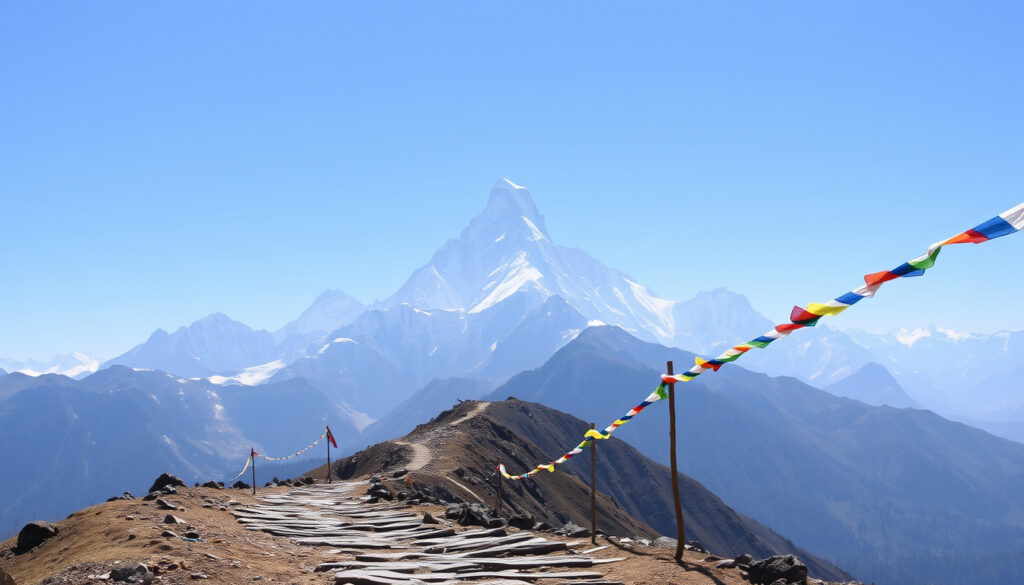
Everest Base Camp Trek: Costs, Difficulty, Itinerary & Safety (2025 Guide)
There’s a moment on the trail when the prayer flags come into view against the Khumbu Icefall, and you realise you’ve been walking toward this for over a week. Every year roughly 40,000 trekkers make the journey to Everest Base Camp, drawn by the same magnetic pull but arriving with very different budgets, fitness levels, and expectations.
Elevation: 5,364 m (17,598 ft) ·
Annual trekkers: ~40,000 ·
Typical duration: 12–14 days ·
Cost range: $1,000–$5,000 ·
Fatalities (trek): Extremely rare; altitude sickness main risk
Quick snapshot
- South Base Camp elevation: 5,364 m (17,598 ft) (Mount Face Nepal trek operator)
- Standard trek duration: 12–14 days (Nep Trek itinerary specialist)
- Cost range: USD 1,000 to USD 5,000 (All Nepal travel guide)
- Exact annual trekker count varies by source—estimates range 35,000 to 45,000
- Specific cost breakdowns shift seasonally and by operator
- Peak seasons: March–May and September–November (Nepal Everest Base Camp permit guide)
- Acclimatization days built into standard 12–14 day itineraries (Nepal Everest Base Camp permit guide)
- 2025 permit system simplified with digital payments at entry points
- Helicopter evacuation services available but costly
Six facts that cut through the noise: here’s what the data actually says about Everest Base Camp.
| Item | Value |
|---|---|
| Elevation | 5,364 m (17,598 ft) – South Base Camp |
| Location | Nepal, Khumbu region |
| Trek duration | 12–14 days |
| Cost average | $2,500 – $3,000 |
| Annual trekkers | ~40,000 |
| Fatalities (trek) | Fewer than 5 per year (mostly altitude-related) |
How Hard Is It to Climb to Everest Base Camp?
Most people picture ropes, crampons, and a steep ice face when they hear “Everest.” The reality: the Base Camp trek is a long walk at altitude—no technical climbing required. The difficulty comes from the elevation gain and the duration, not from exposed scrambling or glacier traverses.
What fitness level is required?
- Good cardiovascular endurance is essential: expect 5–7 hours of walking per day, with elevation gains of 400–800 m per day on several sections (Hakuna Matata Treks Nepal trek operator).
- Leg strength matters for the long, stone-stepped descents—quad-dominant training (lunges, step-ups, squats) helps prevent injury.
- Any healthy person who can hike 10–15 km on moderately steep terrain can manage the route with proper pacing.
Can a beginner do it?
Yes—but with conditions. Several 2025 trek guides note that the route is suitable for beginners who have decent base fitness, provided they prepare for long walking days and the altitude effects (Explore in Nepal trek preparation guide). That preparation means at least 8–12 weeks of consistent training before departure: hiking with a loaded pack, stair climbing, and longer weekend walks.
Beginners who skip altitude preparation—not fitness preparation—are the ones who turn back. The body’s response to 5,364 m is non-negotiable: no amount of gym time substitutes for slow ascent and sleep-high days.
Is altitude sickness a concern?
Altitude sickness is the primary risk on the Base Camp trek, according to every operator consulted. Acute Mountain Sickness (AMS) affects roughly 50–70% of trekkers above 3,500 m in some form, from headaches and nausea to more serious HAPE or HACE. Acclimatization stops at Namche Bazaar (3,410 m) and Dingboche (4,260 m) are built into standard itineraries specifically to reduce risk (Nep Trek itinerary specialist).
How Much Does the Everest Base Camp Trek Cost?
Five numbers that span the full range: budget independent, mid-range guided, and premium all-inclusive. The gap between quotes tells a story about what you’re actually paying for.
What is included in the cost?
A typical package for a guided trek on the 12–14 day route includes: Kathmandu–Lukla round-trip flight (about 30 minutes each way), teahouse accommodation, three meals daily, guide and porter fees, and all permits. The Lukla flight alone costs roughly USD 160–200 round trip, and permits add about USD 50–60 (Sagarmatha National Park entry plus Khumbu Pasang Lhamu Rural Municipality fee).
| Budget level | Inclusions | Estimated total (USD) |
|---|---|---|
| Budget independent | Permits, basic guesthouses, own guide not included, local meals | $1,000 – $1,500 |
| Mid-range guided | All permits, Lukla flights, guide, porter, 3 meals, teahouses | $1,500 – $2,500 |
| Premium all-inclusive | Private guide/porter, upscale lodges, extra acclimatization days, insurance | $3,000 – $5,000 |
Pattern: the guided middle band accounts for roughly 70% of trekkers, according to operator estimates. The biggest cost driver isn’t luxury but the guide-to-trekker ratio and whether you fly to Lukla or take the longer road alternative from Manthali.
Are there hidden costs?
- Tipping: guides and porters typically expect USD 100–200 total for a 14-day trek.
- Gear rental: sleeping bags, down jackets, and trekking poles add USD 50–150 in Kathmandu.
- Travel insurance: must cover high-altitude trekking (above 5,000 m) and helicopter evacuation—expect USD 60–120.
- Hot showers and WiFi: pay-per-use at teahouses, roughly NPR 300–500 per shower (USD 2–4).
What this means: the “budget” trek can easily creep to USD 1,200–1,500 when you add gear, insurance, and tips that aren’t included in the upfront price.
How Many Days Does It Take to Walk to Everest Base Camp?
Twelve to fourteen days is the industry standard—not arbitrary, but driven by one specific constraint: your body’s need to adjust to the altitude. Anyone who tries to shorten it to 10 days is making a trade-off on safety.
What is a typical itinerary?
The most common 12-day route starts with a flight from Kathmandu to Lukla (2,840 m), then tracks through Phakding, Namche Bazaar (acclimatization day), Tengboche, Dingboche (another acclimatization day), Lobuche, Gorak Shep, and finally Everest Base Camp on day 9, with a sunrise summit of Kala Patthar (5,545 m) on day 10 for the classic view. The descent back to Lukla takes two days (ASC360 trek cost guide).
Average hiking time per day
Most days involve 5–7 hours of walking, with the longest day being the haul from Lobuche to Gorak Shep and Base Camp (about 7–8 hours). The two acclimatization days are short walks (3–4 hours) designed to “climb high, sleep low.” Several 2025 guides describe this rhythm as the backbone of a successful trek (All Nepal trekking guide).
What factors affect duration?
- Weather: Lukla flights often get delayed or cancelled, adding 1–2 days on either end.
- Fitness pacing: slower groups may need an extra day.
- Acclimatization issues: if AMS symptoms appear, rest days can extend the itinerary.
The trade-off: saving two days by skipping an acclimatization stop doesn’t save time—it increases the chance of turning back from Gorak Shep because you can’t breathe properly.
How Risky Is Everest Base Camp?
The base camp trek is often described as “safe” relative to the summit climb, and the data backs that up—but altitude sickness, falls on loose stone, and weather changes are real hazards that appear in every operator’s incident log.
What are the main dangers?
The trek itself records fewer than five deaths annually, according to operator estimates. Compare that to roughly 300–350 deaths on the summit routes since 1922—the base camp experience is orders of magnitude safer. The primary risk is altitude sickness: specifically HAPE (fluid in the lungs) and HACE (fluid on the brain). Falls occur mainly on the descent near Lukla, where stone steps are uneven and trekkers are already fatigued (Hakuna Matata Treks safety briefing).
How many deaths occur on the trek?
Reliable statistics are scarce because most deaths go unreported outside Nepal. Trekkers die from altitude-related causes (HAPE, HACE, heart failure) at a rate of roughly 1–3 per 40,000 trekkers per year, making the Base Camp trek extremely safe compared to many mountain walks in the Alps or the Rockies.
What is the 2pm rule?
The so-called “2pm rule” applies to summit attempts on Mount Everest itself—turn around by 2 pm regardless of your position. For the Base Camp trek, no such rule exists. However, guides recommend being off the trail and in your teahouse by early afternoon if bad weather moves in, because afternoon winds and cloud cover reduce visibility and increase hypothermia risk.
The most dangerous part of the EBC trek isn’t the altitude—it’s the Lukla flight. The runway at Tenzing-Hillary Airport is 527 m (1,729 ft) long, sloping uphill, and surrounded by mountains. Weather cancellations are common, and accidents, while rare, have occurred.
What Is the Elevation of Everest Base Camp?
Two base camps exist on opposite sides of the mountain. The South Base Camp is the one nearly every foreign trekker visits. Knowing the numbers explains why acclimatization is not optional.
How high is South Base Camp?
5,364 meters (17,598 feet)—that’s the official figure used by the Nepal government and referenced in all major trek permits (Mount Face Nepal permit documentation). For context, that’s 1.3 times the elevation of Mount Kilimanjaro’s summit camp. The North Base Camp on the Tibetan side sits slightly lower at 5,150 m (16,896 ft).
Why is elevation important?
Above 3,500 m, your body produces more red blood cells to compensate for lower oxygen—a process called acclimatization. At 5,364 m, atmospheric oxygen is roughly 50% of sea level. This is why the standard 12–14 day itinerary includes two full acclimatization days: your body needs time to build that capacity gradually. Trekkers who fly to Lukla (2,840 m) and start walking immediately are already above the threshold where AMS can kick in (Nep Trek acclimatization schedule).
What permits are needed?
Two main permits for foreign trekkers: the Sagarmatha National Park entry permit (NPR 3,000 for foreigners, about USD 22) and the Khumbu Pasang Lhamu Rural Municipality permit (NPR 2,000 for the first four weeks, about USD 15). A TIMS card (Trekkers’ Information Management System) costs NPR 2,000 for independent trekkers and NPR 1,000 for organized trekkers (Himalaya Hub permit breakdown).
For the average trekker planning a 2025 trip, the permit system is the least expensive part of the journey but the most bureaucratic. Digital payment is now accepted at most entry points, but having exact NPR cash as backup avoids delays.
Pros and Cons of the Everest Base Camp Trek
Upsides
- Life-changing views of Everest, Lhotse, and Ama Dablam without technical climbing
- Well-established trail network with teahouses every 1–2 hours
- Moderate difficulty—doable for anyone with 8 weeks of training
- Strong local culture: Sherpa villages, monasteries, prayer flags throughout
- Relatively safe with low fatality rate compared to summit routes
Downsides
- Altitude sickness risk is real and can stop the trek at any point
- Cost can balloon with hidden expenses (tipping, gear, insurance)
- Lukla flight cancellations due to weather, adding days or forcing last-minute changes
- Basic accommodation: teahouse rooms are small, cold, and shared bathrooms are common
- Crowded during peak seasons (April, May, October, November)
Step-by-Step Planning Guide
Seven steps that move from decision to departure. Each step is a gate: skip one and the whole plan wobbles.
- Assess fitness and training timeline
Start training 12 weeks before departure. Focus on hiking with a 10–12 kg pack, stair climbing (30–45 minutes), and weekly 15–20 km hikes. If you can’t hike 10 km on a 15% grade without stopping, delay the trip. A 2025 training guide from Explore in Nepal fitness preparation specialist recommends at least two long weekend hikes per month at increasing elevation gain. - Budget realistically
Assumes mid-range guided trek: between USD 1,500 and USD 2,500. Add USD 200 for gear rental, USD 100 for insurance, USD 150 for tips. If you’re doing independent budget, expect USD 1,000–1,500 but with less support if things go wrong. A detailed cost breakdown from Trip Nepal budget planner puts a self-supported solo trek at roughly USD 1,114 including all basics. - Book permits and flights
Permits can be purchased at the Sagarmatha National Park entrance gate in Monjo and at the Khumbu Pasang Lhamu office in Lukla. The Lukla flight must be booked through a local airline or your trek operator—don’t wait until you’re in Kathmandu during peak season. A 2025 permit guide from Nepal Everest Base Camp permit advisor details the fees and required documents. - Choose your season
Spring (March–May): clearest views, busiest trails, moderate temperatures. Autumn (September–November): similar conditions, slightly cooler, fewer trekkers. Winter (December–February): trail open but teahouses limited; temperatures drop below freezing at night. Monsoon (June–August): heavy rain, cloud cover, leeches, and higher landslide risk on the trail. Most operators recommend spring for first-timers. - Pack smart and light
Your pack should weigh no more than 10–12 kg; a porter carries the rest (you can hire one for about USD 15–20 per day). Essentials: four-season sleeping bag (rated to -15°C), down jacket, waterproof jacket and pants, trekking poles, water purification tablets, headlamp, and a basic first-aid kit with Diamox (acetazolamide) for altitude prevention. Several guides note that many trekkers overpack and end up leaving gear at teahouses (All Nepal packing recommendations). - Plan for altitude
Start your trek slowly: walk at a pace where you can hold a conversation. Acclimatization days are non-negotiable—the standard “climb high, sleep low” protocol means day hikes to higher elevation before returning to the same sleeping altitude. Diamox can reduce AMS symptoms but doesn’t prevent HAPE or HACE. A 2025 safety guide from Hakuna Matata Treks safety advisory recommends carrying a pulse oximeter and monitoring SpO2 levels daily. - Arrange travel insurance
Standard travel insurance doesn’t cover high-altitude trekking. You need a policy that specifically includes evacuation above 5,000 m. Companies like World Nomads and Global Rescue offer plans for about USD 60–120 depending on trip length. Without it, helicopter evacuation can cost USD 3,000–10,000 out of pocket.
Blockquotes from the Trail
“The biggest misconception is that you need to be a mountaineer to get to Base Camp. You don’t. You need to be a walker who respects altitude.”
— Guide conversation documented by Hakuna Matata Treks field notes
“The Khumbu Pasang Lhamu permit system was introduced to manage trekker numbers and fund local infrastructure. It’s not a barrier—it’s crowd control.”
Summary
Everest Base Camp is an achievable goal for most fit beginners who plan carefully and budget properly. The trek’s difficulty comes from altitude, not technique; its cost depends on how much support you want; and its risks are manageable with smart pacing and proper insurance. For the aspiring trekker planning a 2025 trip, the choice is clear: invest the 12 weeks of training and USD 1,500–2,500 now, or spend years wondering what the prayer flags looked like against the Khumbu Icefall—and whether you were ready to walk there.
Frequently asked questions
Do I need a guide for Everest Base Camp?
Not legally, but strongly recommended. Independent trekkers can walk the route without a guide, but a guide handles permits, navigation, altitude monitoring, and emergency logistics. Most 2025 guides advise first-timers to hire a guide through a registered agency (Trip Nepal guide advice).
What is the best time to go to Everest Base Camp?
Spring (March–May) and autumn (September–November) offer the clearest skies and most stable weather. Spring is busier but has slightly warmer daytime temperatures. Autumn trails are less crowded with equally good visibility. Avoid monsoon season (June–August) for the trek itself (All Nepal seasonal guide).
What gear do I need for the Everest Base Camp trek?
Minimum essentials: warm sleeping bag (-15°C rating), down jacket, waterproof jacket and trousers, trekking poles, headlamp, water purification tablets, first-aid kit with Diamox, and a daypack (30–40 L). Full gear lists are available from operators like Explore in Nepal packing guide.
Is helicopter evacuation available from Everest Base Camp?
Yes. Helicopter evacuation exists from Gorak Shep and Base Camp, but it costs USD 3,000–10,000. Travel insurance that covers high-altitude evacuation (above 5,000 m) is essential before you start the trek (View Nepal Treks cost breakdown).
Can you see Mount Everest from Base Camp?
Strictly speaking, no—Everest’s summit is hidden behind the Khumbu Icefall and the West Shoulder from the Base Camp itself. For the classic view of Everest’s peak, trekkers climb Kala Patthar (5,545 m) early in the morning, typically on day 10 of the itinerary (Nep Trek route description).
How should I train for the Everest Base Camp trek?
Start 12 weeks before: hike with a loaded pack (10–12 kg) on hilly terrain 2–3 times per week, do stair climbing (30 minutes), and include strength training for legs and core. Aim to complete a 20 km hike with 800 m elevation gain before departure. A training plan from Explore in Nepal fitness preparation recommends gradually increasing weekly elevation gain.
What is the best way to prevent altitude sickness on the trek?
Slow ascent is the only proven method: don’t gain more than 500 m in sleeping elevation per day above 3,000 m. Acclimatization days, hydration (3–4 L daily), and avoiding alcohol and sleeping pills also help. Diamox (acetazolamide) can reduce symptoms but doesn’t prevent severe AMS. A 2025 safety protocol from Hakuna Matata Treks safety guidelines recommends monitoring SpO2 with a pulse oximeter below 80% trigger an immediate descent.
More related posts
 Jared Leto: Relationships, Apology, Career & Net Worth (2025)
 Michelle Pfeiffer Biography: Age, Family, and Net Worth
 Best Asian Supermarket Near Me in Dublin – Open Now & Delivery
 John Williams: Awards, Film Scores & Lasting Legacy
 Lauren Lapkus Biography: Movies, TV Shows, Divorce
 Annette Badland: Biography, Partner, Children, and Career
 Petrol Stations with Fuel Near Me: Prices & Quality Compared
 John Lewis Student Discount: Up to 60% Off via Partners