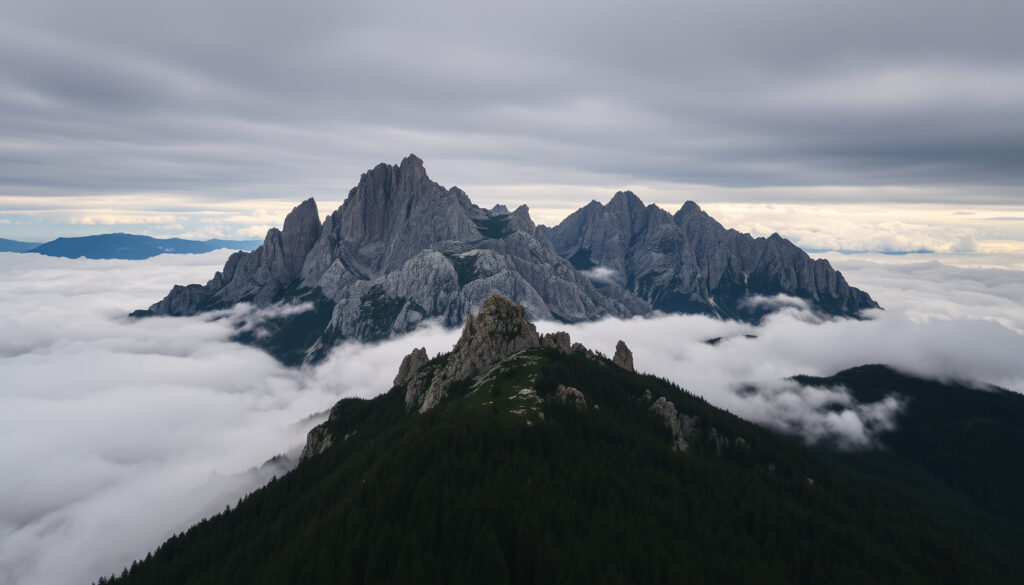
Mount Olympus: Hiking Guide, Myths, and Key Facts
Anyone who has ever looked up at a mountain and wondered what it would be like to stand where the gods once ruled knows the pull of Mount Olympus. Greece’s highest peak, soaring to 2,917 meters, is as much a pilgrimage for mythology lovers as it is a challenge for hikers. This guide weaves together the ancient stories and the modern trails, giving you the facts you need to plan your own ascent.
Height: 2,917 m (9,570 ft) ·
Country: Greece ·
Number of Peaks: 9 ·
First National Park: 1938 ·
UNESCO Biosphere Reserve: 1981
Quick snapshot
- Northern Greece, border of Thessaly and Macedonia (Prado Litochorou – hiking authority)
- Highest peak Mytikas: 2,917 m (Prado Litochorou – hiking authority)
- National Park since 1938, UNESCO Biosphere Reserve (Prado Litochorou – hiking authority)
- Home of the Olympian gods (GreekMythology.com – mythology reference)
- Zeus, Athena, and other major deities (GreekMythology.com – mythology reference)
- Center of ancient Greek religion (GreekMythology.com – mythology reference)
- Beginner-friendly with preparation (The Mount Olympus – trails database)
- Two-day typical itinerary (The Mount Olympus – trails database)
- Five mountain huts, 60 km of trails (The Mount Olympus – trails database)
- Best season: June to September
- Nearest town: Litochoro
- Guide recommended for first-time climbers
| Detail | Value |
|---|---|
| Highest point | Mytikas (2,917 m / 9,570 ft) |
| Country | Greece |
| First ascent | 1913 (by Christos Kakkalos, Frederic Boissonnas, Daniel Baud-Bovy) |
| Number of peaks above 2,700 m | 6 |
| Protected area | Olympus National Park (first in Greece) |
| Designation | UNESCO Man and Biosphere Reserve (1981) |
Where is the real Mount Olympus?
You will not find it in Turkey, Turkey. The real Mount Olympus is firmly in northern Greece, straddling the border between Thessaly and Macedonia just a few kilometers from the Aegean Sea (GreekMythology.com – geography reference). Its highest summit, Mytikas, punches up to 2,917 meters, making it the tallest mountain in Greece by a clear margin.
Is Mount Olympus in Greece or Turkey?
- Greece. There is no Mount Olympus in Turkey (the ancient Lycian city of Olympos is a different place).
- The entire Olympus massif lies within Greek territory, mostly within the region of Central Macedonia.
What region of Greece is Mount Olympus in?
- It sits roughly 80 km southwest of Thessaloniki, on the border of Thessaly (south) and Macedonia (north).
- The nearest major town is Litochoro, a gateway village at the foot of the mountain.
Five distinct peaks rise above 2,700 m, creating a natural wall that ancient Greeks believed was the literal home of their gods.
For anyone planning a trip, the mountain’s accessibility from Litochoro means you can be on the trail within an hour of leaving the coast. That proximity makes it one of Europe’s most climbable famous peaks.
What is Mount Olympus’ mythology?
In Greek mythology, Mount Olympus was not just a mountain—it was the fortress of the Olympian gods, a utopia above the clouds where Zeus ruled, feasts were held, and mortals were rarely invited. The poet Hesiod described how Zeus “drove the Titans from heaven and made Olympus his fortress” (Hesiod, Theogony).
Did Zeus live in Mount Olympus?
- Yes. Zeus was king of the twelve Olympians and his palace was said to be on the highest peak, Mytikas (GreekMythology.com – mythology source).
- Other major gods—Hera, Athena, Apollo, Artemis, and more—had their own residences on the mountain.
Which god was killed by Zeus?
- Zeus overthrew his own father, Cronos, and according to some versions of the myth, killed him or imprisoned him in Tartarus.
- He also killed Asclepius with a thunderbolt for raising the dead, and struck down the Titans in the Titanomachy.
Who was pregnant with Athena?
- Athena’s mother was Metis, the Titaness of wisdom. Zeus swallowed Metis while she was pregnant, and later Athena sprang fully grown from his forehead (GreekMythology.com – Athena myth).
Mythological accounts vary: the death of Cronos and the birth of Athena have multiple versions. For the hiker, what matters is that the mountain has been sacred for millennia—a fact that adds weight to every step.
Can beginners climb Mount Olympus?
The short answer is yes—but not without preparation. The mountain’s standard route is rated as moderately difficult, with some exposed scrambling near the summit. Beginners who are fit and use a guide can reach the top.
What is the easiest route to climb Mount Olympus?
- The Prionia–Spilios Agapitos Refuge–Skala–Mytikas route is the most popular and the most straightforward (Climb Europe – mountaineering guide).
- Prionia is reachable by car, saving 18 km of uphill walking from Litochoro.
- The section from Refuge to Skala is classified as difficult; the final arm to Mytikas is very difficult (National Parks Association – difficulty ratings).
Step-by-step beginner itinerary (two-day climb)
- Day 1: Litochoro to Prionia (18 km, 3–5 hours) or drive to Prionia. Hike from Prionia to Spilios Agapitos Refuge (4.5–6 km, ~3 hours). Stay overnight at the refuge.
- Day 2: Early start from refuge to Skala (2–3 hours), then traverse to Mytikas (1–2 hours of scrambling). Descend same route back to refuge, then down to Prionia.
Five mountain huts dot the trails, providing accommodation and meals (The Mount Olympus – hut info). Booking ahead in peak season (June–September) is essential.
The last 200 meters to Mytikas involve steep, exposed rock. Beginners should only attempt this section with a guide and in clear weather. The mountain is notorious for sudden storms.
Is Mount Olympus bigger than Noah’s ark?
It depends on what you mean by “bigger.” Mount Olympus is a mountain; Noah’s ark was a ship. In terms of height, Olympus is vastly larger—2,917 m compared to the ark’s 300 cubits (roughly 135–150 m) as described in the Bible (Bible Gateway – Genesis 6:15). But the comparison is metaphorical: one is a literal mountain, the other a vessel.
| Feature | Mount Olympus | Noah’s Ark (biblical description) |
|---|---|---|
| Height / length | 2,917 m (9,570 ft) | ~135–150 m (300 cubits) |
| Type | Mountain (landform) | Ship (vessel) |
| Location | Greece | Hypothetical; Mount Ararat (Turkey) tradition |
| Primary function | Natural peak, cultural icon | Mythological watercraft |
Two things, one pattern: both hold enormous cultural weight, but comparing their dimensions is like comparing a spire to a whale.
Why is Mount Olympus so famous?
Mount Olympus occupies a unique space in the global imagination: it is both a real, climbable mountain and the mythical home of the Greek gods. This dual identity draws pilgrims and hikers from every corner of the world.
What is Mount Olympus known for?
- It is the highest mountain in Greece (Prado Litochorou – elevation data).
- As part of the Olympus National Park (established 1938, first in Greece), it is a UNESCO Biosphere Reserve (UNESCO – biosphere designation).
- Its mythology has inspired literature, art, and film for over 2,500 years.
Why is Mount Olympus important in Greek culture?
- The mountain is a national symbol of Greece, representing both natural beauty and ancient heritage.
- Thousands visit each year for hiking, photography, and religious/historical pilgrimage.
- It remains a living part of Greek identity – referenced in poetry, tourism, and even political rhetoric.
How long does it take to walk up Mount Olympus?
Most hikers take two days to reach Mytikas and return. A fit day-walker could do it in a single very long day, but the altitude and exposure make overnighting advisable.
What is the recommended itinerary for climbing Mount Olympus?
- Classic two-day: Litochoro → Prionia (drive or long hike) → Spilios Agapitos Refuge (3 h) → Skala + Mytikas → return same day.
- Alternative three-day: include a night at Plateau of Muses for acclimatization.
Are there huts on Mount Olympus?
- Yes, five huts: Spilios Agapitos (Refuge A), Christakis (Refuge B), Petrostrouga, Gortsia, and Kalyvia (Climb Europe – hut details).
- They offer meals, dorm beds, and guidance. Reservations essential in summer.
The E4 European long-distance path crosses Olympus National Park, making it possible to hike the mountain as part of a longer trek (Climb Europe – E4 trail).
Confirmed facts
- Mount Olympus is a real mountain in Greece with an elevation of 2,917 meters.
- It was designated the first national park in Greece in 1938.
- In Greek mythology, Olympus was the home of the gods.
What’s unclear
- The exact location of the mythological Olympus is debated among scholars; some suggest it was a region rather than a specific peak.
- The specific events in myths (e.g., Zeus killing Cronos) have multiple versions.
“A sight that only gods could enjoy” – Christos Kakkalos, first modern climber to summit Mytikas in 1913.
“Zeus drove the Titans from heaven and made Olympus his fortress.” – Hesiod, Theogony
alltrails.com, discovergreece.com, hike734.com, urban-wanders.com, scribd.com, youtube.com, nationalreport.uk
For those planning a trip, a complete guide to hiking and mythology offers practical advice on routes and ancient lore.
Frequently asked questions
What is the best time of year to climb Mount Olympus?
June through September offers the most stable weather. Summer temperatures at altitude range from 10–20 °C, but storms can roll in quickly. Spring and autumn are possible for experienced hikers, but snow lingers into June.
Do I need a guide to climb Mount Olympus?
Not strictly, but for beginners a guide is strongly recommended, especially for the final scramble to Mytikas. Several local companies in Litochoro offer guided ascents.
What should I pack for a Mount Olympus hike?
Sturdy hiking boots, warm layers (temperatures drop at night), rain gear, water (at least 2 L), snacks, hat, sunscreen, and a headlamp. Huts provide bedding and meals.
Are there any entrance fees for Olympus National Park?
No, the park itself is free to enter. Hut fees and guide costs are separate. Parking at Prionia may have a small fee.
Can I see ancient ruins on Mount Olympus?
There are no major ruins on the peak, but the ancient city of Dion at the mountain’s base has extensive archaeological sites, including temples of Zeus and the Muses.
How difficult is the climb to Mytikas?
It’s considered moderate to difficult. The trail is well-marked but includes steep, exposed sections with some scrambling. Prior hiking experience is helpful.
Is Mount Olympus visible from Athens?
No, it’s too far (about 400 km north). It is visible from Thessaloniki on clear days, and from the Pierian coast.
For those inspired by other world-class peaks, read our Everest Base Camp Trek Guide and Kilimanjaro Peak Guide for more high-altitude adventure planning.
More related posts
 XO Cape Arnna Fethiye – Resort Guide and Reviews
 Maya Jama Biography: Age, Net Worth, Relationships
 Jane McCarry: Biography, Still Game Role, Teaching Career
 Sylvania Platinum Share Price: Analy i & Foreca t
 Silver Bangles for Women: Trends, Authenticity & Buying Guide
 David Gandy: Biography, Age, Height, Net Worth & Personal Life
 Amber Midthunder: Ethnicity, Age, Net Worth, and Most Famous Role
 My Parents Are Aliens: Cast Changes, Where to Watch & More