What Is Cardiovascular Disease – Causes, Symptoms, Types
Cardiovascular disease encompasses a broad spectrum of disorders affecting the heart and blood vessels, representing a significant global health burden. This class of conditions includes coronary artery disease, stroke, heart failure, and peripheral artery disease, all of which disrupt the critical flow of oxygen-rich blood throughout the body.
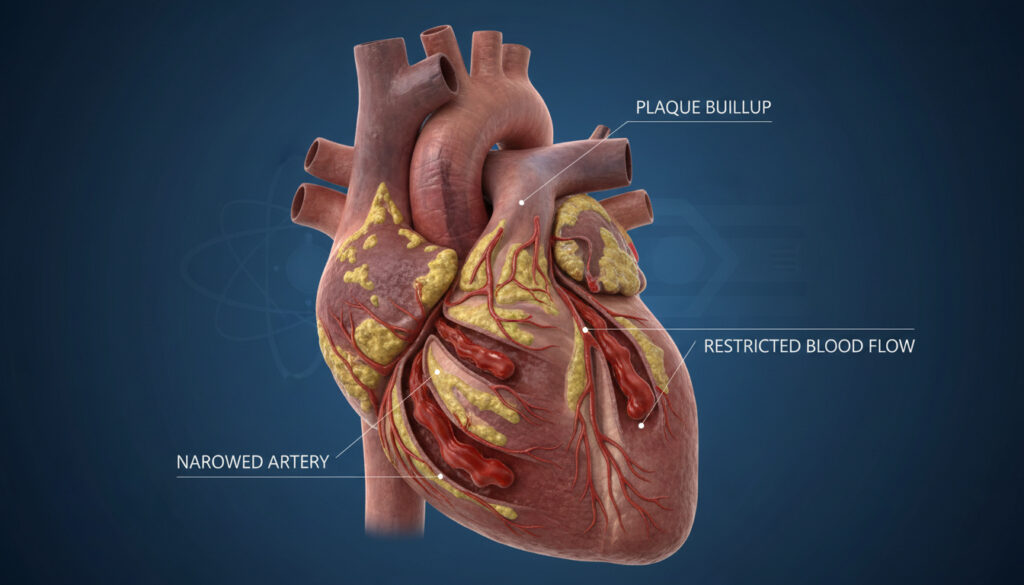
At its core, cardiovascular disease typically involves atherosclerosis—the progressive buildup of plaque within arterial walls. This accumulation of fats, cholesterol, and other substances narrows blood vessels and restricts circulation, potentially leading to life-threatening events. While the terminology often overlaps, distinctions exist between cardiovascular disease and specific conditions like coronary artery disease; the former represents the umbrella category affecting the entire circulatory system, while the latter refers specifically to narrowed arteries supplying the heart muscle.
Understanding the mechanisms, manifestations, and classifications of these conditions remains essential for both medical professionals and patients. The World Heart Federation and World Health Organization classify these disorders based on anatomical involvement and pathological processes, providing frameworks for clinical assessment and management.
What Causes Cardiovascular Disease?
Primary Mechanism
Atherosclerosis drives most cardiovascular pathology through plaque accumulation along arterial walls.
Affected Systems
Pathology involves both cardiac muscle and systemic blood vessels including arteries and veins.
Common Result
Narrowed vessels restrict oxygen-rich blood flow to vital organs and tissues.
Clinical Outcome
Progression leads to angina, myocardial infarction, or cerebrovascular events.
Key Insights
- Atherosclerosis serves as the primary underlying cause for most cardiovascular disease types, involving plaque buildup that narrows arterial passages.
- Plaque consists of fats, cholesterol, and other substances that accumulate specifically along arterial walls, reducing blood flow.
- Cardiovascular disease encompasses both heart and blood vessel disorders, creating a broad diagnostic category.
- Coronary artery disease represents the most common specific type in the United States, accounting for significant cardiovascular morbidity.
- Conditions such as type 2 diabetes or hypertension may initially present without symptoms, delaying diagnosis.
- The first clinical manifestation may be an acute event such as heart attack or stroke rather than gradual symptom onset.
- Pathological changes affect arteries supplying various body regions including the brain, lower extremities, and heart muscle.
| Pathological Factor | Description | Primary Manifestation |
|---|---|---|
| Atherosclerosis | Plaque buildup in arterial walls | Narrowed arteries, restricted flow |
| Coronary Artery Disease | Plaque accumulation in heart arteries | Angina, myocardial infarction |
| Cerebrovascular Disease | Blood vessel compromise in brain | Stroke, transient ischemic attack |
| Peripheral Artery Disease | Fat buildup in leg/foot arteries | Lower extremity pain, cramping |
| Heart Failure | Inability to pump or relax normally | Dyspnea, fatigue, fluid retention |
| Arrhythmia | Electrical conduction dysfunction | Irregular heartbeat, palpitations |
| Cardiomyopathy | Diseased heart muscle tissue | Dilated or hypertrophic remodeling |
| Valve Disease | Structural valvular compromise | Regurgitation or stenosis |
According to the Mayo Clinic, atherosclerosis represents the primary underlying cause of many CVD types. The National Library of Medicine confirms that plaque buildup leads to heart attacks, chest pain, and strokes. The Centers for Disease Control and Prevention identifies coronary artery disease as the most common heart disease type in the United States.
What Are the Symptoms of Cardiovascular Disease?
Common Warning Signs
Symptomatology varies significantly by condition type and severity. Patients frequently report chest pain, pressure, heaviness, or discomfort known as angina, sometimes described as a belt around the chest or weight on the chest. Shortness of breath, particularly during activity or at rest, affects many individuals with compromised cardiac function.
Additional manifestations include pain or discomfort radiating to the arms, neck, shoulder, jaw, upper back, or abdomen. Profound fatigue, dizziness, lightheadedness, and fainting episodes frequently accompany cardiovascular compromise. Irregular heartbeats, palpitations, or fluttering sensations indicate electrical conduction disturbances, while swelling in the legs, ankles, feet, hands, or neck veins suggests fluid retention secondary to cardiac dysfunction.
Acute Event Indicators
Heart attack symptoms demand immediate medical attention and include intense chest pain or discomfort, pain in the left arm or jaw, upper back or neck pain, heartburn, nausea or vomiting, extreme fatigue, and difficulty breathing. Stroke presentations involve numbness of the face, arm, or leg—particularly one-sided weakness—confusion, difficulty speaking or understanding, vision problems, walking difficulty, dizziness, loss of balance or coordination, and severe headache without known cause.
Some cardiovascular conditions, particularly hypertension and type 2 diabetes, may present no initial symptoms. For these patients, the first indication of disease might be a heart attack or stroke, underscoring the importance of regular medical screening even in the absence of overt symptoms.
The Cleveland Clinic notes that specific symptoms vary by anatomical involvement. Medical News Today confirms that peripheral artery disease manifests as leg pain, cramping, numbness, weakness, coldness, or non-healing sores.
What Are the Types of Cardiovascular Disease?
Coronary and Arterial Conditions
Coronary artery disease (CAD), also called coronary heart disease (CHD), involves plaque buildup in arteries supplying the heart muscle, accounting for one-third to one-half of CVD cases. Cerebrovascular disease encompasses issues with blood vessels delivering blood to the brain, including stroke and transient ischemic attack. Peripheral artery disease (PAD) results from reduced blood flow to the legs and feet due to arterial fat buildup, while aortic disease affects the body’s largest blood vessel, potentially leading to abdominal aortic aneurysm.
Heart Muscle and Rhythm Disorders
Heart failure describes the inability of the heart to pump or relax normally, sometimes resulting from weakened heart muscle. Arrhythmia involves problems with the heart’s electrical conduction system causing abnormal heart rhythms. Cardiomyopathy refers to diseased heart muscle, including dilated and hypertrophic types that compromise contractile function.
Structural and Congenital Conditions
Valve disease encompasses tightening or leaking in heart valves, disrupting normal blood flow patterns. Pericardial disease involves problems with the heart lining, while congenital heart disease identifies heart issues present from birth. Rheumatic heart disease describes heart damage from rheumatic fever caused by streptococcal bacteria, representing a distinct infectious etiology.
The NHS provides detailed classifications of these conditions. Research published through the National Center for Biotechnology Information confirms CAD prevalence statistics.
How Can Cardiovascular Disease Be Prevented and Treated?
Available research establishes that addressing atherosclerosis—the primary underlying cause—forms the cornerstone of cardiovascular disease management. Specific prevention strategies and treatment protocols require individualized medical evaluation beyond the scope of general research summaries. Healthcare providers typically focus on modifiable factors affecting plaque accumulation and arterial health.
Detailed prevention strategies, risk factor modifications, and treatment protocols require consultation with qualified healthcare providers. The research reviewed does not contain comprehensive guidance on specific therapeutic interventions or lifestyle modification programs.
Patients seeking preventive strategies may benefit from exploring dietary approaches that support cardiovascular health. Understanding blood pressure management provides additional context for arterial health maintenance.
How Does Cardiovascular Disease Progress?
- Initial Plaque Deposition: Atherosclerosis begins with subtle accumulation of fatty deposits, cholesterol, and cellular debris along arterial walls, initially causing minimal flow disturbance.
- Progressive Narrowing: Continued plaque buildup progressively narrows vessel lumens, restricting oxygen-rich blood flow to dependent tissues and organs.
- Symptom Development: As stenosis advances, patients may experience stable symptoms including angina, reduced exercise tolerance, or intermittent claudication depending on affected vascular territories.
- Acute Event Potential: Unstable plaque rupture or thrombotic occlusion may precipitate acute myocardial infarction, ischemic stroke, or critical limb ischemia, representing the most dangerous disease phase.
What Is Known vs. Uncertain About Cardiovascular Disease?
| Established Medical Consensus | Information Requiring Further Verification |
|---|---|
| Atherosclerosis serves as the primary underlying cause | Specific quantitative risk factor prevalence rates |
| Coronary artery disease is the most common US type | Comprehensive demographic mortality statistics |
| Chest pain, dyspnea, and fatigue constitute common symptoms | Prevention protocol efficacy percentages |
| Heart attack and stroke represent acute manifestations | Specific treatment outcome comparisons |
| Some conditions present initially without symptoms | Detailed genetic predisposition markers |
| Ten distinct major disease types are recognized | Economic impact quantification data |
What Is the Broader Significance of Cardiovascular Disease?
Understanding cardiovascular disease requires recognizing its distinction from isolated heart conditions. While coronary artery disease falls under the cardiovascular umbrella, the category encompasses vascular pathology throughout the body—including cerebral, peripheral, and aortic manifestations. This comprehensive scope affects diagnostic approaches, therapeutic strategies, and public health planning.
The pathological process typically begins years before symptom onset, with plaque accumulation representing a gradual, often silent progression. Medical authorities emphasize that the first clinical presentation may be a life-threatening acute event, particularly in conditions like hypertension or diabetes that lack early warning signs. This asymptomatic phase creates significant challenges for early detection and intervention.
What Do Medical Authorities Confirm?
Cardiovascular disease is a broad class of disorders affecting the heart and blood vessels, including conditions like coronary artery disease, stroke, heart failure, and peripheral artery disease.
World Heart Federation / World Health Organization
CVD encompasses problems with the heart or blood vessels that are often caused by atherosclerosis—the buildup of plaque along arterial walls that narrows blood vessels and restricts oxygen-rich blood flow.
Mayo Clinic / MedlinePlus
Heart disease refers to several types of heart conditions, with coronary artery disease being the most common type in the United States.
Centers for Disease Control and Prevention
Key Takeaways on Cardiovascular Disease
Cardiovascular disease comprises a diverse group of disorders affecting the heart and blood vessels, primarily driven by atherosclerotic plaque accumulation. While coronary artery disease represents the most common manifestation in the United States, the category includes cerebrovascular, peripheral, and structural heart conditions. Symptoms range from chest pain and shortness of breath to acute neurological deficits, though some conditions present silently until catastrophic events occur. Patients concerned about cardiovascular health should consult healthcare providers for personalized assessment and explore preventive resources such as heart-healthy dietary guidance.
Frequently Asked Questions
Is cardiovascular disease the same as heart disease?
No. Heart disease refers specifically to conditions affecting the heart itself, while cardiovascular disease encompasses disorders of both the heart and blood vessels throughout the body, including arteries and veins.
What is the difference between cardiovascular disease and coronary artery disease?
Cardiovascular disease is the umbrella term for all heart and blood vessel disorders. Coronary artery disease is a specific type affecting arteries supplying the heart muscle, representing one component of the broader cardiovascular disease spectrum.
Can cardiovascular disease be cured?
Research does not indicate that cardiovascular disease is curable. Management focuses on addressing underlying causes such as atherosclerosis and controlling symptoms through medical intervention.
How is cardiovascular disease diagnosed?
Specific diagnostic protocols are not detailed in available research sources. Medical evaluation typically involves assessment of symptoms, medical history, and various clinical examinations performed by qualified healthcare providers.
At what age does cardiovascular disease typically begin?
Atherosclerotic processes may begin in early adulthood, though clinical symptoms often manifest later in life. Some congenital forms are present at birth. The research does not specify exact age ranges for disease onset.
What is the most common type of cardiovascular disease?
Coronary artery disease represents the most common type in the United States, accounting for one-third to one-half of all cardiovascular disease cases according to clinical literature.
Can you have cardiovascular disease without symptoms?
Yes. Conditions such as hypertension and type 2 diabetes may initially cause no symptoms. The first sign of cardiovascular disease might be a heart attack or stroke.
More related posts
 Olsen Twins: What Happened to Mary-Kate and Ashley
 Tyson Fury: Net Worth, Next Fight, and Gypsy King Legacy
 Sylvania Platinum Share Price: Analy i & Foreca t
 Bridget Jones Films: 4 Movies, Cast Changes & Streaming Guide
 Danny DeVito: Height, Polio Diagnosis, and Personal Life Guide
 Eamonn Holmes: Health, Wealth, and Personal Life Updates
 Nadine Dorries: Nurse, MP, Resignation & New Career
 Joe Hart: Career, Clubs, Net Worth, Height & Retirement