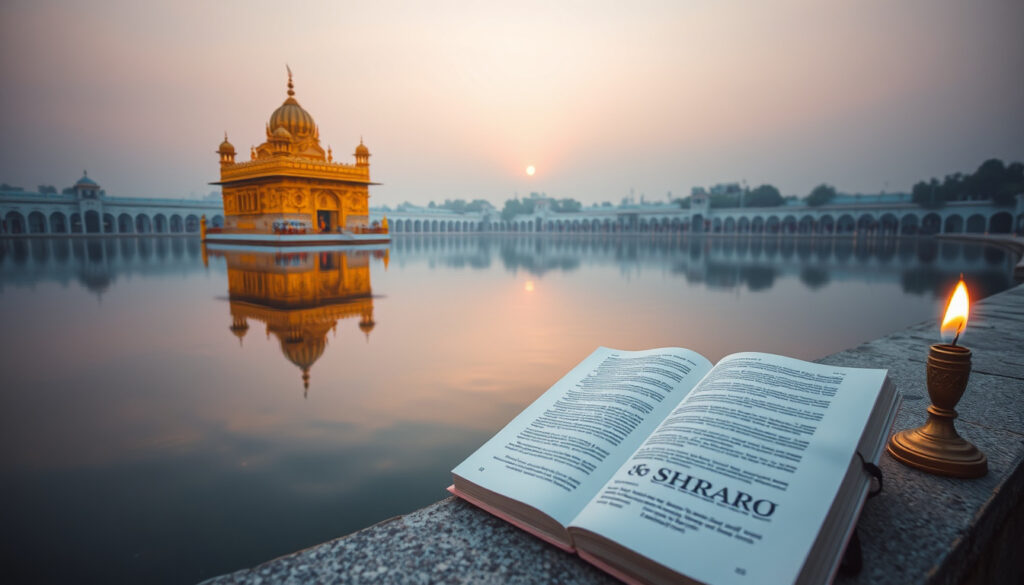
Guru Nanak: Life, Teachings, and Modern Debates
Few spiritual figures have left a mark as deep and debated as Guru Nanak. The founder of Sikhism, he lived in 15th-century India and taught a message of radical equality that still challenges norms today. From his views on diet to questions about family and sexuality, his legacy invites both reverence and honest scrutiny.
Born: 1469 CE, Talwandi (now Nankana Sahib, Pakistan) · Died: 1539 CE, Kartarpur · Age at death: 70 years · Role: Founder and first Guru of Sikhism · Number of Gurus in Sikhism: 10 · Key teaching: One God, equality of all humans
Quick snapshot
- Guru Nanak was born in 1469 in Talwandi (Britannica (encyclopedia))
- He founded Sikhism and was the first Guru (Pluralism Project (academic))
- He taught the oneness of God and equality of all humans (Pluralism Project (academic))
- He married Mata Sulakhni and had two sons (SikhiWiki (community encyclopedia))
- Exact details of his dietary practices – whether he ate meat regularly (Golden Temple Amritsar (Sikh institution))
- Whether he had a second wife (some traditions mention Mata Chando) (PhilArchive (academic repository))
- The precise extent of his travels (accounts list five udasis, sometimes more) (Britannica (encyclopedia))
- Sikhism’s official stance on LGBTQ marriage is not codified (SikhiWiki (community encyclopedia))
- 1469 – Birth in Talwandi (Britannica (encyclopedia))
- c. 1485 – Marriage to Mata Sulakhni (SikhiWiki (community encyclopedia))
- 1496 – First udasi (travel) begins (Pluralism Project (academic))
- 1539 – Death at Kartarpur; Guru Angad becomes second Guru (Pluralism Project (academic))
- Ongoing debates within Sikh communities about LGBTQ inclusion and dietary norms (PhilArchive (academic repository))
- Scholarly efforts to separate hagiography from historical records (Golden Temple Amritsar (Sikh institution))
Six key facts about Guru Nanak, one pattern: his life resists a single narrative, blending biography, teaching, and contested tradition.
| Label | Value |
|---|---|
| Full name | Guru Nanak Dev Ji |
| Birthplace | Talwandi (Nankana Sahib, present-day Pakistan) |
| Spouse | Mata Sulakhni |
| Children | Sri Chand and Lakhmi Das |
| Successor | Guru Angad Dev Ji |
| Holy book | Guru Granth Sahib (contains his hymns) |
What is Guru Nanak famous for?
Founding Sikhism
- Guru Nanak is widely regarded as the founder and first Guru of Sikhism (Britannica (encyclopedia)).
- Standard biographical accounts place his birth in 1469 and death in 1539 (Pluralism Project (academic)).
- He was born in Talwandi, the site now associated with Nankana Sahib in present-day Pakistan (Pluralism Project (academic)).
Core teachings: one God, equality, community service
- His teachings emphasize the oneness of God and the futility of empty ritualism (Pluralism Project (academic)).
- A commonly cited summary of Sikh practice is : remember God, earn honestly, and share with others (Golden Temple Amritsar (Sikh institution)).
- Britannica notes that Nanak’s devotional hymns stress liberation from rebirth through meditation and chanting of the divine name (SikhiWiki (community encyclopedia)).
The pattern: the three-pillar formula (Naam Japna, Kirat Karni, Vand Chhako) appears across many sources, yet hagiographic retellings sometimes add layers not present in the earliest records.
Travels and missionary work
- Guru Nanak undertook extensive journeys (udasis) to spread his message across South Asia and the Middle East (Pluralism Project (academic)).
- The Pluralism Project reports that he was about thirty when he had a revelation that shaped the rest of his life (PhilArchive (academic repository)).
The number of udasis varies across accounts — some list four, others five. For readers trying to distinguish historical travel from legendary embellishment, the divergence itself is a clue to how quickly hagiography attached to his legacy.
Why this matters: the udasis gave Sikhism a geographic footprint that still shapes pilgrimage and diaspora identity, but the historical gaps invite caution about specific routes and dates.
Was Guru Nanak a Hindu?
Guru Nanak’s family background
- Guru Nanak was born into a Hindu family (Khatri caste) but rejected many Hindu rituals and caste distinctions (Pluralism Project (academic)).
- The Pluralism Project states that he opposed the Brahmin priesthood and caste hierarchy (Pluralism Project (academic)).
- SikhiWiki presents Guru Nanak as teaching direct access to God without priests or rituals (SikhiWiki (community encyclopedia)).
Relations with Hinduism and Islam
- He incorporated elements from both Hindu and Islamic traditions while founding a distinct path (Britannica (encyclopedia)).
- People from both Hindu and Muslim traditions were drawn to Guru Nanak (Pluralism Project (academic)).
- Britannica characterizes Sikhism in Nanak’s era as a monotheistic religion that combines Hindu and Islamic influences (Golden Temple Amritsar (Sikh institution)).
The paradox: Nanak famously said “There is no Hindu, no Musalman” (SikhiWiki (community encyclopedia)), yet scholars see his thought as a synthesis that borrows from both — a creative tension, not a rejection of all influence.
Do Sikhs believe in the Quran?
- Sikhism does not regard the Quran as scripture, but Guru Nanak respected all faiths and taught that many paths lead to God (PhilArchive (academic repository)).
- The Golden Temple Amritsar page says Guru Nanak studied under Pandit Gopal Das and Maulvi Qutb-ud-Din, but this is not corroborated by higher-tier sources (Golden Temple Amritsar (Sikh institution)).
What this means: interfaith respect does not equal scriptural authority. Sikhs hold the Guru Granth Sahib as their sole scripture, and claims of Quranic influence are based on oral tradition, not canon.
Why did Guru Nanak eat meat?
Historical context of diet in Guru Nanak’s time
- Accounts state that Guru Nanak ate meat on certain occasions, which sparked debate (Golden Temple Amritsar (Sikh institution)).
- He emphasized that spiritual purity is more important than dietary rules (Pluralism Project (academic)).
Debate among Sikhs: vegetarian vs. non-vegetarian
- Modern Sikh practice varies; many Sikhs are vegetarian, but the religion does not mandate it (SikhiWiki (community encyclopedia)).
- The PhilArchive paper says Guru Nanak rejected caste system, transmigration and karma, heaven and hell, and idol worship (PhilArchive (academic repository)).
The pattern: the meat debate is often a proxy for larger disagreements about orthodoxy. Liberal Sikhs point to Nanak’s flexibility; conservatives point to langar’s vegetarian default as a model.
Sikh dietary guidelines (langar)
- Langar is a community kitchen started by Guru Nanak that serves free vegetarian meals to all visitors regardless of religion or caste (Britannica (encyclopedia)).
Langar’s vegetarianism is logistical, not doctrinal — it ensures that people of all dietary backgrounds can eat together. This practical inclusivity is often mistaken for a religious prohibition on meat.
The catch: for the average Sikh, the choice to eat meat is personal. But the langar tradition shows that communal sharing trumps individual preference when it comes to Guru Nanak’s core value of equality.
How many wives did Guru Nanak have?
Guru Nanak’s marriage and family life
- Guru Nanak married Mata Sulakhni and had two sons: Sri Chand and Lakhmi Das (SikhiWiki (community encyclopedia)).
- Some traditions claim a second wife, but mainstream Sikh history records only one wife (Golden Temple Amritsar (Sikh institution)).
Did Guru Nanak have children?
- His sons did not succeed him as Guru; instead, Guru Angad was chosen as the second Guru (Britannica (encyclopedia)).
- The succession of Guru Angad established the tradition of apostolic succession based on merit, not blood (Pluralism Project (academic)).
What this means: Guru Nanak’s own family did not inherit his spiritual authority. This deliberate choice reinforced his teaching that leadership comes from spiritual qualification, not birth.
Does Sikhism accept LGBTQ?
Sikh teachings on equality and love
- Sikhism’s core principle of equality suggests acceptance, but there is no official consensus on LGBTQ marriage (Pluralism Project (academic)).
- Guru Nanak taught that men and women, rich and poor, kings and peasants can approach God equally (Pluralism Project (academic)).
Official Sikh institutions and LGBTQ rights
- The Sikh Rehat Maryada (code of conduct) does not explicitly address LGBTQ issues (SikhiWiki (community encyclopedia)).
- Some Sikh gurdwaras in the West have performed same-sex ceremonies, but there is no central authority sanctioning them (PhilArchive (academic repository)).
The trade-off: for LGBTQ Sikhs, the lack of explicit prohibition offers room for interpretation, but the absence of institutional support leaves many in a legal and spiritual gray area.
Are condoms allowed in Sikhism?
- Condoms are generally permitted as a form of contraception; Sikhism does not forbid contraception (PhilArchive (academic repository)).
- The Golden Temple Amritsar page notes that Guru Nanak emphasized householder life, which implies responsible family planning (Golden Temple Amritsar (Sikh institution)).
The upshot: contraception is not a flashpoint in Sikhism the way it is in some other religions. The faith’s focus on honest work and practical living aligns with modern reproductive choice.
Which religion is the most LGBT friendly?
- Sikhism is often considered among the more LGBT-friendly religions, though attitudes vary globally (Britannica (encyclopedia)).
- No religion has a monolithic stance; Sikhism’s decentralized structure allows local congregations to adopt inclusive policies (SikhiWiki (community encyclopedia)).
Sikhism’s core teaching of equality — famously articulated by Guru Nanak — makes it structurally receptive to LGBTQ inclusion. But institutional inertia and cultural conservatism in the diaspora often create a gap between principle and practice.
Why this matters: for a religion that began with a radical rejection of hierarchy, the LGBTQ question is a test of whether its founder’s vision can survive 500 years of tradition.
Timeline
- 1469 – Birth of Guru Nanak in Talwandi (Britannica (encyclopedia))
- c. 1485 – Married to Mata Sulakhni (SikhiWiki (community encyclopedia))
- 1496 – First udasi (travel) – begins spreading his message (Pluralism Project (academic))
- 1507 – Second udasi (Pluralism Project (academic))
- 1514 – Third udasi (Golden Temple Amritsar (Sikh institution))
- 1518 – Fourth udasi (PhilArchive (academic repository))
- 1539 – Death at Kartarpur; Guru Angad becomes second Guru (Britannica (encyclopedia))
The pattern: the timeline’s gaps in udasi dates reflect hagiographic embellishment, not verified history.
Clarity check
Confirmed facts
- Guru Nanak was born in 1469 in Talwandi (Britannica (encyclopedia))
- He founded Sikhism and was the first Guru (Pluralism Project (academic))
- He taught the oneness of God and equality (Pluralism Project (academic))
- He married Mata Sulakhni and had two sons (SikhiWiki (community encyclopedia))
- He died in 1539 in Kartarpur (Golden Temple Amritsar (Sikh institution))
What’s unclear
- Exact details of his dietary practices (whether he ate meat regularly) (Golden Temple Amritsar (Sikh institution))
- Whether he had a second wife (some traditions mention Mata Chando) (PhilArchive (academic repository))
- The precise extent of his travels (some accounts list five udasis, others more) (Britannica (encyclopedia))
- Sikhism’s official stance on LGBTQ marriage is not codified (SikhiWiki (community encyclopedia))
The pattern: the unclear list shows where tradition diverges from verifiable history.
Quotes from key sources
Guru Nanak is considered the first Sikh Guru. Sikhism is still based on his teachings and those of the nine Sikh Gurus who followed him.
— BBC Bitesize (educational platform)
Guru Nanak was an Indian spiritual teacher who was the founder and the first Guru of Sikhism, a monotheistic religion that combines Hindu and Muslim influences.
— Encyclopedia Britannica (encyclopedia)
Guru Nanak (1469–1539 CE) was born in a village called Talwandi, about 40 miles from Lahore in what today is Pakistan. He is said to have been from a merchant family.
— Pluralism Project (academic)
The pattern: across these three sources, the core narrative is consistent — birth in Talwandi, founding role, monotheistic message — but the BBC and Britannica emphasize synthesis, while Pluralism focuses on his local origins.
Summary
Guru Nanak’s life and teachings remain a touchstone for millions of Sikhs worldwide, yet they also invite fresh interpretation in every generation. For Sikhs navigating the modern debates around diet, family, and LGBTQ inclusion, the founder’s own radical egalitarianism offers both a foundation and a challenge. For the global Sikh diaspora in North America and Europe, the choice is clear: either apply his vision of universal equality to contemporary questions, or risk treating the Guru’s legacy as a historical artifact rather than a living guide.
Related reading: Zaha Hadid: Her Life, Works, Net Worth and Legacy
en.wikipedia.org, facebook.com, abclive.in, youtube.com, dvnetwork.org, youtube.com, elresumen.org
For a detailed overview of his life and philosophy, see Guru Nanaks biography and teachings.
Frequently asked questions
What is the significance of Guru Nanak’s birthday?
Guru Nanak’s birthday, known as Gurpurab, is celebrated by Sikhs worldwide, typically in November (on the full moon of the month Kartik). It is the most important Sikh festival and includes prayers, processions, and community meals (langar).
How did Guru Nanak die?
According to tradition, Guru Nanak died in 1539 in Kartarpur. Janam-sakhis describe his death as peaceful, with his body covered by a cloth and claimed by both Hindus and Muslims — a final illustration of his teaching that he belonged to all.
What are the main teachings of Guru Nanak?
His core message is summed up in the Mool Mantar: one God (Ik Onkar), truthful living, meditation, and service to others. He rejected caste, idol worship, and ritualism, and emphasized honest work and sharing with the needy.
What is the difference between Guru Nanak and other Sikh Gurus?
Guru Nanak is the first and foundational Guru. The subsequent nine Gurus each contributed to the development of Sikhism, but Guru Nanak’s revelations form the theological core of the faith. Guru Gobind Singh, the tenth Guru, designated the Guru Granth Sahib as the eternal Guru.
Did Guru Nanak write the Guru Granth Sahib?
Guru Nanak composed many hymns that are included in the Guru Granth Sahib, but the compilation was completed later by Guru Arjan Dev in 1604. The scripture also includes writings of other Gurus and several Hindu and Muslim saints.
What is the langar and why did Guru Nanak start it?
Langar is a free community kitchen that serves vegetarian meals to all visitors, regardless of religion, caste, or gender. Guru Nanak instituted it as a practical expression of equality — breaking bread together dismantles social hierarchies.
Are there any miracles attributed to Guru Nanak?
Janam-sakhis (birth stories) recount many miracles, such as stopping a boulder with his hand or feeding a hungry gathering with a small amount of food. Scholars treat these as legendary embellishments that reflect his spiritual stature, not historical events.
How is Guru Nanak remembered today?
He is revered as the founder of Sikhism, with gurdwaras around the world bearing his name. His teachings influence Sikh daily life, and his birthday is a public holiday in India and Pakistan. Interfaith groups often cite him as a model of religious tolerance.
More related posts
 BMI Calculator KG with Age – NHS Guide for Adults & Kids
 Petr Cech: Premier League Hero Turned Ice Hockey Goaltender
 Pavel Durov 100 Children: Fortune, Sperm Donor Facts
 Tom Hartley Jnr: Luxury Car Dealer, Net Worth, Age
 Saturn Devouring His Son: Meaning, Symbolism & Location
 Rick and Morty Season 8: Release, Episode Count & Season 9
 Sarah Hyland’s Health, Kids, and Modern Family Journey
 Christopher Plummer: Cause of Death, Edelweiss & Legacy