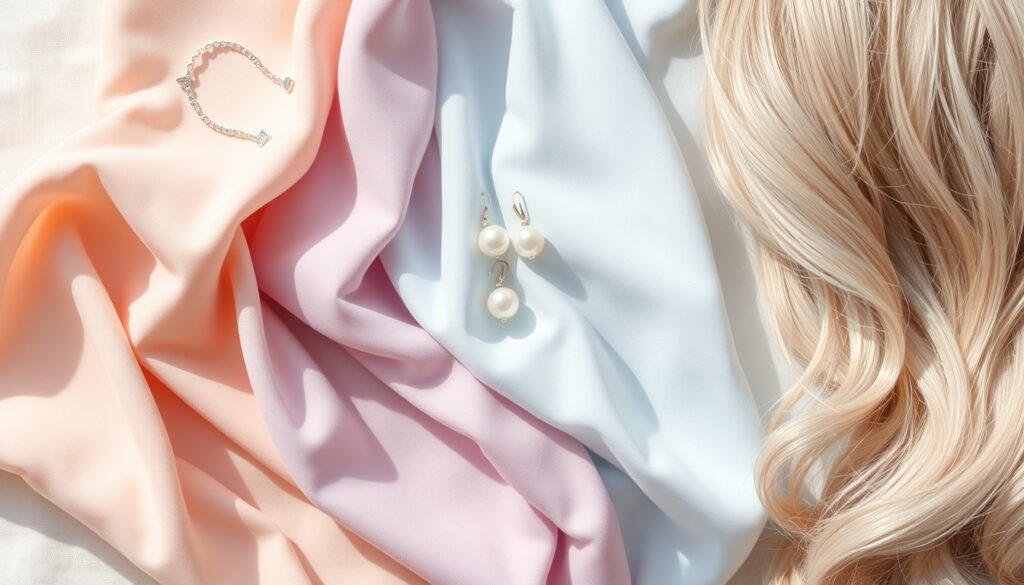
True Summer Color Palette: Guide to Colors, Jewelry & Hair
If you’ve ever tried on a soft blue sweater and wondered why it made your skin glow while a peach blouse dulled it, you’ve already touched the logic of seasonal color analysis. True Summer is that cool, muted palette that sits at the pure cool end of the 12‑season system — and once you know its rules, dressing becomes a lot more intentional.
Position in 12‑season system: Core cool season between Light Summer and Soft Summer ·
Skin undertone: Cool (pink or bluish) ·
Best metal: Silver or platinum ·
Worst metal: Yellow gold ·
Typical eye colors: Blue, green, grey, or greyish‑blue ·
Typical natural hair colors: Ash blonde, ash brown, or light cool brown
Quick snapshot
- True Summer is cool and muted, with colors that are gentle rather than bright or dark (Susan Padron Stylist (seasonal color analysis specialist))
- Silver is the most flattering metal for True Summers (Curate Your Style London (colour analysis retailer))
- Whether Cool Summer is exactly synonymous with True Summer in all 12‑season systems (Curate Your Style London — colour analysis retailer)
- Exact boundaries of ‘too light’ or ‘too soft’ for True Summer vs. its sub‑seasons (uncertain, varies by system)
- Veins appear blue or purple, not green (The Concept Wardrobe (comprehensive color analysis guide))
- Natural hair is ashy with no red or golden tones (The Concept Wardrobe — comprehensive color analysis guide) (The Concept Wardrobe (comprehensive color analysis guide))
- Use a draping test with True Summer vs. Soft Summer vs. Cool Winter to confirm your season (Gabrielle Arruda (seasonal color analysis educator))
- Swap yellow gold accessories for silver or platinum immediately (Gabrielle Arruda (seasonal color analysis educator))
| Attribute | True Summer |
|---|---|
| Season type | Cool |
| Position | Between Light Summer and Soft Summer |
| Typical eye colors | Blue, green, grey, greyish‑blue |
| Typical natural hair colors | Ash blonde, ash brown, light cool brown |
| Best metal | Silver, platinum, white gold |
| Worst metal | Yellow gold, brass, copper |
What colors should true summer wear?
Cool pastels and muted tones
True Summer colors are cool, muted, and medium‑light in value. According to Susan Padron Stylist (seasonal color analysis specialist), the palette includes cool blues, pure greys, soft pinks, lavender, soft navy, and icy pastels with a blue or pink tinge. These shades never shout — they sit gently on the skin because they share the same cool, greyed‑down quality that True Summer skin has.
Raspberry, rose, and lavender shades
The Concept Wardrobe (comprehensive color analysis guide) highlights that blues, turquoises, and greys feature heavily in the True Summer palette. Raspberry tones that lean blue rather than orange, muted rose, and lavender are all winners. The common thread: every color has a visible blue or pink undertone and low saturation — nothing bright, nothing neon.
Soft blues, periwinkle, and mint green
Periwinkle and mint green work because they are cool and soft. Soul of Color (color analysis blog) notes that True Summers appear more harmonious when wearing rose, slate blue, soft navy, and cool mauve. These aren’t the bright blues of Spring or the deep navies of Winter — they are muted, medium‑light versions.
Colors to avoid: warm, bright, and dark hues
The True Summer palette deliberately avoids warm and bright colours. Curate Your Style London (colour analysis retailer) explicitly warns that orange, peach, warm yellow, tomato red, and black should be avoided because they clash with the cool, muted undertone. Black is too harsh; True Summer needs soft navy or medium grey instead.
A True Summer wearing black looks tired; the same person in soft navy looks fresh. The difference is the cool, muted factor — and it’s why this palette is so specific.
The implication: Colors should never appear warm, overly bright, or very dark. If a color has a visible yellow or orange base, it belongs to another season.
How do you know if you are a true summer?
Skin undertone test (vein, white paper, and silver/gold test)
Start with the vein test: True Summers have blue or purple veins, not green. According to The Concept Wardrobe (comprehensive color analysis guide), true summers have cool, blue‑leaning undertones. The white paper test: hold a plain white sheet next to your face — if your skin looks pinkish or rosy next to the white, you’re cool. Finally, the silver/gold test: silver jewelry will make your skin look brighter, while yellow gold will make it look sallow.
Natural hair and eye color characteristics
True Summer hair is cool and ashy — never red, warm, or golden. The Concept Wardrobe states that True Summer natural hair can range from dark blonde to dark brown, but is defined by an absence of brightness and ashy, muted quality. Eyes are typically blue, green, grey, or greyish‑blue, and they often have a soft, hazy appearance rather than the piercing clarity of Winter.
How your skin reacts to the sun
True Summers tend to burn before tanning and rarely tan deeply. This is consistent with their cool, pinkish undertone. According to Gabrielle Arruda (seasonal color analysis educator), True Summer has light, medium, and some medium‑dark values, but not the depth of Winter — and the skin’s reaction to sun mirrors that medium‑light value range.
Step-by-step self‑diagnosis checklist
- Vein check: Look at the inside of your wrist in natural light. Blue or purple = cool. Green = warm.
- White paper test: Hold a piece of white printer paper next to your face. If your skin looks pink, you’re cool. Yellow = warm.
- Metal test: Hold a silver earring next to one ear and a yellow gold one next to the other. Which makes your skin look clearer and brighter? Silver win = cool.
- Hair check: Is your natural hair ashy with no red or gold streaks? Ash blonde, ash brown, or cool brown = True Summer candidate.
- Draping test: Hold a warm peach fabric next to your face, then a soft icy pink. If the pink looks better, you’re likely a True Summer. Gabrielle Arruda (seasonal color analysis educator) recommends this as the final confirmation.
The draping test alone can mislead if the lighting is warm. Always do all four steps in natural daylight for the most accurate read.
What this means: If you check three or more boxes above, you are likely a True Summer. The step‑by‑step method removes guesswork and gives you a repeatable diagnostic.
Should a true summer wear gold or silver?
Silver and platinum: the ideal choices
Silver is unequivocally the most flattering metal for True Summers. Curate Your Style London (colour analysis retailer) states that True Summer is defined by cool undertones and elegant muted colours, and silver reflects those same qualities. Platinum and white gold are safe alternatives because they have the same cool, neutral base.
When white gold or very pale rose gold can work
White gold is essentially silver in appearance, so it works. Very pale rose gold — sometimes called blush gold — can be acceptable if the rose tint is barely there and the metal reads as cool overall. According to Curate Your Style London (colour analysis retailer), the rule is: if the metal looks warm or yellow, it’s wrong.
Why yellow gold is generally not recommended
Yellow gold clashes with True Summer’s cool undertones. The warmth of gold pulls out any yellow in the skin and makes a True Summer look sallow or tired. Gabrielle Arruda (seasonal color analysis educator) notes that True Summer sits on the purely cool end of the spectrum — yellow gold has no place there.
Metal finishes to avoid (antique, brassy)
Brass, copper, bronze, and any antique gold finish with a yellowish overtone should be avoided. Even white metals with a matte brass finish can introduce unwanted warmth. Stick to shiny polished silver, platinum, or white gold for a consistently cool look.
The pattern: Metal choice is a binary — silver works, gold fails. For True Summers, that’s actually easier than it sounds because it eliminates half the shopping options instantly.
Is true summer different to cool summer?
True Summer in the 12‑season system
The Concept Wardrobe (comprehensive color analysis guide) describes True Summer as the coolest end of Summer, with colours that are cool, muted, and gentle. True Summer is considered the core cool season, balanced between Light Summer (lighter and slightly softer) and Soft Summer (more muted and greyer). It is purely cool, not leaning toward warm or neutral.
Cool Summer as a subset or synonym
Some systems use “Cool Summer” interchangeably with True Summer. Curate Your Style London (colour analysis retailer) calls True Summer also Cool Summer by some practitioners. However, in many 12‑season systems, Cool Summer is treated as a separate sub‑season that is still cool but slightly less so than True Summer, allowing for a tiny bit more warmth in the palette.
Two colors, one difference: the table below shows how they compare.
| Aspect | True Summer | Cool Summer |
|---|---|---|
| Undertone | Purely cool (blue‑based) | Cool but can allow a touch of neutral |
| Lightness | Medium‑light range | Similar, but can go a shade lighter |
| Chroma (saturation) | Muted, not bright | Slightly brighter in some systems |
| Sub‑season position | Core cool between Light and Soft | Sometimes considered a separate sub‑season |
| Jewelry rule | Silver, never yellow gold | Same, but occasionally pale rose gold allowed |
Key differences in lightness and softness
Gabrielle Arruda (seasonal color analysis educator) clarifies that True Summer is more muted in chroma and not bright, while Cool Summer may be allowed a slightly higher saturation in some systems. The practical difference is subtle — most people who identify as True Summer will find that Cool Summer’s slightly brighter pinks or purples still work, but the safest bet is to stick with the true cool‑muted palette.
The trade‑off: If you see two different systems labelling you differently, don’t worry — the difference is academic. What matters is that your personal palette avoids warm, bright, and very dark colours.
What is the best hair color for a true summer?
Natural ash and cool tones that suit true summers
The Concept Wardrobe (comprehensive color analysis guide) states that True Summer hair is cool and ashy — never red, warm, or golden. Natural ash blonde, ash brown, and cool light brown are the most flattering shades. If your natural hair is dishwater blonde or a mousy brown with no warmth, you’re already in the right zone.
Recommended hair dye colors (ash blonde, ash brown, cool light brown)
When dyeing, stick to colours with a cool or ash base. Soul of Color (color analysis blog) recommends cool hair colours such as ash blonde, light brown, or cool grey for the True Summer spectrum. White blonde can also work if it is a true cool white, not a warm ivory. Avoid any dye with “golden”, “honey”, or “copper” in its name.
Balayage and highlights with cool undertones
Highlights should be cool and muted — think icy blonde or pearl, not sunny blonde. Balayage can work if the placement is soft and the colours are ashy. Gabrielle Arruda (seasonal color analysis educator) advises that True Summer has medium contrast, so highlights that are too bright or high‑contrast will overpower the natural harmony.
Hair colors to avoid: warm gold, copper, and red shades
Warm golden blonde, copper, auburn, and any red with orange tones will clash painfully against True Summer’s cool skin. The Concept Wardrobe specifically warns against warm gold and red shades. Even a hint of warmth in the hair can make a True Summer look unbalanced, because the skin and hair are both cool‑muted — any warmth stands out as a foreign colour.
Why this matters: Hair is the most visible colour you wear. For a True Summer, getting the tone wrong means the whole look falls apart. But get it right — ash, cool, muted — and the effect is effortless elegance.
“Emily is a True Summer… softer, medium-light colors like shell pink, wisteria, mint green, or steel blue? Then maybe summer is a better fit.”
“True Summer is the original Summer season in the four seasons colour analysis and sits between Light Summer and Soft Summer on the seasonal flow chart.”
— The Concept Wardrobe (comprehensive color analysis guide)
For those who find the true summer palette too muted, the soft summer palette guide offers a slightly softer, more neutral alternative.
Frequently asked questions
What is the difference between true summer and soft summer?
Soft Summer is more muted and can handle slightly warmer, greyer colours. True Summer is cooler and stays in the medium‑light value range. Soft Summer has lower contrast and sits adjacent to Autumn, while True Summer is purely cool.
Can true summers wear black?
True Summers should avoid black because it is too dark and harsh. Black belongs to Winter. A better alternative is soft navy, charcoal grey, or a very dark cool brown.
True summer vs light summer – what’s the difference?
Light Summer is lighter and slightly warmer than True Summer. Light Summer can borrow some pastels from Spring, while True Summer stays strictly cool and muted. Light Summer also allows white gold more readily than True Summer.
What makeup foundation suits a true summer?
Choose a foundation with a pink or neutral‑cool undertone. Avoid yellow‑based foundations. Look for labels that say “cool”, “rosy”, or “neutral cool”. Test on your jawline in natural light to confirm it matches.
Are true summers considered cool or warm?
True Summers are cool. They are the coolest of the Summer sub‑seasons, with blue‑based undertones and no warmth in their natural coloring.
What are the best true summer lip colors?
Soft rose, dusty pink, mauve, and cool berry are ideal. Avoid orange, brick red, bright coral, or brown‑based nudes. The lip colour should be muted and cool, never bright or warm.
Can true summers occasionally wear warm colors?
True Summers can wear very pale, cool versions of warm colours — for example, a pastel yellow that leans green rather than orange — but full strength warm colours should be avoided. The contrast is too jarring.
For someone who has been wearing the wrong colors for years, discovering you are a True Summer is a revelation. The choice is simple: stick with cool, muted, medium‑light shades, silver or platinum jewelry, and ash‑based hair colours. For the woman in Dublin or Cork buying a new wardrobe, the implication is clear: invest in a soft navy blazer and a silver necklace, and skip the yellow gold and black — your skin will thank you.
More related posts
 How to Earn Money Online: 5 Legit Ways (No Investment)
 Matt Weston: Double Olympic Skeleton Champion & £1m Bonus
 Cash ISA Rachel Reeves – Allowance Cut Explained
 Charli XCX Biography: Age, Height, Ethnicity, and FAQs
 Amber Midthunder: Ethnicity, Age, Net Worth, and Most Famous Role
 Tyres for My Car: Compare Prices & Retailers in Ireland
 Catherine Connolly: Party, Family, Religion & Presidency
 Robin van Persie: Career, Stats, Managerial Role & Personal Life