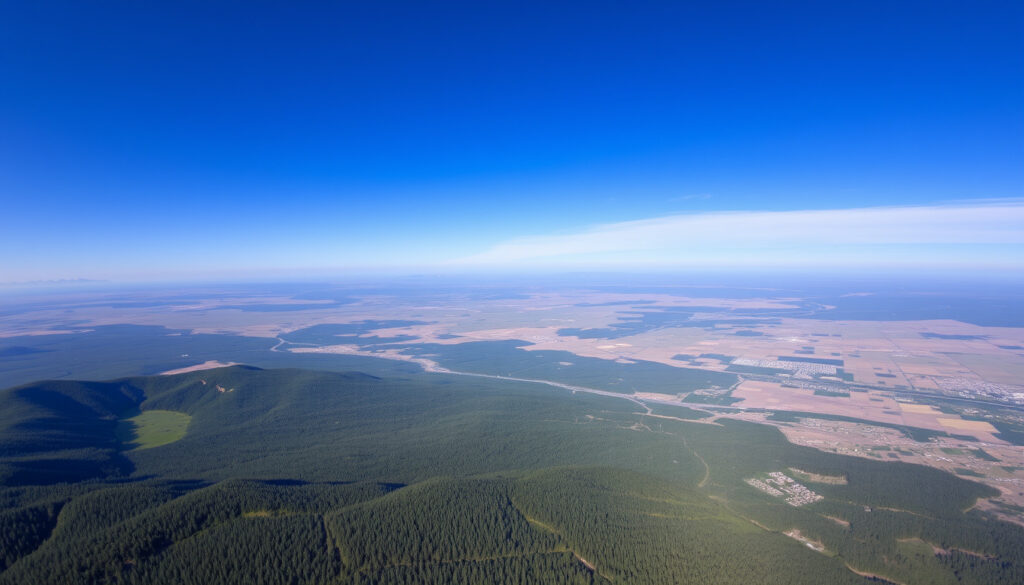
Largest Country in the World – Area vs Population Facts
When measuring nations by physical size, one country stands apart from all others. Russia spans an extraordinary stretch of northern Eurasia, claiming the title of the world’s largest nation by total land area. Yet when examining population rather than territory, a different hierarchy emerges entirely, with a densely packed South Asian giant now at the summit.
Understanding what makes a country “largest” requires distinguishing between these two fundamentally different measurements. A nation may dominate by territorial expanse while remaining sparsely populated, while another may cover a fraction of the land yet house a substantial portion of humanity.
This distinction shapes how geographers, policymakers, and everyday readers interpret global rankings. The numbers behind these rankings originate from standardized international sources, though some territorial disputes introduce unavoidable complexities.
What is the Largest Country in the World by Land Area?
Russia holds the distinction of being the world’s largest country by total area, encompassing approximately 17.1 million square kilometers. This figure represents roughly 11 percent of Earth’s entire landmass, making Russia nearly twice the size of Canada, which ranks second. The country stretches across eleven time zones, bridging Europe and Asia in a vast territory that includes tundra, forest, and steppe regions.
Land Area: Russia, 17,098,242 km², ~11% of Earth’s land surface
Population: India, ~1.43 billion (2024), recently surpassed China
Area Rankings: Russia leads by area; India leads by population
Geographical Span: Russia spans 11 time zones across two continents
The question of whether Russia is definitively the largest country in the world depends entirely on which territorial measurements are accepted. Russia’s claimed area includes Crimea, the peninsula annexed in 2014. International bodies, including the United Nations Statistics Division, often exclude this disputed territory from their calculations, which could narrow the gap between Russia and Canada in certain rankings.
- Russia spans 11 time zones, from Kaliningrad to the Bering Strait
- Siberia alone contains more territory than the entire country of Canada
- Russia’s vast expanse creates extreme population density variations
- The country’s northern latitudes include largely uninhabited tundra
- Canada ranks second but covers approximately 10 million square kilometers
- Russia’s territory encompasses climate zones from arctic to subtropical
- The country shares land borders with 16 other nations
| Rank | Country | Total Area (km²) | Continent | Notes |
|---|---|---|---|---|
| 1 | Russia | 17,098,242 | Europe/Asia | Spans two continents |
| 2 | Canada | 9,984,670 | North America | Largest in the Americas |
| 3 | United States | 9,372,610 | North America | Includes Alaska and territories |
| 4 | China | 9,596,960 | Asia | Largest nation entirely in Asia |
| 5 | Brazil | 8,515,767 | South America | Largest in South America |
Which Country Has the Largest Population?
A dramatic shift occurred in 2023 when India overtook China to become the world’s most populous nation. With approximately 1.43 billion people as of 2024 estimates, India now leads this particular ranking. China, which held the top position for decades, now sits at around 1.41 to 1.425 billion residents. This transition marks one of the most significant demographic changes in recent global history.
Population Distribution Among Major Nations
The relationship between territorial size and population reveals striking patterns. India, ranking seventh globally by land area, houses roughly 1.43 billion people—a density that contrasts sharply with the vast, sparsely populated territories of Russia and Canada. Meanwhile, Russia, despite being the world’s largest nation by area, maintains a population of only approximately 145 million.
India’s population density approaches 435 people per square kilometer, far exceeding the sparse figures in Russia (~8.5/km²) or Canada (~4/km²). These disparities highlight how land area alone fails to capture a nation’s human geography.
Population estimates carry inherent uncertainty. Different agencies and methodologies can produce variations of several million, and figures fluctuate continuously through births, deaths, and migration. The United Nations Population Division and national census bureaus both contribute to these ongoing calculations.
Why Does Population Size Matter?
Population rankings carry significant implications for global economics, politics, and resource allocation. Nations with larger populations represent substantial consumer markets and labor pools. India’s ascent to the top of the population ranking reflects its growing influence in international affairs and global economic projections.
What Are the 10 Largest Countries in the World?
The definitive ranking of the world’s largest nations by land area remains remarkably consistent across major sources, including the CIA World Factbook and the United Nations Statistics Division. While minor discrepancies arise from differing methodologies regarding coastal waters or dependent territories, the top positions remain unchanged.
| Rank | Country | Area (km²) | Population (millions) |
|---|---|---|---|
| 1 | Russia | 17,098,242 | ~145 |
| 2 | Canada | 9,984,670 | ~39 |
| 3 | United States | 9,372,610 | ~345 |
| 4 | China | 9,596,960 | ~1,410 |
| 5 | Brazil | 8,515,767 | ~216 |
| 6 | Australia | 7,692,024 | ~27 |
| 7 | India | 3,287,590 | ~1,430 |
| 8 | Argentina | 2,780,400 | ~46 |
| 9 | Kazakhstan | 2,724,900 | ~20 |
| 10 | Algeria | 2,381,741 | ~46 |
These ten nations collectively represent a substantial portion of Earth’s land surface. Russia alone accounts for approximately 11 percent of global landmass, while the remaining nine countries together encompass less than 6 percent each. The list spans multiple continents, with South America, Europe, Asia, North America, Africa, and Oceania all represented.
How Do the Largest Countries Compare in Size?
Comparing national sizes reveals fascinating geographical insights beyond simple rankings. Russia and Canada, the two largest nations, share a common characteristic: both possess enormous territories with relatively modest populations spread across challenging climates. Their population densities rank among the lowest on Earth.
Russia and China: A Size Contrast
China presents an instructive contrast to Russia despite ranking fourth in total area. China covers approximately 9.6 million square kilometers, yet it supports a population roughly ten times larger than Russia’s. Where Russia’s territory stretches across eleven time zones with frozen northern expanses, China’s land supports intensive agriculture and urban development across its eastern regions.
Russia’s claimed area includes Crimea (~27,000 km²), which remains internationally disputed. The United Nations and numerous national governments do not recognize this annexation, meaning Russia’s official ranking may vary depending on the source consulted.
Time Zone Comparisons
The geographical scale of these nations becomes particularly apparent when examining time zones. Russia maintains eleven distinct time zones, ranging from UTC+2 in Kaliningrad to UTC+12 in Kamchatka. China, despite spanning a similar longitudinal distance, operates under a single time zone (UTC+8), standardizing time across its diverse landscapes. Canada observes six time zones, while India uses a single offset of UTC+5:30.
How Have Global Rankings Changed Over Time?
The establishment of standardized international territorial measurements traces largely to the post-World War II era, when the United Nations systemized collection methods for global statistics. These frameworks created consistent baselines against which nations could be measured.
- 1940s – The United Nations forms and begins standardizing international territorial measurements
- 1991 – The dissolution of the Soviet Union confirms Russia’s territorial extent as the largest successor state
- 2023 – India officially surpasses China to become the world’s most populous nation
- Present – Area rankings remain largely static since the 1990s, while population rankings continue shifting
What Is Established Versus What Remains Uncertain?
Certain facts regarding national sizes rest on firm international consensus, while others involve measurement complexities that introduce uncertainty into the record.
| Established Information | Uncertain or Disputed Information |
|---|---|
| Russia’s land area: 17,098,242 km² per UN standard measurements | Population estimates carry margins of approximately ±5% |
| Canada ranks second globally by area | Crimea’s status affects Russia’s official area depending on source |
| India surpassed China in population during 2023 | Minor ranking variations among lower-positioned nations |
| China maintains the fourth position by land area | Coastal water inclusions create slight measurement differences |
Why Does National Size Matter Geopolitically?
The scale of a nation’s territory carries profound implications for its geopolitical influence, natural resource access, and strategic positioning. Russia’s vast landmass provides extensive mineral wealth, agricultural potential, and strategic depth that smaller nations cannot replicate. Similarly, China’s territorial size supports its position as a global economic power despite relatively higher population density. For more information on electric vehicle pricing and specifications, you can explore VW ID.3 Preis Modelle Reichweite.
These geographical realities shape international relations, trade routes, environmental policies, and security considerations. A nation’s land area influences its climate diversity, biodiversity, and capacity to sustain various industries. The interplay between territorial size and human development creates complex patterns that extend far beyond simple numerical rankings.
What Sources Establish These Facts?
The figures presented throughout this analysis derive from authoritative international sources that employ standardized methodologies for measurement and estimation.
The United Nations Statistics Division and member state reporting create the baseline from which most international comparisons originate, ensuring consistency across borders and jurisdictions.
— UN Statistics Division framework
The CIA World Factbook provides comprehensive country-level data, including standardized area measurements that facilitate direct comparison between nations.
— CIA World Factbook methodology
World Bank population data complements these territorial measurements, offering continuously updated figures that track demographic shifts in near real-time. The United Nations Population Division provides long-term demographic projections that contextualize current population rankings.
Summary
Russia remains the world’s largest country by land area, spanning approximately 17.1 million square kilometers across eleven time zones. However, when measuring by population, India now holds the top position with approximately 1.43 billion residents. These two distinct rankings—territorial versus demographic—reveal fundamentally different hierarchies among the world’s nations. Understanding which measurement applies depends entirely on context: territorial size for geographical scope, population for human impact and economic potential.
For those interested in related measurements, the distinction between converting inches to centimeters highlights how different measurement systems can affect how we understand size. Similarly, exploring fractions as decimals can provide insight into converting between different representations of the same quantity.
Frequently Asked Questions
What is the largest country in the world?
Russia is the largest country in the world by total land area, covering approximately 17.1 million square kilometers—about 11 percent of Earth’s landmass.
Is Canada bigger than Russia?
No, Canada is not bigger than Russia. Russia ranks first at 17.1 million km², while Canada ranks second at approximately 10 million km².
What are the 10 largest countries by area?
The 10 largest countries are Russia, Canada, United States, China, Brazil, Australia, India, Argentina, Kazakhstan, and Algeria, in that order.
Which country has the largest population in 2024?
India has the largest population in 2024, with approximately 1.43 billion people, having recently overtaken China.
Why does Russia have so many time zones?
Russia spans an enormous longitudinal distance across both Europe and Asia, requiring eleven time zones to accommodate the varying solar times across its territory.
How is Crimea counted in Russia’s total area?
Russia includes Crimea in its claimed area, but the United Nations and many international sources exclude the disputed territory, which could affect comparative rankings.
Does India or China have more land area?
China has more land area than India. China ranks fourth globally at 9.6 million km², while India ranks seventh at 3.3 million km².
What is the smallest country in the world?
Vatican City is the smallest country in the world, covering only 0.44 square kilometers.
More related posts
 How to Screen Record on Mac: Built-in Methods & Audio
 Sam Taylor-Johnson – Biography Films and Career
 Noddy Holder: Biography, Net Worth, Family, and Friendship with Dave Hill
 Jackie Chan Today: Current Life, Family, Politics & FAQs
 PIP Medical Conditions List UK: Eligibility & How to Apply
 Virat Kohli: Net Worth, Ex-Girlfriends & Retirement 2025
 Private Health Insurance UK – Costs, Providers and NHS Guide
 Hugh Dennis: English Comedian Biography, Career, Family & FAQs