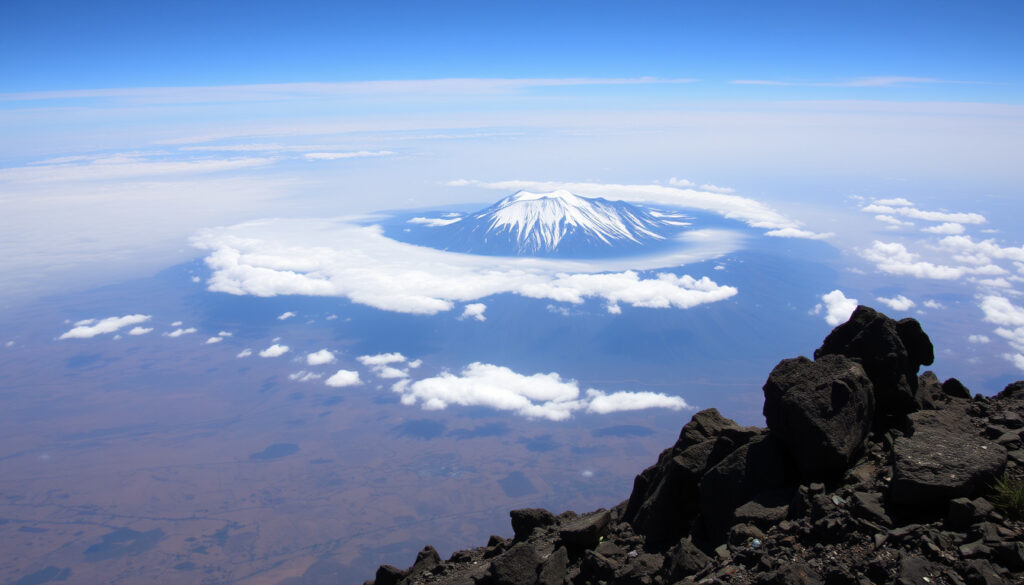
Kilimanjaro Peak: Height, Difficulty, and Safety
You’ve probably heard the name—Kilimanjaro—and wondered if it’s something you could actually climb with no ropes or oxygen. That’s the surprising thing about Africa’s tallest peak: it’s a walk-up mountain that challenges your lungs, not your grip.
Height: 5,895 m (19,341 ft) ·
Location: Tanzania, East Africa ·
First Ascent: 1889 by Hans Meyer and Ludwig Purtscheller ·
Annual Climbers: Approximately 35,000
Quick snapshot
- Height: 5,895 m (19,341 ft) (Altezza Travel)
- No technical climbing required (Civic Maple)
- Supplemental oxygen not needed for most climbers (Altezza Travel)
- Annual deaths: 10–15 (Tanzania Specialist)
- Exact annual death count fluctuates year to year
- Success rates vary widely by route and itinerary length
- Long-term glacier retreat may affect future climbing conditions
- 1889: First ascent by Hans Meyer and Ludwig Purtscheller
- 1920s–today: Growing popularity as a trekking destination
- Recent years: Increased focus on acclimatization protocols
- Climate change accelerating glacier loss, possibly changing routes
- More operators offering longer itineraries to boost success rates
- Growing interest among beginner adventurers
Here is a quick comparison of Kilimanjaro against other major peaks.
| Elevation | 5,895 m (19,341 ft) |
|---|---|
| Country | Tanzania |
| Mountain Range | None (free-standing) |
| First Ascent | 1889 by Hans Meyer and Ludwig Purtscheller |
| Easiest Route | Marangu Route (5–6 days) |
| Average Success Rate | 65% |
| Annual Deaths | 10–15 climbers |
Can Beginners Climb Kilimanjaro?
The short answer: yes—no technical climbing skills are required. Unlike Everest, Kilimanjaro is a non-technical “walk-up” mountain, which means you don’t need ropes, crampons, or prior mountaineering experience (Civic Maple). That said, physical fitness and proper preparation are essential. Altitude is the real barrier: at the summit, each breath contains about half as much oxygen as at sea level (Altezza Travel).
- No technical climbing needed – no ropes or harnesses required.
- Recommended itinerary: 8–9 days for better acclimatization (Tanzania Specialist).
- Average summit success rate: about 65% (Ascend Tanzania).
The implication: beginners can absolutely summit, but they should pick a longer route (like Lemosho or Northern Circuit) to give their bodies time to adapt. Short routes dramatically lower your odds.
Which Is Higher, K2 or Kilimanjaro?
K2 is significantly higher—8,611 m versus Kilimanjaro’s 5,895 m. But the two mountains are worlds apart. K2 sits in the Karakoram range on the Pakistan-China border, while Kilimanjaro is a free-standing volcano in Tanzania. The height difference also explains the technical gulf: K2 demands expert climbing skills; Kilimanjaro requires none (Global Summit Guide).
Is K2 the same as Kilimanjaro?
No. They are on different continents, in different mountain systems. K2 is part of the Karakoram range, Kilimanjaro is a solitary stratovolcano. Confusion may stem from their similar reputation as extreme-altitude peaks.
What is harder, Everest or Kilimanjaro?
Everest is far harder—both in altitude (8,849 m) and technical difficulty. Everest requires years of preparation, supplementary oxygen, and fixed ropes. Kilimanjaro is a trek by comparison (Altezza Travel). The catch: Kilimanjaro’s summit night is extremely strenuous due to rapid altitude gain, even though the climbing itself is non-technical.
Kilimanjaro vs Everest Base Camp: which is harder?
The Everest Base Camp trek is longer (12–14 days) but involves lower maximum altitude (5,364 m). Kilimanjaro’s summit night pushes you to 5,895 m in one push, which is more physically demanding (The Conversation). Many find Kilimanjaro’s summit night harder because of the sheer altitude gain and cold.
The pattern: Kilimanjaro is the “easier” high-altitude trek, but it’s not easy—altitude is the equalizer.
Beginner climbers gain a massive altitude achievement without technical risk, but they face a brutal summit night that even seasoned trekkers find punishing.
How Many Climbers Die on Kilimanjaro?
Approximately 10–15 climbers die each year on Kilimanjaro, according to official park statistics (Tanzania Specialist). Given that around 35,000 people attempt the climb annually, the death rate is low—roughly 0.03% to 0.04%.
- Main causes: altitude sickness (acute mountain sickness, AMS), falls, hypothermia, and pre-existing health conditions (The Conversation).
- At 4,000–6,000 m, the chance of experiencing AMS is about 50% (The Conversation).
- Climbers with oxygen saturation below 80% at Barafu base camp are generally advised not to continue (The Conversation).
Is Kilimanjaro evil?
This myth likely stems from high-altitude folklore and the mountain’s imposing reputation. There is nothing inherently “evil” about Kilimanjaro—it’s a natural environment where inadequate preparation leads to real danger. The death rate is comparable to many other adventure activities.
Why this matters: the risk is real but manageable. Most deaths are preventable with proper acclimatization, fitness, and guided support.
Do You Need Oxygen to Climb Kilimanjaro?
No, supplemental oxygen is not required for Kilimanjaro. Unlike Everest, where bottled oxygen is standard, Kilimanjaro’s altitude (5,895 m) can be managed by gradual acclimatization (Altezza Travel). Most climbers ascend without any bottled oxygen.
- Barometric pressure at the summit drops to about 50 kPa—half of sea level (The Conversation).
- Oxygen saturation at Barafu base camp often falls from 95% to 83–87% (The Conversation).
- Some guides carry oxygen as a safety measure for emergencies or evacuations (Altezza Travel).
The upshot: you won’t need oxygen if you choose a longer route and let your body adapt. Summit night is the crux—cold, dark, and thin air—but thousands manage it every year without tanks.
Why Is Kilimanjaro So Famous?
Kilimanjaro’s fame rests on three pillars: it is the highest mountain in Africa (5,895 m), the largest free-standing mountain in the world, and one of the few snow-capped peaks near the equator. Its iconic summit, Uhuru Peak, draws climbers from around the globe (Altezza Travel).
- Located in Kilimanjaro National Park in Tanzania (Tanzania Specialist).
- Accessible to non-climbers – no technical gear required (Civic Maple).
- Glaciers on the summit are receding due to climate change, adding urgency to the experience.
The pattern: Kilimanjaro is both a bucket-list achievement and a barometer of climate change. Its fame is earned through accessibility and majesty.
Clarity check
Confirmed facts
- Highest mountain in Africa (5,895 m) – Altezza Travel
- No supplemental oxygen required for most climbers – Altezza Travel
- No technical climbing skills needed – Civic Maple
- Annual deaths average 10–15 – Tanzania Specialist
- Success rates: 65% average – Ascend Tanzania
What remains unclear
- Exact annual death numbers fluctuate year to year
- Success rate depends heavily on route and itinerary length
- Long-term glacier retreat’s effect on climbing conditions
- Precise 77% AMS rate figure from one source has low confidence – Global Summit Guide
“At the summit, each breath contains about half as much oxygen as at sea level.”
Altezza Travel
“Climbers with oxygen saturation below 80% at Barafu base camp are generally advised against continuing to the summit.”
The Conversation
“Longer routes offer higher success rates on Kilimanjaro.”
Tanzania Specialist
“No technical climbing skills required – it’s a walk-up mountain.”
Civic Maple
The decision for every aspiring climber is clear: commit to a longer itinerary, respect the altitude, and treat Kilimanjaro as the serious physical challenge it is. For those who do, the view from Uhuru Peak is a reward few other mountains can match. For the unprepared, the risk is real—but entirely preventable.
Related reading: **Grizzly Bear Facts: Weight, Height, Behavior & Safety**
kilimanjarosunrise.com, xpatsinternational.com, adventurealternative.com, mountkilimanjaroguide.com, stadspressen.se
Frequently asked questions
What is the best time to climb Kilimanjaro?
The dry seasons (January–February and June–October) offer the best weather. The long rains (March–May) and short rains (November) can make trails muddy and slippery.
How long does it take to climb Kilimanjaro?
Most itineraries range from 5 to 9 days. Longer routes (8–9 days) significantly improve acclimatization and summit success rates (Tanzania Specialist).
What is the success rate for climbing Kilimanjaro?
The overall average is about 65%, but it varies by route: Lemosho and Northern Circuit exceed 90% on longer itineraries, while the 5-day Marangu route drops below 70% (Ascend Tanzania).
What is the easiest route up Kilimanjaro?
The Marangu Route is often called the easiest because it features hut accommodation, but its short duration (5–6 days) actually lowers success rates. The Lemosho Route (8 days) is physically easier due to better acclimatization.
Is altitude sickness common on Kilimanjaro?
Yes. At 4,000–6,000 m, roughly 50% of climbers experience acute mountain sickness (AMS). Symptoms include headache, nausea, and fatigue. Proper acclimatization is the best prevention (The Conversation).
What gear do I need to climb Kilimanjaro?
You’ll need warm layers (temperatures drop to -20°C at night), a good sleeping bag, waterproof boots, headlamp, trekking poles, and a daypack. Guides provide tents and meals. Check with your operator for a full packing list.
Can beginners climb Kilimanjaro without training?
Training is strongly recommended. Cardiovascular fitness, leg strength, and mental stamina are crucial. Most operators suggest starting a training program at least 3 months before the climb (Much Better Adventures).
More related posts
 John Rhys-Davies: Gimli, Sallah, and His Unconventional Choices
 Dennis Rodman: NBA Legend, Net Worth, and Life Today
 Mount Olympus: Hiking Guide, Myths, and Key Facts
 Chloë Grace Moretz: Biography, Age, Relationships & Career
 Constance Wu: Hiatus, Children, and Fresh Off the Boat Backlash
 Saturn Devouring His Son: Meaning, Symbolism & Location
 Petrol Stations with Fuel Near Me: Prices & Quality Compared
 Aston Villa vs RB Salzburg Lineups – Predicted XI, Team News, Injuries