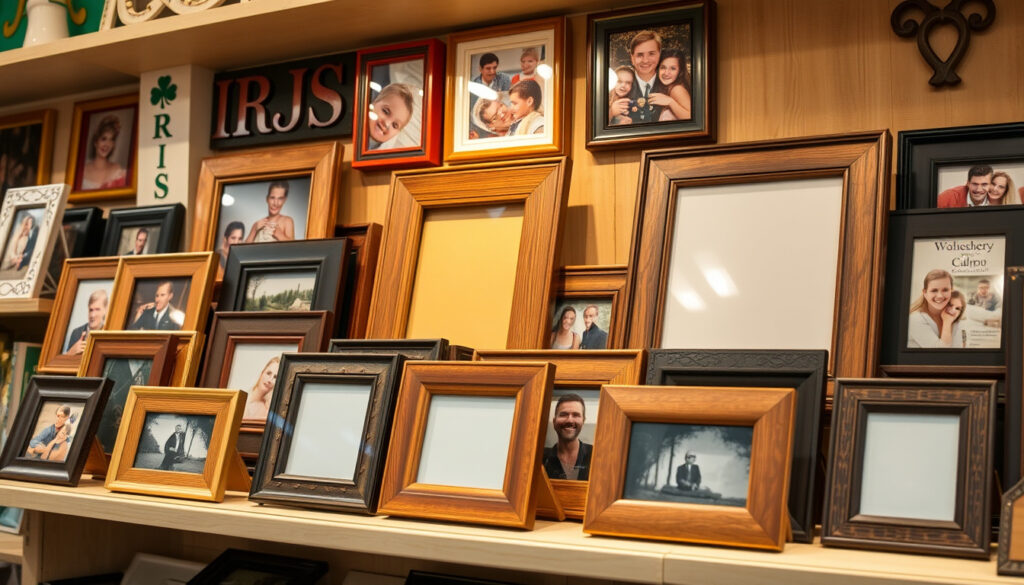
Photo Frame Buying Guide: Sizes, Materials & Top Irish Shops
There’s a particular satisfaction in seeing a favourite photo sitting in the perfect frame — the right size, the right material, the right spot on the wall. This guide walks you through the standard sizes, materials, and best places to buy photo frames in Ireland, so you can make a confident choice without guesswork — whether you’re framing a family portrait, a certificate, or a print from a recent holiday.
Most common photo frame size worldwide: 4 × 6 inches (10 × 15 cm) ·
Typical material options: Wood, metal, plastic, and glass ·
Average price range for a standard frame: €5 – €50 depending on material and brand ·
Number of Irish retailers specialising in photo frames: Over 20 major stores including Carraig Donn, JYSK, and Tipperary Crystal ·
Annual growth rate of the photo frame market (Ireland): Approximately 3% (2023 estimate)
Quick snapshot
- Standard photo frame sizes in Ireland include 4×6, 5×7, 8×10, A4, A3, and 16×20 inches (Elaine Watters Art, Irish art retailer)
- Wood, metal, and plastic frames are widely available at Irish retailers (Home Store + More, high-street chain)
- Ready-made frames at Pictorium Dublin cost €22–€99 (Pictorium, Dublin framing specialist)
- Exact market share of different frame materials in Ireland is not published
- Whether acrylic or glass is preferred by Irish consumers remains unclear
- No major timeline events expected; the photo frame market in Ireland is stable with steady 3% annual growth
- Retailers are expanding online custom framing services (e.g., eFrame.ie, Bootsphoto.ie)
- Sustainable materials (bamboo, recycled wood) are gaining traction in the Irish market
Five essential facts at a glance: what you need to know before buying.
| Attribute | Details |
|---|---|
| Standard sizes | 4×6, 5×7, 8×10, 11×14, A4 |
| Common materials | Wood, metal, plastic, glass, acrylic |
| Price range (Ireland) | €3 – €150 depending on size, material, and brand |
| Top Irish retailers | Carraig Donn, Tipperary Crystal, JYSK, Homestore and More, Woodie’s |
| Recommended hanging height | Eye level – approximately 145–150 cm from floor |
What are the most popular photo frame sizes and how do I choose?
Standard sizes for prints and posters
In Ireland, the most common photo frame sizes are a mix of imperial and metric. Kenro Ireland, a leading photo accessory supplier, lists 4×6, 5×7, 8×10, and 16×20 as the inch-based standards. Meanwhile, A4 (21×29.7 cm) and A3 (29.7×42 cm) are widely used for certificates, prints, and artwork, as IKEA Ireland’s size guide confirms. Elaine Watters Art, an Irish art retailer, notes that A4 is among the most used paper sizes for everyday framing. Home Store + More carries square formats like 4×4 and 8×8 alongside rectangles, while Strand Framing in Dublin lists both imperial and metric sizes, showing the dual-unit market.
How to measure your photo correctly
Always measure the photo itself, not the frame opening. BGA Store Ireland advises that the total frame size equals the photo size plus twice the rail width. For example, a 4×6 photo in a frame with 1.5 cm rails needs a finished frame of roughly 4×6 plus 3 cm on each side. IKEA Ireland sells frames with explicit picture dimensions and outer dimensions, helping buyers match wall space.
Matted vs. non-matted frames and size implications
Using a mat (mount) adds visual breathing room and allows you to fit non-standard photo sizes into a standard frame. A mat also shifts the required frame size: an 8×10 photo with a 2-inch mat will need a 12×14 frame. eFrame Ireland offers custom sizing options, making it easier to get the exact fit.
Mats protect the photo from touching the glass and add a gallery feel, but they increase the overall frame size and cost. For a busy gallery wall, skip the mat to keep frames compact and uniform.
The implication: knowing your photo’s exact dimensions — and whether you want a mat — is the first step. Without it, you risk buying a frame that’s too small or leaves an awkward gap.
Which materials are best for photo frames: wood, metal, or plastic?
Durability and weight comparison
Wood frames are heavier and more robust, suited for large prints. Pictorium in Dublin uses “A-Core” material for some styles, a composite that mimics wood at a lower weight. Metal frames (aluminium, steel) are lighter and resistant to warping, making them ideal for large frames that need to be wall-mounted. Plastic frames are the lightest and least durable, best for temporary or budget displays.
Aesthetic fit with home decor
Wood offers a classic, warm look that suits traditional interiors. Metal frames are modern and sleek, often used in offices or contemporary homes. Plastic frames come in many colours and finishes, but can look cheap. Lafayette Photography in Ireland offers both wood and metal styles with filters to help choose by colour and finish.
Cost and availability in Ireland
Plastic frames are the cheapest, often €3–€10 at Home Store + More or JYSK. Wood frames range from €10 to €50, while metal frames sit in the middle at €15–€40. Premium silver frames from Tipperary Crystal can reach €150. The price difference reflects material cost and craftsmanship.
One pattern across three materials: wood offers longevity and warmth, metal is modern and practical, plastic is the budget choice. For a permanent display, invest in wood or metal. For a temporary student flat or seasonal decoration, plastic works fine.
Irish homeowners who spend €50+ on a frame expect it to last. A cheap plastic frame may warp in a humid Irish winter, while a well-sealed wood frame will hold its shape.
Here’s how the materials compare side by side:
| Material | Durability | Weight | Aesthetic | Price range (Ireland) |
|---|---|---|---|---|
| Wood | High – can last decades | Heavy | Classic, warm, traditional | €10 – €50+ |
| Metal | High – resistant to warping | Light to medium | Modern, sleek, industrial | €15 – €40 |
| Plastic | Low – can crack or warp | Very light | Versatile, can look cheap | €3 – €15 |
The catch: wood and metal frames hold up better in Ireland’s damp climate, making them the smarter long-term investment.
Where can I buy quality photo frames in Ireland?
Irish specialty stores
Carraig Donn, an Irish gift and homeware chain, offers curated frames, often with Celtic or coastal designs. Tipperary Crystal specialises in premium silver and enamel frames, popular for wedding gifts. Galway Crystal also produces ornate frames for those who want a distinctly Irish craft.
High-street retailers
JYSK, Home Store + More, and Woodie’s stock a wide range of sizes and styles at competitive prices. Home Store + More lists ready-made frames from 4×4 up to 16×20, plus A4 and A3. Strand Framing in Dublin offers both in-store and online ordering with dual-unit measurements.
Online options and local framers
eFrame Ireland lets you customise sizes and materials from home. Bootsphoto.ie offers framing alongside photo printing, a convenient one-stop shop. For unique or oversized pieces, local framers like Pictorium in Dublin provide personalised service with prices from €22 to €99.
What this means: Irish shoppers have the luxury of choice. For a quick, cheap frame, head to JYSK or Home Store + More. For a special gift or heirloom piece, invest in Tipperary Crystal or a local framer.
How do I arrange and hang photo frames for a gallery wall?
- Create paper templates the size of each frame.
- Arrange templates on the floor to test layout and spacing.
- Use painter’s tape to attach templates to the wall for a visual preview.
- Choose hanging hardware: picture hooks for lightweight frames, wall anchors for heavy ones.
- Hang the centre frame first, then work outward using a spirit level and measuring tape.
- Maintain 2–3 inches (5–8 cm) between frames for a balanced look.
Planning the layout on paper or with templates
Before hammering nails, sketch your wall area and cut out paper templates the size of each frame. Lafayette Photography recommends arranging the templates on the floor first to test spacing. Lay them out on the wall with painter’s tape to visualise the final arrangement.
Choosing the right hanging hardware
For lightweight frames (plastic, small metal), use picture hooks or adhesive strips. For heavy wood frames, use wall anchors or toggle bolts. BGA Store Ireland notes that the hanging wire should be about 1/3 down from the top of the frame for balanced tilt.
Tips for balanced spacing and alignment
Keep 2–3 inches (5–8 cm) between frames. Use a spirit level for each frame, and a measuring tape to ensure consistent gaps. For a symmetrical grid, start from the centre and work outward. For an organic salon-style wall, cluster frames around a focal point.
A gallery wall that looks effortless actually takes planning. Irish homeowners who skip the template stage often end up with uneven rows and extra holes. Take the extra 30 minutes and use paper templates — it saves an hour of frustration.
The pattern: good hanging is 80% planning, 20% execution. Once you’ve mapped the layout, the actual hanging takes minutes.
How do I clean and maintain photo frames?
Cleaning glass and acrylic safely
Use a microfiber cloth and a gentle glass cleaner. Spray onto the cloth, not directly onto the glass, to prevent moisture seeping into the frame. For acrylic, use a cleaner made for plastics to avoid scratching. IKEA Ireland recommends wiping acrylic with a damp cloth and blotting dry.
Caring for wood, metal, and silver finishes
Dust wood frames with a dry cloth; for deeper clean, use a slightly damp cloth and dry immediately. Metal frames can be wiped with a mild soap solution. Silver frames from Tipperary Crystal require a silver polish cloth to prevent tarnish. Avoid harsh chemicals on any finish.
Preventing dust and sun damage
Keep frames out of direct sunlight to prevent photo fading and frame discolouration. Elaine Watters Art advises using UV-protective glass for valuable prints. Dust the frame and glass weekly to maintain clarity.
The catch: neglecting maintenance shortens a frame’s life. A €50 wood frame that sits in a sunny window for three years will look faded and cracked. A quick weekly dusting and UV glass can double its lifespan.
“Choosing a frame colour that matches your wall paint — or deliberately contrasts it — makes the photo pop. I always tell clients to bring a paint chip when shopping.”
— Orla Ní Chonaill, interior designer and contributor to Irish Home Decor Blog
“Our customers love silver and enamel frames for christenings and weddings. They’re not just frames — they’re keepsakes.”
— Store manager, Carraig Donn
For Irish shoppers, the choice is clear: invest in a frame that fits not just the photo but the room and the occasion. A plastic frame might save a few euro today, but a wood or silver frame will still look good a decade from now.
Frequently asked questions
What is the best way to measure a photo for framing?
Measure the exact dimensions of the photo (width and height). Do not measure the frame opening, as the frame usually overlaps the photo edge by a few millimetres. If using a mat, measure the photo and add the mat width.
Can I frame a photo without a mat?
Yes, many frames are designed for direct insertion. The photo sits behind the glass and is held by tabs or clips. This is common for standard 4×6 or 5×7 prints.
How do I remove a photo from a frame without damaging it?
Gently remove the backboard or release the tabs. If the photo sticks to the glass, use a hairdryer on low heat to loosen the bond. Slide the photo out carefully.
Are photo frames with clips or with tabs better?
Clips are easier to remove for swapping photos, but they may not hold thick prints. Tabs are more secure and suit heavier photos or mats. Choose based on how often you plan to change the picture.
How do I choose a frame colour that complements my photo?
Match the frame to a dominant colour in the photo for a harmonious look, or choose a neutral (black, white, silver) for versatility. For a bold statement, pick a contrasting colour.
What size frame do I need for an 8×10 photo with a mat?
If the mat adds 2 inches on each side, you need a frame that fits a 12×14 photo. Always measure the mat opening plus the photo.
Do I need to use acid-free mounting materials?
Yes, for valuable or archival photos. Acid-free mats and backings prevent yellowing and deterioration over time. Standard cardboard can cause damage within a few years.
How do I frame a photo that is not a standard size?
Buy a frame slightly larger than the photo and use a custom-cut mat to fill the gap. Many Irish framers (e.g., eFrame.ie, Pictorium) offer mat cutting services.
Related reading:
More related posts
 Mental Health: Definition, Signs, and Support in Ireland
 Smokey Robinson: Blue Eyes, Bob Dylan Quote, Biggest Hits
 Patrick Wilson: Biography, Career, Wife, and Net Worth
 Horses Grand National: 2026 Runners & Favourites
 Aston Villa vs PSG Lineups: Champions League 2025 Recap
 Charlotte Gainsbourg: Biography, Career & Life
 Spain National Football Team vs France National Football Team Stats – Head-to-Head Record and History
 Maternity Leave in Ireland 2026: Duration, Pay, and How to Apply