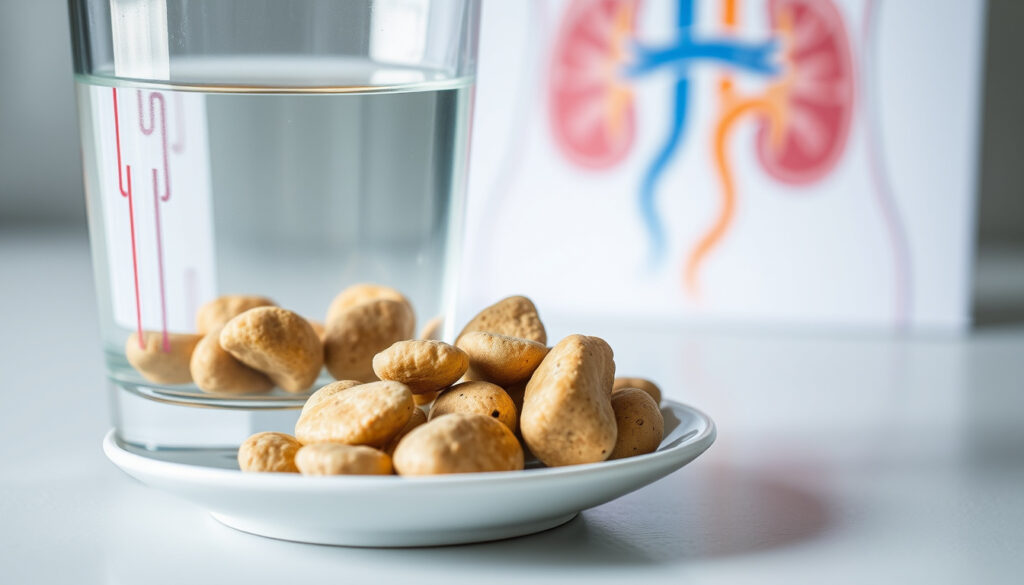
Signs of Kidney Stones: 7 Warning Symptoms & Look-Alikes
Anyone who has ever doubled over from a sharp, stabbing pain in their lower back knows the kind of alarm that sends you straight to a search engine. That sudden, intense ache is often the first real signal that something is happening inside your kidneys — and for about one in ten people, that something turns out to be a kidney stone, and knowing which symptoms to watch for, what can mimic them, and when a home check is enough versus when you need a doctor can make a real difference in how quickly you get relief.
Prevalence in the U.S.: About 1 in 10 people will have a kidney stone at some point in their life. ·
Peak age for first episode: 40–60 years old. ·
Recurrence rate without prevention: Approximately 50% within 5 to 10 years. ·
Most common stone type: Calcium oxalate (about 80% of cases). ·
Average size requiring intervention: 5 mm or larger often needs medical removal.
Quick snapshot
- Kidney stones cause classic colicky flank pain that radiates to the groin (NHS (UK health authority))
- Blood in urine appears in more than 80% of cases (Cleveland Clinic (urology department))
- Small stones under 5 mm often pass spontaneously with hydration (Cleveland Clinic (urology department))
- Exact cause of initial stone formation remains debated despite known risk factors like dehydration and diet (Mayo Clinic (medical reference))
- Rate of stone passage in individuals varies significantly (Mass General Brigham (patient education))
- Home urine dipstick reliability versus lab urinalysis for kidney stone diagnosis is not well established (Cleveland Clinic (urology department))
- Pain waves last 20–60 minutes, with episodes recurring over hours or days (Mayo Clinic (medical reference))
- Small stones (under 5 mm) may pass within a few weeks of onset (NHS (UK health authority))
- Larger stones (over 6 mm) may require intervention within days to weeks (Cleveland Clinic (urology department))
- If symptoms include fever or uncontrollable pain, go to the ER immediately (NHS (UK health authority))
- If pain is manageable, schedule a same-day GP or urology appointment (Cleveland Clinic (urology department))
- Home monitoring with fluid intake and urine straining can help track stone passage (Mass General Brigham (patient education))
The key facts table below outlines the core characteristics of kidney stone attacks.
| Attribute | Value |
|---|---|
| Pain onset | Sudden, often at night or early morning (Mayo Clinic (medical reference)) |
| Pain quality | Sharp, cramping, wave-like (Mayo Clinic (medical reference)) |
| Location | Flank (side), back, lower abdomen, groin (Cleveland Clinic (urology department)) |
| Duration of an episode | 20–60 minutes per wave, may last hours to days (Mayo Clinic (medical reference)) |
| Common complications | UTI, kidney infection, ureter blockage, sepsis (rare) (NHS (UK health authority)) |
What are the 7 warning signs of kidney stones?
Sudden severe flank pain
The hallmark of a kidney stone is sudden, intense pain in the flank — the area between your ribs and hip on one side of your back. The
- Pain is often described as colicky, meaning it comes in waves that build to a peak and then fade. Mayo Clinic (medical reference) notes that the waves correspond to the stone moving down the ureter.
- The intensity can reach 8–10 on a 1–10 pain scale. Mass General Brigham (patient education) states that this pain often awakens people from sleep.
“This pain often awakens people from sleep.” — Mass General Brigham (patient education)
The colicky pattern is your first clue: pain that surges and recedes in cycles is classic for a moving stone. Steady, constant pain points toward a different source, like a muscle spasm or infection.
Pain radiating to groin or abdomen
As the stone travels down the ureter, the pain often moves from the flank to the lower abdomen or groin.
- Men may feel referred pain in the testicle; women in the groin or labia. Cleveland Clinic (urology department) describes radiation to the groin as a characteristic feature.
- The location shift tracks the stone’s progress and can help distinguish it from other conditions.
“Radiation to the groin is a characteristic feature.” — Cleveland Clinic (urology department)
Nausea and vomiting
The intense pain triggers a reflex that many people experience as stomach upset.
- Mayo Clinic (medical reference) lists nausea and vomiting as common symptoms, caused by the nerve linkage between the kidneys and the gastrointestinal tract.
- Vomiting can worsen dehydration, which may slow stone passage.
Blood in urine (hematuria)
Visible or microscopic blood is a near-certain sign that a stone has scratched the lining of the urinary tract.
- Blood in urine is present in more than 80% of kidney stone cases, per Cleveland Clinic (urology department).
- Urine may appear pink, red, or brown — or blood may only be visible under a microscope during a urine test.
Urgency and frequency
A stone near the bottom of the ureter or the bladder can irritate the nerves that signal the need to pee.
- A constant need to urinate or passing only small amounts is reported by Cleveland Clinic (urology department) as a common symptom.
- This symptom overlaps heavily with urinary tract infections (UTIs), making it hard to tell apart at home.
Fever and chills
A fever with flank pain is a red flag that a kidney stone may be causing an infection.
- NHS (UK health authority) emphasizes that fever and chills indicate a possible kidney infection, which requires urgent medical attention.
- Any temperature above 100.4°F (38°C) combined with flank pain means go to the ER, not wait at home.
Cloudy or foul-smelling urine
Urine that looks murky or smells different can signal infection or the presence of stone material.
- Mayo Clinic (medical reference) includes cloudy or foul-smelling urine as a potential symptom.
- Cloudiness can come from pus (white blood cells) fighting an infection triggered by the stone.
The implication: the wave-like quality of the pain and the presence of blood are the two strongest differentiators. If your pain is constant and there is no blood, a muscle strain or a UTI becomes a more likely explanation.
How do you check for kidney stones at home?
Three home strategies can give you useful information — but none of them can confirm or rule out a stone on their own. Follow these steps for a systematic home check.
- Self-monitor symptoms — Track pain pattern, location, and any accompanying symptoms like nausea or fever.
- Strain your urine — Use a fine-mesh strainer or coffee filter to catch any stone particles.
- Use a home urine dipstick — Check for blood, but remember it is not a substitute for lab analysis.
Self-monitoring symptoms
Track the pain pattern, location, and any accompanying symptoms like nausea or fever. Write down when the pain started, how intense each wave feels (1–10 scale), and whether the pain location shifts. This diary becomes valuable for your doctor.
- Mass General Brigham (patient education) recommends noting the timing and intensity of pain waves as a way to gauge whether the stone is moving.
- If pain becomes constant or fever appears, stop home monitoring and seek care.
Straining urine for stones
Catching the stone helps your doctor identify its type and plan prevention.
- Use a fine-mesh strainer, a coffee filter, or the special strainer a pharmacy sells — urinate through it and look for small, hard particles. Cleveland Clinic (urology department) advises saving any stone you capture for analysis.
- Stones can be as small as a grain of sand, so inspect carefully.
Home urine dipstick for blood
Home dipstick tests can detect blood, but they are not a substitute for laboratory urinalysis.
- Cleveland Clinic (urology department) notes that urine tests can look for blood, stone-forming crystals, and signs of infection — but a home dipstick gives only a partial picture.
- A positive dipstick for blood raises suspicion but does not confirm a stone; other causes of blood in urine (infection, trauma, menstruation) must be ruled out.
Home monitoring is useful for tracking symptoms, but if you have severe pain that does not ease, fever, or inability to keep down fluids, home measures are not enough. These scenarios require professional evaluation.
What can be mistaken for kidney stones?
Several conditions share the same flank-pain-and-urinary-symptoms profile. Knowing the differences can save you a wrong turn to the wrong clinic. The table below compares the most common mimics.
| Condition | Pain location | Pain quality | Key distinguishing features |
|---|---|---|---|
| Kidney stone | Flank, radiating to groin | Wave-like (colicky), intermittent | Blood in urine, nausea, urgency |
| Urinary tract infection | Lower abdomen, flank | Constant, burning | Dysuria (burning during urination), fever |
| Appendicitis | Periumbilical then right lower quadrant | Constant, worsening | Fever, loss of appetite, localized tenderness |
| Ovarian cyst rupture | Lower abdomen (one side) | Steady, sharp | Occurs during ovulation/menstruation, no urinary symptoms |
| Gallstones | Upper right abdomen, right shoulder | Steady, after fatty meals | No urinary symptoms, may radiate to back |
| Diverticulitis | Left lower abdomen | Constant, crampy | Fever, constipation/diarrhea, no hematuria |
| Muscle spasm | Flank | Positional, worsens with movement | No urinary symptoms, no fever |
- Urinary tract infection (UTI): NHS (UK health authority) notes that UTIs cause similar flank pain, urinary urgency, and cloudy urine. The difference: UTI pain is often constant, not wave-like, and comes with burning during urination from the start.
- Appendicitis: Usually presents with pain that starts around the belly button and moves to the lower right abdomen. Mayo Clinic (medical reference) locates kidney stone pain in the flank and side, not the lower right quadrant.
- Ovarian cyst rupture: Causes sudden lower abdominal pain on one side, often during ovulation or menstruation. Pain is typically steady rather than wave-like.
- Gallstones: Trigger pain in the upper right abdomen, often after fatty meals. Mayo Clinic (medical reference) notes that kidney stone pain sits lower and more toward the back.
- Diverticulitis: Causes left lower abdominal pain, often with fever, constipation, or diarrhea — not flank pain with urinary symptoms.
- Muscle spasms: Flank muscle strain can cause local pain, but it is positional (hurts when you twist) and does not radiate to the groin or cause urinary symptoms.
The pattern: wave-like pain plus blood in urine strongly favors kidney stones over the other candidates. Constant pain plus burning suggests infection. Positional pain without urinary symptoms points to muscle.
How to flush out kidney stones quickly
Hydration with water
The single most effective home strategy for passing a small stone is drinking enough water to produce a steady flow of urine.
- Mass General Brigham (patient education) recommends at least 3 to 4 liters of fluids per day when trying to pass a stone.
- Most stones under 5 mm pass within weeks with adequate hydration, per NHS (UK health authority).
- Do not force fluids if you are nauseated or vomiting — you risk vomiting more and worsening dehydration. Sip slowly instead.
Pain management
Over-the-counter pain relievers can help you tolerate the waves of pain, but follow label instructions carefully.
- Ibuprofen or acetaminophen can be used, but avoid taking more than the recommended dose. Cleveland Clinic (urology department) advises that severe pain may require prescription medication.
- A warm bath or a heating pad on the flank can relax the ureter muscles and ease discomfort.
Medications to relax the ureter
Alpha-blockers like tamsulosin (Flomax) are sometimes prescribed to relax the ureter and help stones pass faster.
- These are prescription-only; your doctor will determine if they are appropriate for your stone size and location.
- NHS (UK health authority) notes that these medications can shorten the passage time by a few days.
Medical intervention for large stones
Stones that are 5 mm or larger often do not pass on their own and may require a procedure.
- Cleveland Clinic (urology department) reports that around 90% of stones smaller than 6 mm pass spontaneously, but only about 60% of those larger than 6 mm do.
- Common interventions include extracorporeal shock wave lithotripsy (ESWL), ureteroscopy, or ureteral stenting.
Drinking 4 liters of water a day works for small stones, but if the stone is larger than 6 mm or your pain is severe enough to prevent drinking, medical intervention is the faster path — sometimes the only path.
What does the start of a kidney stone feel like?
Sudden and sharp pain: ‘like a knife’
The onset is rarely gradual. People describe it as a sudden, sharp stab that stops them mid-step.
- Mass General Brigham (patient education) reports that pain often awakens people from deep sleep.
- The pain can be 8–10 on a 1–10 scale within minutes of onset.
Unilateral pain in lower back or side
The pain is almost always on one side — the side where the stone is lodged.
- Cleveland Clinic (urology department) notes that flank pain in the lower back, belly, or side is the most common kidney stone symptom.
- Bilateral pain (both sides) is rare and could indicate a different condition, such as a kidney infection.
Pain that comes and goes in waves
The wave pattern is the most telling feature of early kidney stone pain.
- Mayo Clinic (medical reference) explains that the waves correspond to the ureter contracting around the stone as it tries to move it.
- Each wave lasts 20–60 minutes, with periods of near-complete relief in between.
The catch: once the pain becomes constant, the stone may have fully blocked the ureter. Constant pain plus fever is the emergency threshold.
While the classic warning signs are similar for everyone, the specific symptoms of kidney stones in women can differ due to anatomical and hormonal factors, making it important to recognize sex-specific pain patterns.
FAQ
Can a kidney stone cause pain in the testicles?
Yes. The nerve pathways from the kidney and ureter overlap with those supplying the testicles, so pain can radiate to the testicle on the same side as the stone. Cleveland Clinic (urology department) lists groin and testicular pain as a common referral pattern.
Is it normal to feel pain while peeing a kidney stone?
Yes. As the stone passes through the urethra (the tube leading out of the bladder), it can cause sharp, burning pain, often described as passing a shard of glass. This phase is typically brief — once the stone exits, the pain stops.
How long does it take to pee out a kidney stone?
For small stones (under 5 mm), the process usually takes a few days to a few weeks. NHS (UK health authority) notes that most small stones pass within 4–6 weeks with adequate hydration. Larger stones may not pass at all without intervention.
Can drinking lemon juice dissolve kidney stones?
Lemon juice contains citric acid, which has been shown in laboratory studies to help prevent calcium oxalate crystals from forming. However, there is no high-quality clinical evidence that drinking lemon juice dissolves existing stones. NHS (UK health authority) emphasizes that hydration with water remains the first-line recommendation.
Does kidney stone pain get worse with movement?
Generally, no. Kidney stone pain is visceral, not positional — it does not typically worsen with twisting, bending, or walking. If movement aggravates the pain, a muscle strain or skeletal issue is more likely. Mayo Clinic (medical reference) describes the pain as colicky and not related to movement.
What are the first signs of kidney stones in males?
The first signs are the same as for females: sudden unilateral flank pain, blood in urine, and nausea. However, males may experience referred pain in the testicle or tip of the penis, which can be an early clue. NHS (UK health authority) confirms that pain radiation to the groin and genitals is common in men.
What are early signs of kidney stones in women?
Early signs mirror those in men: sudden flank pain, blood in urine, and urgency to urinate. Women are also at higher risk for UTIs, which can mimic kidney stones, so the distinction between wave-like pain (stone) and constant pain with burning (UTI) is especially important. Mayo Clinic (medical reference) notes that women may also experience referred groin or labial pain.
Are kidney stones dangerous?
In most cases, kidney stones are painful but not life-threatening. The danger arises when a stone blocks the ureter, causing urine to back up into the kidney (hydronephrosis), which can damage kidney function. The more immediate danger is a kidney infection (pyelonephritis), which can progress to sepsis. NHS (UK health authority) stresses that fever with flank pain requires emergency care.
For the person trying to figure out if this is a kidney stone or something else, the choice is clear: if the pain is wave-like, on one side, and comes with blood in the urine, act on kidney stones first. If there is fever, do not wait — go to the ER. For everyone else, the data-backed path is hydration, a pain diary, and a same-day doctor visit to confirm what is really going on.
More related posts
 Vauxhall Vivaro Review: Reliability, Common Problems & Dimensions
 Ant Middleton: Conviction, SAS Firing, Tax Debt, and Controversies
 The Cabin in the Woods: Parody, Monsters, and Why No Sequel
 John Lewis Student Discount: Up to 60% Off via Partners
 Catfish and the Bottlemen Tour 2025: Dates, Tickets & 2026 Updates
 Amanda Bynes: What Happened, Her Appearance, and Updates
 Seth MacFarlane: 9/11 Escape, Relationships, Religion, Net Worth
 Olivia Newton-John: Death, Net Worth, and John Travolta