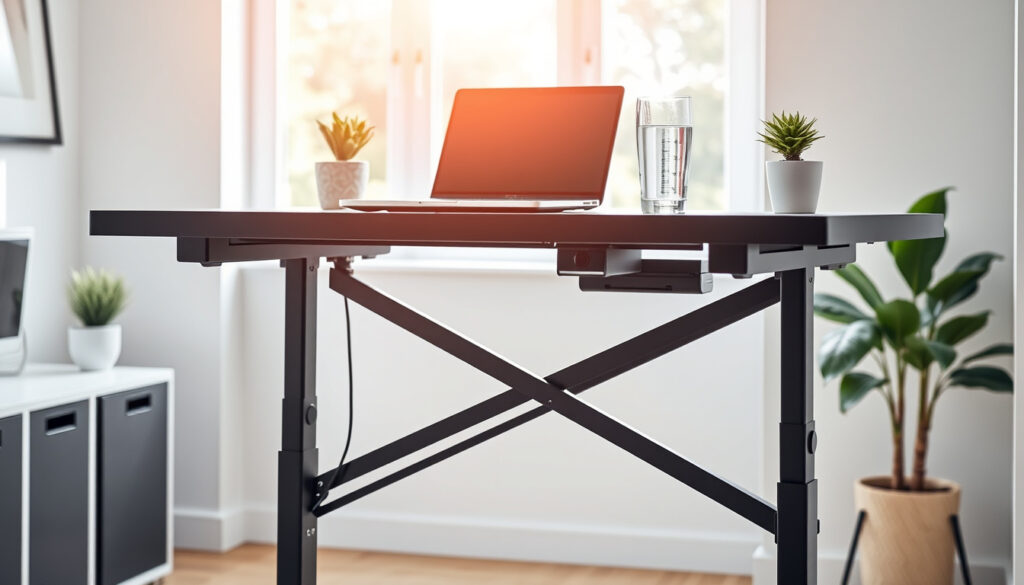
Standing Desk: Health Benefits, Rules, and Best Picks
Anyone who spends hours at a desk knows that all-day sitting can leave you stiff and sore — which is why standing desks have become a popular alternative backed by research. A 12-month Steelcase study found 47% of users reported less upper body discomfort, but the science also shows that standing too long has pitfalls, so knowing how to alternate is key.
Upper body discomfort reduction: 47% of users after 12 months (Steelcase workplace study) · Sitting time reduction: 17% after 3 months (Steelcase workplace study) · Alternating recommendation: every 30–60 minutes (Cleveland Clinic health advisory)
Quick snapshot
- Reduces upper back, shoulder, or neck discomfort for 47% of users, per a Steelcase (workplace furniture researcher) 12-month trial
- May reduce risk factors for weight gain by increasing daily standing and activity, as noted by Cleveland Clinic (US health system)
- Can improve posture when used correctly, according to Leitz Ireland (office ergonomics brand)
- Prolonged standing without breaks can cause foot pain, leg swelling, and joint stiffness, per Cleveland Clinic (health advisory)
- High-quality electric desks cost several hundred euros — a significant upfront investment (Cleveland Clinic (health advisory))
- Systematic review PubMed research review found no strong evidence that standing desks boost productivity
- Adopt a sit-stand ratio such as the 20/8-2 rule (20 min stand, 8 min sit, 2 min move) — supported by Posturite (ergonomics consultancy) research summary
- Use an anti-fatigue mat and keep the screen at eye level, as advised by Ireland’s Health Service Executive (HSE) workplace guidance
- Alternate every 30–60 minutes, argues Cleveland Clinic
- Electric height-adjustable models offer the smoothest transition — popular in Ireland through Leitz Ireland and RackZone Ireland (office supplier)
- Ensure the height range fits your ergonomic needs (typically 65–125 cm) (Leitz Ireland)
- Check warranty (at least 5–10 years) and weight capacity (Leitz Ireland)
Four key facts drawn from the research highlight what a standing desk can and cannot deliver:
| Fact | Value | Source |
|---|---|---|
| Sitting time reduction with height-adjustable desk | 17% after 3 months | Steelcase 12‑month study |
| Upper body discomfort reduction | 47% of users over 12 months | Steelcase |
| Calorie expenditure | Standing burns more calories than sitting | Cleveland Clinic |
| Alternating recommendation | Every 30–60 minutes | Cleveland Clinic |
Are standing desks actually healthy?
Evidence on back pain reduction
- A Steelcase longitudinal study found that 47% of employees using height-adjustable desks reported a significant reduction in upper back, shoulder, or neck discomfort after one year (Steelcase workplace research).
- A workplace sit-stand desk intervention reported significant differences between intervention and control groups, indicating reduced sedentary behaviour and improved workers’ health (PMC (National Institutes of Health) study).
The implication: standing desks can reduce discomfort for a meaningful share of users, but they are not a universal cure. The benefit depends on correct setup and consistent alternation.
Cardiovascular and metabolic effects
- Cleveland Clinic states that standing desks can reduce risk factors associated with weight gain and obesity by increasing daily standing and activity (Cleveland Clinic health advisory).
- The extra calorie burn from standing is modest — roughly 50 kcal per hour more than sitting, according to energy expenditure research summarised by Posturite (ergonomics consultancy).
What this means: any metabolic benefit is cumulative over the workday, not dramatic enough to replace exercise. Standing four hours a day burns about 200–300 extra kcal — the equivalent of a small snack.
Risks of prolonged standing
- Standing all day without interruption can cause foot pain, leg swelling, and joint issues, warns Cleveland Clinic.
- A systematic review found mixed effects on psychological well-being and no clear benefit for productivity (PubMed systematic review on sit-stand desks).
The catch: static standing is just as risky as static sitting. The body is designed to move, not to lock into any single posture for hours.
What is the 20/8‑2 rule for standing desks?
How to apply the 20/8‑2 rule
- The rule is a simple guide: stand for 20 minutes, sit for 8 minutes, then move or walk for 2 minutes. This cycle repeats throughout the day.
- It is recommended by many ergonomics practitioners, including Posturite, as a way to avoid static postures and keep blood flowing.
Why this matters: the rule forces frequent posture changes, which is the central mechanism behind standing‑desk health benefits.
Why 20 minutes standing, 8 minutes sitting, 2 minutes moving
- Twenty‑minute standing intervals are short enough to prevent excessive foot and leg strain, yet long enough to engage core muscles and boost circulation (Cleveland Clinic).
- The two‑minute movement break — walking, stretching, or light activity — helps prevent blood pooling and joint stiffness.
Adapting the rule for individual needs
- Not everyone can follow the 20/8‑2 schedule precisely. Ergonomics specialists advise starting with a 1:1 sit‑stand ratio and adjusting based on comfort (Ireland’s HSE workplace guidance).
- People with existing health conditions (varicose veins, joint issues, pregnancy) should consult a healthcare professional before increasing standing time.
The trade‑off: a customised ratio is better than no alternation. The worst desk setup is the one you never change.
What are the negatives of a standing desk?
Physical drawbacks: foot, leg and back strain
- Prolonged standing without an anti‑fatigue mat or proper shoes can lead to foot pain, calluses, and lower back discomfort, according to Cleveland Clinic.
- Varicose veins risk increases if you stand for hours without movement, as venous return is reduced (Posturite research summary).
Cognitive and productivity concerns
- The systematic review in PubMed (National Library of Medicine) reported that productivity effects were inconsistent across studies.
- Standing may actually reduce fine motor task performance for some people during the first few weeks of transition.
Cost and space considerations
- Electric height‑adjustable desks typically range from €350 to €1,000+ in Ireland, a substantial outlay for a home office (RackZone Ireland).
- These desks require more floor space for the frame and motors; sit‑stand converters are a cheaper but less stable alternative.
The upshot: a standing desk is not a magic bullet. It demands conscious planning, comfortable accessories, and a realistic budget — and it won’t automatically make you more productive.
What is the best standing desk for a home office?
Key features: height range, motor vs manual, stability
- Height range should accommodate both sitting (elbow height ~70–75 cm) and standing (elbow height ~95–105 cm for most adults). An adjustable range of 65–125 cm covers nearly all users (Leitz Ireland).
- Dual‑motor electric models offer smoother, quieter adjustment than single‑motor or manual crank versions.
- Stability at maximum height is critical: a wobbly desk disrupts work and defeats ergonomic alignment.
Top brands available in Ireland
- IKEA (Bekant and Trotten series) — widely available, mid‑price, good warranty.
- JYSK — sit‑stand models in select stores, budget‑friendly.
- AJ Products — professional‑grade electric desks, higher price but robust build.
- Specialist suppliers like RackZone Ireland and Leitz Ireland offer online ordering and delivery within Ireland.
Budget vs premium options
- Entry‑level manual crank desks cost around €200–350, but adjusting them multiple times a day can be tedious.
- Mid‑range electric desks (e.g., IKEA Bekant at ~€550) offer a good balance of features and value.
- Premium models (€800+) often include memory presets, cable management, and longer warranties (10–15 years).
The pattern: spend more on motor quality and stability; cheap desks may save money upfront but fail to support a healthy alternating habit.
For home‑office workers in Ireland, the best standing desk is one you’ll actually adjust. An electric model with a programmable controller removes the barrier of manual effort. Pair it with an anti‑fatigue mat and a footrest, as recommended by Ireland’s HSE, and you’ll be far more likely to stick with the sit‑stand habit.
The takeaway: electric desks with programmable controllers make it easier to maintain the alternation habit, but the best desk is one you actually adjust.
Is it better to stand for 8 hours or sit?
Health outcomes of prolonged sitting vs standing
- Prolonged sitting is linked to increased risk of cardiovascular disease, type 2 diabetes, and premature mortality (PMC study on sedentary behaviour).
- Prolonged standing, however, elevates risk of varicose veins and joint damage (Cleveland Clinic).
The ideal balance: sit‑stand desks
- Neither extreme is healthy. The goal is regular movement between postures, not permanence in either.
- Research indicates that a multicomponent intervention — including a height‑adjustable desk — is about three times more effective at reducing sitting than advice alone (Posturite review of studies).
Expert recommendations from ergonomics research
- Ireland’s HSE advises setting up the workspace to support good posture and reduce musculoskeletal disorders (HSE working from home guidance).
- Dr. John P. Buckley, University of Chester, found that standing burns an extra 50 kcal per hour compared to sitting — a modest but cumulative metabolic boost (cited by Posturite).
The trade‑off: the desk is a tool, not a solution. The real benefit comes from building a habit of movement — standing, sitting, walking, stretching — throughout the day.
For Irish home‑office workers, the research points to one clear takeaway: a standing desk should be part of a broader ergonomic strategy that includes a proper chair, monitor risers, anti‑fatigue mat, and — most importantly — a schedule of regular posture changes.
To compare popular desk types, here is a quick breakdown of the three main options available in the Irish market:
| Feature | Electric Height‑Adjustable | Manual Crank | Fixed‑Height Standing Desk |
|---|---|---|---|
| Ease of adjustment | Touch‑button, smooth transition | Manual winding, takes 30–60 seconds | Not adjustable |
| Typical price range (€) | 350–1,200 | 200–400 | 150–350 |
| Stability at max height | Very good (dual‑motor models) | Moderate (can wobble) | Excellent (fixed frame) |
| Warranty | 5–15 years | 1–3 years | 1–5 years |
| Best for | Home workers who alternate frequently | Budget‑conscious, occasional use | Dedicated stand‑only workstations |
The pattern: electric desks remove the friction of transition, making it easier to follow the 20/8‑2 rule. While more expensive, the long‑term health payoff can outweigh the upfront cost.
Upsides
- Reduces sedentary time and associated health risks
- 47% of users see less upper body discomfort (Steelcase)
- Can improve posture and circulation (Leitz Ireland, Cleveland Clinic)
- Modest calorie burn adds up over time
Downsides
- Prolonged standing causes foot/leg pain without proper accessories
- High upfront cost for quality electric models
- No proven boost to productivity (PubMed review)
- Requires space and deliberate habit‑change
If you’re new to standing desks, follow these steps to transition safely and effectively:
- Start with a 1:1 ratio — stand for 20 minutes, sit for 20 minutes, and build up gradually. Use a timer or desk‑height reminder app.
- Optimise ergonomics — position the monitor so the top of the screen is at eye level. Keep your elbows at a 90‑degree angle when typing (HSE workspace guidance).
- Invest in accessories — an anti‑fatigue mat, a footrest (for sitting), and a quality chair that supports dynamic sitting.
- Listen to your body — if your feet ache or your lower back tightens, sit down. Pushing through discomfort defeats the purpose.
- Review after one month — adjust the sit‑stand ratio based on comfort. Many users settle on a 40‑minute stand / 20‑minute sit cycle.
These simple steps, combined with the equipment choices above, create the foundation for a sustainable standing‑desk routine at home.
What’s clear — and what needs more research
Based on the evidence, some claims are well supported while others remain uncertain:
Confirmed facts
- Standing burns more calories than sitting (Cleveland Clinic)
- Alternating positions reduces musculoskeletal discomfort (Steelcase)
- Prolonged static standing increases risk of varicose veins (Posturite)
- Height‑adjustable desks reduce overall sitting time (PMC intervention study)
What’s unclear
- Long‑term cardiovascular effects of standing desks — still under study
- Impact on overall productivity in knowledge workers — mixed evidence (PubMed review)
- Optimal sit‑stand ratio for the general population — individual variation is high
- Whether benefits persist beyond the first year — limited long‑term data
Expert perspectives
“Setting up your workspace correctly is essential to support good posture and reduce the risk of musculoskeletal disorders, including upper limb disorders and repetitive strain injuries.”
— Ireland’s Health Service Executive (HSE), Working from Home guidance
“Over a 12‑month study, height‑adjustable workstations were linked to increased productivity, better concentration, and improved overall health.”
— Steelcase, Year‑Long Study Reinforces Benefits of Standing Desks
“Standing and treadmill desks show some utility for breaking up sitting time and may improve select health components, but effects on psychological well‑being and work performance were mixed.”
— Systematic review in American Journal of Preventive Medicine, 2015
The message from these experts is consistent: movement, not mere standing, is the driving force behind health gains. A desk that enables you to shift postures easily is a valuable tool — but only if you use it actively.
For Irish home‑office workers, the implication is clear: choose a height‑adjustable desk that fits your budget and space, pair it with an anti‑fatigue mat and good chair, and commit to frequent posture changes. Standing all day is no better than sitting all day. The desk that works best is the one you use to move.
2727coworking.com, m2officeinteriors.ie, standingdeskmanufacturer.com, hingehealth.com, voicevietnam.org
Frequently asked questions
How long should I stand at a standing desk each day?
Most ergonomics experts recommend 4–6 hours total per day, broken into intervals. Start with 20‑minute stands and gradually increase. Cleveland Clinic suggests alternating every 30–60 minutes.
Do standing desks cause varicose veins?
Prolonged standing without movement can increase the risk of varicose veins. Posturite’s research summary notes that moving for 2 minutes every 20–30 minutes helps maintain healthy circulation.
What height should a standing desk be set for my height?
When standing, your elbows should form a 90‑degree angle with the keyboard, and the top of the monitor should be at eye level. The HSE Ireland workplace guidance provides detailed setup instructions.
Can standing desks help with sciatica?
They may help if the condition is aggravated by prolonged sitting, but standing can also aggravate sciatica if done incorrectly. Consult a physiotherapist before changing your workspace. A sit‑stand desk allows you to find the posture that minimises symptoms.
How do I transition to using a standing desk safely?
Start with a 1:1 sit‑stand ratio, use an anti‑fatigue mat, and gradually extend standing time. Many users find the 20/8‑2 rule a useful starting framework (Posturite).
Are manual crank standing desks reliable?
They are simpler and cheaper, but the crank mechanism can wear out with heavy daily use. Most manual desks offer a 1–3 year warranty compared to 5–15 years for electric models.
What is the difference between a standing desk and a treadmill desk?
A standing desk is a height‑adjustable work surface. A treadmill desk adds an under‑desk treadmill for walking while working. Walking desks burn more calories but require more coordination and may interfere with typing.
Should I use an anti‑fatigue mat with my standing desk?
Yes. Ireland’s HSE and Cleveland Clinic both recommend anti‑fatigue mats to reduce pressure on feet and joints during standing periods.
More related posts
 When Will I Die – Life Expectancy Calculator Guide
 Ant Middleton: Conviction, SAS Firing, Tax Debt, and Controversies
 Jamie Oliver’s Downfall: Restaurant Collapse & £6.8M Recovery
 Fabrizio Romano: Trust, Net Worth, Languages, Lifestyle
 Low Rise Jeans Guide: Fit, Body Types, Styling & Brands
 Queer (Film): Plot, Cast, Reviews & Where to Watch
 Colleen Hoover Books: Reading Order & Guide
 Gabriel Basso: Biography, Career, and Personal Life Facts