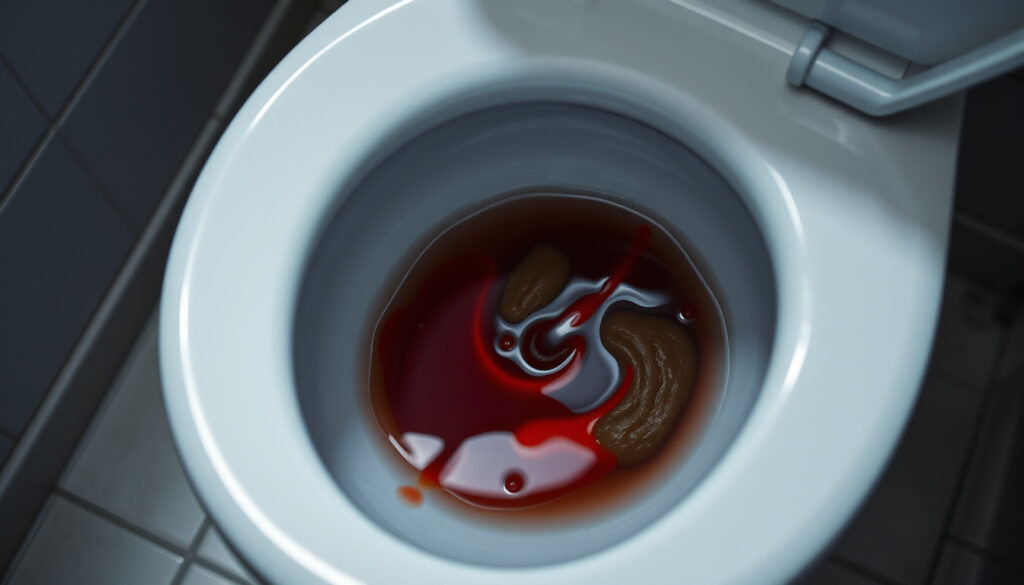
Bright Red Blood in Stool: Causes and When to Worry
Seeing bright red blood in your stool can be alarming, but it’s often less serious than it looks. Bright red usually means the bleeding is coming from the lower end of your digestive tract—your rectum or anus—rather than higher up. The most common culprits are hemorrhoids and anal fissures, both of which are manageable with proper care. Understanding what the color, pain level, and timing of the bleeding tell you can help you decide whether to call a doctor or head to the ER.
Most common cause: Hemorrhoids · Bleeding location: Lower colon, rectum, or anus · Other frequent cause: Anal fissure · Serious indicator: Dark red or maroon blood · Pain association: Pain with pooing suggests fissure
Quick snapshot
- Bright red blood indicates lower GI bleeding per Cleveland Clinic (Cleveland Clinic)
- Hemorrhoids are the most common cause of rectal bleeding in middle-aged and elderly adults per NCBI (NCBI)
- Exact cause without medical examination; food mimics are possible
- Whether bleeding is from hemorrhoids, fissures, or something else requires anoscope or colonoscopy
- Symptoms persisting beyond 7 days warrant a gastroenterologist visit per Manhattan Gastroenterology (Manhattan Gastroenterology)
- Seek immediate care for heavy, persistent, or week-long bleeding (Manhattan Gastroenterology)
- Doctor will perform rectal exam, possibly anoscope or colonoscopy per Manhattan Gastroenterology
- Heavy or frequent rectal bleeding risks anemia or hypovolemic shock per Cleveland Clinic
| Typical source | Common trigger | Urgency level | Cancer color cue |
|---|---|---|---|
| Rectum or anus | Constipation | See doctor if persistent | Often darker |
| Hemorrhoids | Straining during bowel movements | Urgent if heavy or painful | Bright red possible but less typical |
| Anal fissures | Hard stool or constipation | Usually manageable at home | N/A |
| Diverticulosis | Low-fiber diet | See doctor for evaluation | Can be bright red |
What is the most common reason for bright red blood in stool?
The most common cause of bright red blood in stool is hemorrhoids—swollen blood vessels in the lower rectum or anus that can rupture with straining or hard stool. According to NCBI StatPearls, hemorrhoids are the leading cause of rectal bleeding in middle-aged and elderly adults. The second most common cause is anal fissures, which are small tears in the anus typically caused by passing hard stool.
Hemorrhoids
Hemorrhoids develop when straining puts pressure on the veins in your lower rectum, causing them to swell and sometimes bleed. Per Manhattan Gastroenterology, they bleed due to straining, hard stool damaging the surface, ulceration, or thrombosis. The bleeding typically appears as bright red blood—either as drops in the toilet bowl, streaks on the stool, or marks on toilet paper. You may also notice itching, discomfort, or a lump near the anus.
Anal fissures
An anal fissure is a small tear in the lining of your anus, usually caused by passing hard or large stools. According to Healthdirect Australia (an Australian government health service), bright red blood from the lower bowel—including hemorrhoids and fissures—is the most frequently seen pattern. Unlike hemorrhoids, fissures often cause pain during bowel movements.
Bright red blood almost always points to the lower GI tract. Hemorrhoids and fissures together account for the vast majority of cases where bleeding is visible and painless.
Is bright red blood in stool less serious?
Bright red blood is generally associated with lower GI bleeding and is less likely to indicate a serious condition than darker blood—but “less serious” does not mean “ignore it.” According to Cleveland Clinic, bright red blood typically comes from the anus, rectum, or lower colon, which are closer to the exit. However, Northwestern Medicine physician Dr. Stevoff notes: “These colors can usually tell us where the blood is coming from, but not always.”
Compared to dark blood
Dark red or maroon blood suggests bleeding higher in the colon or small intestine per Cleveland Clinic. Black tarry stools (melena) indicate upper GI bleeding from the stomach or esophagus. Darker blood has had more time to digest, which can mean a more serious source.
Painless vs painful
Painless bleeding is more commonly associated with hemorrhoids, while bleeding accompanied by pain during bowel movements suggests an anal fissure per Manhattan Gastroenterology. However, thrombosed hemorrhoids—a more severe form where a blood clot forms—present with a bluish lump and severe pain and require immediate medical attention per Manhattan Gastroenterology.
Bright red blood might be more alarming because it suggests active bleeding, but it does not automatically mean cancer. Cleveland Clinic warns that heavy or frequent rectal bleeding risks anemia or hypovolemic shock—seek ER care for sudden severe bleeding.
What color is cancerous blood in stool?
Cancerous blood in stool is not typically bright red. According to MD Anderson Cancer Center expert Richards: “Bright red blood might be from something low in the colon or rectum, like diverticulosis or hemorrhoids.” Darker blood raises more concern.
Colon cancer indicators
Per NCBI StatPearls, colorectal cancer bleeding is often occult (not visible to the eye) or appears as dark red or maroon blood mixed in with stool. According to HealthPartners, frequent or large amounts of bloody stools require a doctor visit to rule out cancer.
Blood appearance
While bright red streaking on toilet paper or surface-level blood on stool is common with hemorrhoids, Aurora Health Care emphasizes that any blood in stool, on toilet paper, or in the toilet requires a doctor’s contact to rule out fissures, inflammatory bowel disease (IBD), or cancer.
What does hemorrhoid bleeding look like?
Hemorrhoid bleeding is typically bright red and appears in small amounts—often as drops in the toilet water, streaks on the stool, or smears on toilet paper per Manhattan Gastroenterology. The blood is usually on the surface of the stool rather than mixed throughout it.
Appearance
According to Gateway Gastroenterology, bright red bleeding usually appears as dots or streaks and is often noticed after straining during a bowel movement. Northwestern Medicine notes that hemorrhoids cause bright red or maroon blood lower in the intestines.
Associated symptoms
Per Manhattan Gastroenterology, external hemorrhoids may present as a visible lump near the anus, while thrombosed hemorrhoids present as a bluish lump and severe pain requiring immediate treatment. Symptoms with bleeding like unexplained weight loss, fever, or abdominal pain require urgent evaluation.
Bright red blood looks alarming but often comes from manageable conditions. Darker blood, large volumes, or bleeding accompanied by dizziness, severe pain, or unexplained weight loss demands immediate medical evaluation.
When to worry about blood in stool bright red?
While occasional bright red blood from hemorrhoids or fissures is often manageable at home, certain signs mean you should see a doctor or seek emergency care. According to Denmark Digestive, seek emergency care for large volume rectal bleeding, dizziness, abdominal pain, or bowel habit changes.
Red flags
Per LA Colorectal Surgery, see a doctor immediately for painful, heavy, frequent, or week-long rectal bleeding. HealthPartners adds that emergency evaluation is needed for severe pain, cramping, weakness, or rapid pulse with rectal bleeding. MedStar Health emphasizes that bleeding before, during, or after bowel movements warrants medical evaluation to rule out cancer.
Painless bleeding
Painless bright red bleeding is most commonly associated with internal hemorrhoids per Manhattan Gastroenterology. If symptoms persist beyond 7 days without improvement, a gastroenterologist visit is warranted. Minor bleeding from hemorrhoids can often be managed with a high-fiber diet and adequate hydration.
Persistent bleeding, large volumes, or accompanying symptoms like weight loss or severe pain require prompt medical attention regardless of whether the blood appears bright red.
Comparison: Blood Color and What It Means
Three patterns emerge when comparing blood colors and their sources in the digestive tract.
| Blood appearance | Likely source | Typical cause | Urgency level |
|---|---|---|---|
| Bright red | Lower colon, rectum, anus | Hemorrhoids, anal fissures | See doctor if persistent |
| Dark red or maroon | Higher colon, small intestine | Diverticulosis, cancer | Urgent evaluation |
| Black, tarry (melena) | Upper GI: stomach, esophagus | Ulcer, gastritis | Emergency care |
The implication: Blood color serves as a rough indicator of where bleeding originates, but persistent symptoms override any color-based assumption—seek evaluation whenever bleeding recurs.
What experts say about bright red blood
— Richards, MD Anderson Cancer Center
“Bright red blood might be from something low in the colon or rectum, like diverticulosis or hemorrhoids.”
— Dr. Stevoff, Northwestern Medicine
“It’s important to note that these colors can usually tell us where the blood is coming from, but not always.”
— Cleveland Clinic
“Bright red blood in your stool might be more alarming because it suggests active bleeding.”
Related reading
What this means: These resources provide additional context for understanding cardiovascular indicators alongside the digestive health information covered here.
Bright red blood in stool signals lower GI bleeding, with common triggers like hemorrhoids explored in hematochezia causes overview before considering rarer issues.
Frequently asked questions
What causes bright red blood when I wipe but not in stool?
Bright red blood on toilet paper but not in the stool typically indicates a source very close to the anus—most commonly hemorrhoids or anal fissures. Internal hemorrhoids often bleed without causing stool discoloration, and fissures typically cause bleeding only when the area is stretched during a bowel movement.
Can bright red blood in stool be from food poisoning?
Food poisoning does not typically cause bright red blood in stool. Red discoloration from food comes from pigments (like beets or food coloring) that pass through the digestive tract without causing bleeding. If you suspect food poisoning and notice blood, see a doctor to rule out other causes.
What if there’s stomach pain with bright red blood in stool?
Stomach pain accompanying bright red blood warrants a doctor’s visit. While hemorrhoids and fissures are the most common causes of bright red bleeding, abdominal pain could indicate inflammatory conditions or other issues that need evaluation. Per Denmark Digestive, seek emergency care for large volume rectal bleeding combined with abdominal pain.
Is painless bright red blood in stool serious?
Painless bright red blood is most commonly caused by internal hemorrhoids, which are usually not dangerous but should still be evaluated by a doctor. Per Manhattan Gastroenterology, any bleeding that persists beyond 7 days or recurs should prompt a medical visit to confirm the diagnosis.
Does bright red blood always mean hemorrhoids?
No. While hemorrhoids are the most common cause, bright red blood can also come from anal fissures, diverticulosis, or—in rare cases—lower colon polyps or cancer. Per Healthdirect Australia, any blood in stool requires medical evaluation to rule out more serious conditions.
What tests check bright red blood in stool?
Diagnosis typically starts with a physical exam including a rectal exam. Per Manhattan Gastroenterology, your doctor may use an anoscope to view the lower rectum or recommend a colonoscopy to examine the entire colon. Blood tests may also be ordered to check for anemia.
Can bright red blood in stool be from a tear?
Yes. An anal fissure—a small tear in the anal lining—commonly causes bright red bleeding, often accompanied by pain during bowel movements. Per Healthdirect Australia, fissures result from passing hard or large stools and are a frequent cause of lower GI bleeding alongside hemorrhoids.
Confirmed facts
- Bright red blood indicates lower GI bleeding from the anus, rectum, or lower colon per Cleveland Clinic
- Hemorrhoids are the most common cause of rectal bleeding in middle-aged and elderly adults per NCBI
- Bright red blood means bleeding from the lower bowel, often hemorrhoids or anal fissures per Healthdirect Australia
What’s unclear
- Exact cause without medical examination
- Whether bleeding is from hemorrhoids, fissures, or something else without anoscope or colonoscopy
For anyone who notices bright red blood in their stool, the message is clear: do not panic, but do not ignore it either. Most cases stem from manageable conditions like hemorrhoids or fissures, but getting a proper diagnosis rules out something more serious. Persistent bleeding, large volumes, or accompanying symptoms like weight loss or severe pain warrant prompt medical attention.
More related posts
 Myers Briggs Personality Types – Full List and Explanations
 Air Force 1 White – Sizing, Fit and Care Guide
 P Louise Lip Gloss: Shades, Reviews & Ireland Shipping
 Teyana Taylor: Biography, Health, Relationships, Net Worth
 Paul Ritter: Brain Tumour, Cause of Death & Famous Roles
 Rampage Jackson: Career, Record, Lawsuit, and Net Worth
 Geena Davis: Biography, Condition, Kids and Current Work
 Zenos E10 Return: 380-HP British Sports Car for 2026