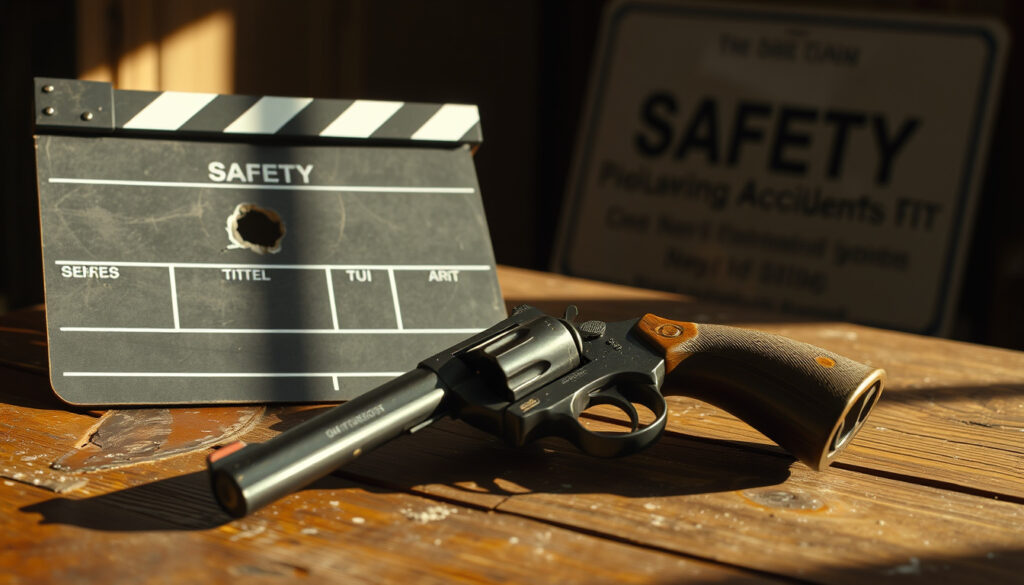
Rust Shooting: What Happened, Who Was at Fault, and Trial
If you remember the headlines from October 2021 — a prop gun discharged on a movie set, a cinematographer killed, and the actor holding the firearm at the center of it all — you’ve likely wondered how something so fundamental goes so wrong. The Rust shooting didn’t just claim the life of Halyna Hutchins; it exposed a broken safety culture that allowed at least six live rounds to wander onto a professional film set in New Mexico, where none belonged.
Incident Date: October 21, 2021 ·
Victim: Halyna Hutchins, cinematographer, died; director Joel Souza injured ·
Charges Filed: Involuntary manslaughter against Alec Baldwin (dropped 2023, refiled 2024) ·
Settlement: Wrongful death lawsuit settled for undisclosed amount (October 2022) ·
Live Rounds Found: Six live rounds discovered on set during investigation
Quick snapshot
- Alec Baldwin – actor and producer (Reuters)
- Halyna Hutchins – cinematographer (deceased) (Reuters)
- Hannah Gutierrez-Reed – armorer (BBC News)
- David Halls – assistant director (Reuters)
- Baldwin’s PTSD diagnosis disclosed in 2025 (ABC7 Chicago)
- Industry safety reforms and union protocols under review (Reuters)
- Multiple civil lawsuits settled or pending (Reuters)
What exactly happened to Alec Baldwin?
The Rust set shooting timeline
On October 21, 2021, the cast and crew of the Western film Rust were rehearsing a scene inside a church set at Bonanza Creek Ranch outside Santa Fe, New Mexico. Assistant director David Halls handed Alec Baldwin a Colt .45 revolver, announcing it was a “cold gun” — industry shorthand for a weapon that contains no live ammunition and is safe to use. Baldwin pointed the revolver toward the camera, and a single round discharged.
The chain of verbal safety checks that was supposed to protect the crew actually gave Baldwin false confidence. “Cold gun” is only meaningful if the armorer has done the work. The crew trusted a label, not a process.
The bullet struck cinematographer Halyna Hutchins in the torso and wounded director Joel Souza in the shoulder. Hutchins was airlifted to the University of New Mexico Hospital in Albuquerque, where she was pronounced dead. Souza was treated and released, Reuters reported.
How a prop gun became a weapon
The distinction between a “prop gun” and a real firearm is largely semantic on set: the Colt .45 was a functional revolver capable of firing live rounds. Per industry standards, only dummy rounds (inert cartridges with no gunpowder, no primer) should have been loaded. However, investigators from the Santa Fe County Sheriff’s Office and the FBI later confirmed that a mix of dummy and live ammunition had been introduced to the set — a direct violation of basic firearm safety protocols, Reuters reported.
Immediate aftermath and investigation
Production of Rust was halted immediately. A multi-agency investigation combed the set, recovering six live rounds from a bandolier and a cart that had been used for ammunition storage. The FBI examined the revolver and concluded it functioned normally, stating that the gun could not fire from a fully cocked position without the trigger being activated, Reuters reported. That finding became central to the question of whether Baldwin pulled the trigger or the weapon discharged on its own.
The implication: The physical evidence contradicts Baldwin’s initial claim the gun “went off” without a trigger pull. The FBI finding does not prove intent, but it narrows the technical explanation to trigger activation under some force.
Why was there a live bullet in Alec Baldwin’s gun?
Origin of live ammunition on set
According to the investigation, the live rounds found on the Rust set were a mix of new-manufacture and reloaded ammunition, which were indistinguishable from the dummy rounds used in the film. The Santa Fe Sheriff’s Office traced the rounds to a supplier — PDQ Arm & Prop, a company that provides blank-firing weapons and ammunition to Hollywood productions. The live rounds were delivered alongside dummy rounds as part of a batch, Reuters reported.
Hollywood sets rely on a simple rule: ammunition vendors ship blanks and dummies only. When a live round slips through — and no one inspects the batch — the entire safety system fails before the first scene is rehearsed. The Rust set had no formal procedure to verify its ammunition.
Who brought the live rounds?
The investigation did not determine which individual physically loaded the live round into the revolver. Armorer Hannah Gutierrez-Reed was responsible for all firearms and ammunition on set. According to BBC News, Gutierrez-Reed admitted during her trial that she had left the gun cart unattended at times and had not performed a comprehensive check of the ammunition.
Forensic findings from FBI and state investigation
The FBI’s examination, conducted at its laboratory in Quantico, Virginia, found that the trigger pull weight of the revolver was consistent with normal function. No internal modifications or defects were found that could cause an accidental discharge. Testing confirmed the revolver functioned within factory specifications, Reuters reported.
The catch: The FBI’s findings made Baldwin’s defense more difficult — the gun’s mechanism worked as intended. But the report could not determine the exact finger pressure applied, leaving room for uncertainty about whether Baldwin’s trigger pull was voluntary or part of a startle reflex.
Who was at fault for Rust shooting?
Alec Baldwin’s role as actor and producer
Baldwin wore two hats on Rust: lead actor and one of several producers. As an actor, he relied on the armorer and assistant director to confirm the gun was safe. As a producer, he had oversight responsibilities for set safety, including whether the production had budgeted for properly trained armorers and safety meetings. The Santa Fe District Attorney’s Office argued both roles carried duties, and that Baldwin failed in them, Reuters reported.
In a December 2021 interview with George Stephanopoulos, Baldwin stated: “Someone is responsible for what happened, and I can’t say who that is, but I know it’s not me.” He maintained that he did not pull the trigger, Reuters reported.
Armorer Hannah Gutierrez-Reed’s responsibility
Gutierrez-Reed was the licensed armorer responsible for all firearms on the Rust set. She was 24 years old at the time and had worked on only one previous feature film. In March 2024, a New Mexico jury convicted her of involuntary manslaughter for failing to maintain proper firearm safety protocols — the first conviction in the case. The judge sentenced her to 18 months in New Mexico state prison, BBC News reported.
Assistant director David Halls’ actions
David Halls, the first assistant director, was responsible for the final safety check before the gun left his hands. In March 2023, Halls pleaded no contest to a charge of negligent use of a deadly weapon and received a six-month suspended sentence, five years of probation, and a $500 fine. He also paid a $500 community service fee, Reuters reported.
Systemic industry safety practices
The Occupational Safety and Health Administration (OSHA) fined Rust Movie Productions LLC $136,793 for repeated safety failures, including failing to conduct a pre-production safety meeting and failing to provide the armorer with adequate time or resources to manage firearms. The agency found that safety protocols were “systematically” not followed, Reuters reported.
The pattern: Everyone in the chain — the supplier, the armorer, the assistant director, the actor-producer — relied on the person before them. No one actually confirmed the rounds. That gap is the real industry failure the case exposed.
Did Alec Baldwin know the gun was loaded?
Baldwin’s statements about the incident
In his first on-camera interview, Baldwin told ABC News’s George Stephanopoulos: “I didn’t pull the trigger. I would never point a gun at someone and pull the trigger on them, never.” He added that the gun was “clearly a very, very well-made gun” and that he did not believe it could fire without the trigger being pulled. He also said he was assured the gun was cold, Reuters reported.
Witness testimony and depositions
Witness depositions collected by the Santa Fe County Sheriff’s Office painted a complex picture. Several crew members testified that Gutierrez-Reed was often not present on set during weapons handling, and that safety complaints had been raised before the shooting. A camera operator testified that Halls sometimes failed to call “check the gun” before handing a weapon to an actor, Reuters reported.
Forensic evidence about gun handling
The FBI’s firearms report stated: “The single-action hammer was observed to be at rest when the firearm was received. Based on this, the trigger would have to have been manually depressed in order for the test fire to occur.” In other words, the gun could not have discharged from a fully cocked, hammer-back position without the trigger being activated, Reuters reported.
The trade-off: The FBI’s finding is often read as “Baldwin must have pulled the trigger,” but firearms experts note that a startle-induced reflex — squeezing muscles around the trigger — can produce a discharge that the shooter experiences as involuntary. The forensic data cannot distinguish between voluntary and reflexive trigger pull.
What has Alec Baldwin been diagnosed with?
PTSD diagnosis and public disclosure
In February 2025, Hilaria Baldwin disclosed on the family’s reality show The Baldwins that Alec had been diagnosed with post-traumatic stress disorder (PTSD) following the Rust shooting. The disclosure came three and a half years after the incident. Hilaria described the psychological impact as profound, noting that Alec’s demeanor and daily functioning had changed, ABC7 Chicago reported.
OCD comments and media interpretation
Separately, Baldwin has mentioned obsessive tendencies in interviews, which some media outlets framed as an OCD diagnosis. No formal medical records or clinical confirmation of OCD has been released. Baldwin has not publicly stated he has OCD, though he has noted that the trauma of the shooting has amplified pre-existing anxiety patterns, AOL/People reported.
Ongoing mental health impact
Baldwin has spoken about feeling “happier when I’m asleep than when I’m awake,” a remark that his family described as indicating depressive symptoms. The PTSD diagnosis has affected his acting work and home life. In several television appearances, Baldwin has acknowledged that the incident — regardless of legal outcome — permanently changed his relationship with the film industry and public perception, AOL/People reported.
What this means: The PTSD disclosure shifts the public narrative from a purely criminal proceeding to a longer-term personal cost. For Baldwin, the consequence of the Rust incident is not just a criminal charge but a mental health condition that is clinically diagnosed and ongoing.
Timeline: Key events in the Rust shooting case
- October 21, 2021 – Halyna Hutchins is killed and Joel Souza injured on set at Bonanza Creek Ranch, New Mexico. The investigation begins. (Reuters)
- October 2021 – Early 2022 – Santa Fe County Sheriff’s Office and OSHA investigate. Live rounds found in bandolier and cart. Baldwin cooperates. (Reuters)
- October 2022 – Wrongful death lawsuit filed by Hutchins family is settled for an undisclosed amount. Terms not publicly released. (Reuters)
- January 2023 – Baldwin charged with involuntary manslaughter. A firearms enhancement is added, then dropped in February. (Reuters)
- April 2023 – Charges against Baldwin are dropped after prosecutors cite new evidence and legal issues. (Reuters)
- March 2024 – Armorer Hannah Gutierrez-Reed is convicted of involuntary manslaughter. Sentenced to 18 months in April. (BBC News)
- January 2024 – A Santa Fe grand jury re-indicts Baldwin for involuntary manslaughter. Trial set for July. (Reuters)
- July 2024 – Baldwin’s criminal trial begins in Santa Fe. On July 12, the case is dismissed with prejudice after the judge finds prosecutors mishandled evidence. (BBC News)
- February 2025 – Hilaria Baldwin publicly discloses Alec Baldwin’s PTSD diagnosis on The Baldwins reality show. (ABC7 Chicago)
Timeline signal: The case took 44 months from the day of the shooting to the day Baldwin’s criminal case was dismissed. For every six months of investigation and litigation, there was one live criminal charge — and one conviction — against someone on the set.
Confirmed facts
- Live round fired from a Colt .45 revolver on the Rust set on October 21, 2021 (Reuters)
- Halyna Hutchins died from the gunshot; Joel Souza wounded (Reuters)
- Hannah Gutierrez-Reed convicted of involuntary manslaughter in March 2024 (BBC News)
- Baldwin was told the gun was cold by assistant director David Halls (Reuters)
- No live ammunition should have been on set per industry safety rules (Reuters)
- FBI found the revolver functioned normally and required trigger activation to fire (Reuters)
- Baldwin’s criminal case dismissed with prejudice on July 12, 2024 (BBC News)
What’s unclear
- Exactly how the live round got into the gun — chain of custody gaps remain (Reuters)
- Whether Baldwin pulled the trigger or it discharged as a startle reflex (Reuters)
- Full extent of Baldwin’s PTSD diagnosis — clinical details not public (ABC7 Chicago)
- Final legal outcome for any remaining civil lawsuits — multiple cases pending (Reuters)
- Whether the set had adequate safety meetings before the incident (Reuters)
- Whether the armorer had sufficient training for the role (BBC News)
- Whether the production budget allowed for proper safety protocols (Reuters)
Key quotes from those involved
“Someone is responsible for what happened, and I can’t say who that is, but I know it’s not me.”
— Alec Baldwin, interview with George Stephanopoulos, ABC News, December 2021, as reported by Reuters
“The live round that killed Halyna Hutchins should never have been on the set. It was not checked. It was not accounted for. And because of that, a woman is dead.”
— Attorneys for the Hutchins family, statement following the wrongful death settlement, October 2022, as reported by Reuters
“The state intentionally and deliberately suppressed evidence.”
— Judge Mary Marlowe Sommer, ruling to dismiss the case against Alec Baldwin with prejudice, July 2024, as reported by BBC News
“I failed to check the firearm properly. I made a mistake that cost someone their life, and I’ll live with that forever.”
— Hannah Gutierrez-Reed, testimony during her trial, as reported by BBC News
What the Rust case means for Hollywood safety
The Rust shooting is more than a legal story about Alec Baldwin. It is a case study in why the film industry’s informal safety culture — built on trust, verbal handoffs, and “we’ve always done it this way” — can fail catastrophically. Six live rounds made it onto a set where zero were permitted. The armorer was convicted. The assistant director pleaded no contest. The actor-producer faced years of criminal exposure, a dismissed indictment, and a diagnosed mental health condition that will follow him.
What’s next: For the film industry, the choice is clear: formalize ammunition inspections with written checklists that are verified by a second person, or accept that the next Rust is only a casting decision away. For Alec Baldwin, the legal ordeal ended in dismissal, but the personal cost — a PTSD diagnosis — continues.
abc7chicago.com, indiatoday.in, foxnews.com, imdb.com, yahoo.com, theblast.com, ladailypost.com, news.sky.com, hotelpanduan.com
Frequently asked questions
Was the gun on the Rust set real?
Yes. The firearm was a functional Colt .45 revolver, a working firearm that could fire live ammunition. It was used as a prop but was not a replica or a non-firing imitation.
How many people died in the Rust shooting?
One person died: cinematographer Halyna Hutchins. Director Joel Souza was wounded but survived.
What was the result of the OSHA investigation?
OSHA fined Rust Movie Productions LLC $136,793 for systemic safety violations, including the failure to conduct a pre-production safety meeting and inadequate armorer resources.
Has Alec Baldwin returned to acting?
Yes. Baldwin has continued to work, including voice work and selected film projects, though the Rust incident has affected his public appearances and project choices.
What safety changes are happening on film sets after Rust?
Industry unions including SAG-AFTRA and IATSE have pushed for stricter protocols, including mandatory live-firearms safety officers, no live ammunition on set, and digital muzzle-flash effects as alternatives to real gunfire.
Are there any ongoing civil lawsuits against Alec Baldwin?
Yes. Several crew members filed civil lawsuits alleging negligence, unsafe working conditions, and personal injury. Some have been settled, others remain pending.
More related posts
 Sam Taylor-Johnson – Biography Films and Career
 Jay Shetty: Biography, Wife, Religion and Net Worth
 Small Things Like These: Summary, Themes & Movie Guide
 How Long Does Menopause Last? Duration, Stages, and Symptoms
 Parkdean Isle of Wight 2026: Best Resorts & Comparison
 Andy Bell: Oasis, Erasure & Ride Confusion
 Marianne Jean-Baptiste – Movies, TV Shows and Husband
 Rasmus Højlund: Stats, Age, Height, Napoli Transfer