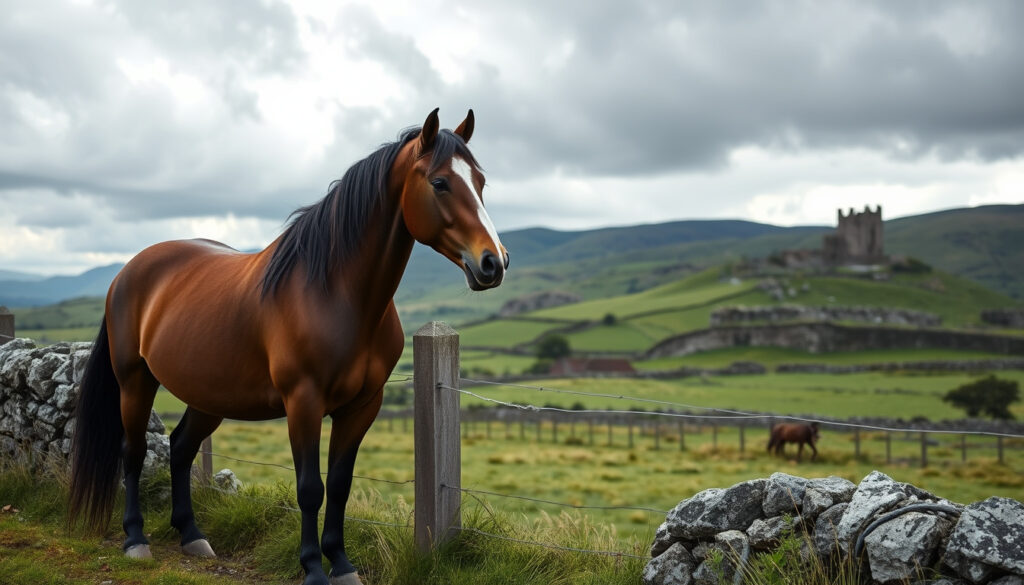
Horseback Riding Weight Limits, Costs & Trips in Ireland
You’re probably here because you’re an adult rider wondering if you’re within a safe weight limit — or you’re planning a trip to Ireland and want to know what horse riding actually costs. Either way, the answers aren’t always easy to find in one place, so this article pulls together the key numbers, the 20% rule, and real operator policies in Ireland to help you make an informed decision.
Average cost of a one-hour lesson in Ireland: €40–€80 · Maximum rider weight (20% rule for 500 kg horse): 100 kg including tack · Typical horse weight (Irish Cob): 500–600 kg · Horse riding tour companies in Dublin listed on TripAdvisor: 5+
Quick snapshot
- 20% rule: rider + tack ≤ 20% of horse’s weight (University of Minnesota Extension)
- Horse weight ranges: 500–600 kg (Irish Cob) (University of Minnesota Extension)
- Breed recommendations: larger draft breeds for heavier riders (University of Minnesota Extension)
- Hourly lessons: €40–€80 (Killegar Stables)
- Day treks: from €60 (Castle Leslie Estate)
- Multi-day tours: €200+ (Killegar Stables)
- Cliffs of Moher
- Connemara
- Dingle Peninsula
- Check operator weight policies before booking
- Prepare with proper gear: what to wear horseback riding
The table below gives you the essential numbers at a glance.
| Metric | Value |
|---|---|
| Maximum rider weight (20% rule for 500 kg horse) | 100 kg including tack |
| Typical Irish riding lesson cost | €50–€60 per hour |
| Pony Club Australia weight guideline | 20% of horse’s body weight |
What is horseback riding called?
The formal term is equestrianism, which covers riding, driving, and vaulting. In everyday use, people say horse riding or simply riding. The term equitation refers specifically to the skill of riding.
Formal term: equestrianism
- Equestrianism is the official name for the sport and activity of horseback riding.
- It includes disciplines like dressage, show jumping, and eventing.
Common alternatives: horse riding, equitation
- “Horse riding” is the most common phrase in Ireland and the UK.
- “Equitation” is used in competitive contexts, particularly in the US.
The implication: when you search for activities in Ireland, “horse riding” will get you the most results, but “equestrian” signals a more formal or competition-oriented setting.
Is 70 kg too heavy to ride a horse?
For most horses, a 70 kg rider is well within safe limits — provided the horse is average-sized and the tack is properly fitted. The key is the 20% rule.
Understanding the 20% weight rule
The University of Minnesota Extension, a leading equine research body, states that an average adult light riding horse can comfortably carry about 20% of its ideal bodyweight (University of Minnesota Extension). For a 500 kg horse, that’s 100 kg including tack. A 70 kg rider plus 10 kg of tack equals 80 kg — well under the limit.
Horse size and breed considerations
- Smaller ponies (300 kg) have a 60 kg limit, so a 70 kg rider would be too heavy.
- Larger breeds like Irish Draughts or Shires (600 kg+) can carry 120 kg+.
A 70 kg rider on a typical 500 kg Irish Cob is safe. But if the horse is smaller or the tack is heavy, the margin shrinks. Always check the operator’s policy rather than assume the 20% rule alone protects you.
What is the 20% rule in horseback riding?
The 20% rule is a widely accepted guideline for horse welfare. It states that the total load — rider plus saddle and gear — should not exceed 20% of the horse’s body weight.
How to calculate the 20% rule
- Weigh the horse (or use an average breed weight).
- Multiply by 0.20 to get the maximum total load.
- Subtract tack weight (typically 10–15 kg) to find the rider weight limit.
Example: a 500 kg horse × 0.20 = 100 kg maximum load. Minus 15 kg tack = 85 kg rider limit.
This guideline is endorsed by the Certified Horsemanship Association and was used in old U.S. Cavalry manuals, as noted by the University of Minnesota Extension.
Irish operators often use their own weight limits rather than the 20% rule. For example, Dingle Horseriding Holidays and Treks Ireland publishes segmented limits by rider height and sex, while Ballyjennings Stables caps at 100 kg. Knowing the 20% rule helps you evaluate these policies rather than accepting them at face value.
How much does horse riding cost in Ireland?
Costs vary by region, type of ride, and duration. In general, a one-hour lesson will set you back €40–€80, while a full-day trek can cost €100–€200.
Hourly lesson rates
- Castle Leslie Estate charges €65 for a one-hour lesson.
- Killegar Stables reports beginner lessons ranging from €25 to €70 depending on the session type.
Day trek pricing
- Castle Leslie Estate lists a one-hour estate ride at €75 and a two-hour estate ride at €100.
- Cross-country rides at Castle Leslie are €85 for one hour and €130 for two hours.
Inn-to-inn tour packages
Multi-day guided tours, often called “inn-to-inn” riding, can exceed €300 per day. These include accommodation, meals, and horse hire. Operators like Dingle Horseriding Holidays and Treks Ireland offer custom packages for experienced riders.
Do horses feel pain when being ridden?
Yes, horses can feel pain if the rider is too heavy, the saddle is poorly fitted, or the riding technique is rough. The University of Minnesota Extension notes that improper loading can cause back soreness and behavioural issues.
Signs of discomfort in horses
- Head tossing
- Tail swishing
- Reluctance to move forward
- Flattened ears
Proper saddle fit and rider weight
An ill-fitting saddle concentrates pressure points and can cause pain even with a light rider. The 20% rule is a starting point, but as the University of Minnesota Extension emphasises, it is not a complete rule by itself — other factors like fitness, balance, and tack matter.
“The 20-percent rule is a starting point for determining horse carrying capacity, not a complete rule by itself.”
University of Minnesota Extension
The pattern: responsible operators treat the 20% rule as a floor, not a ceiling, and adjust based on the individual horse and rider.
Can a 150 kg person ride a horse?
A 150 kg (≈330 lb) rider is near or beyond the safe limit for most horses. Even a large 600 kg horse has a 120 kg maximum load under the 20% rule, leaving only 105 kg for the rider after tack — well below 150 kg.
Finding a suitable horse
Some heavy horse breeds — such as Shires, Percherons, or Clydesdales — can carry up to 25% of their body weight. A 700 kg draft horse could theoretically carry 140 kg plus tack. However, such horses are rare in riding schools.
Working with riding centers
Irish operators are upfront about limits. Ballyjennings Stables states a maximum accommodated rider weight of 100 kg. Dingle Horseriding Holidays and Treks Ireland publishes segmented limits — fit male riders up to 16.3 stone (≈104 kg) and fit female riders up to 14 stone (≈89 kg). National Riding Stables (a rescue centre) sets a firm limit of 210 pounds (≈95 kg).
A 150 kg rider will find very few commercial operators in Ireland able to accommodate them. Specialised heavy-horse centres may exist, but they are not common. Call ahead and discuss your weight openly rather than hoping for flexibility on arrival.
Pros and cons of horse riding in Ireland
Upsides
- Stunning scenery from Cliffs of Moher to Connemara
- Professional, well-regulated riding schools
- Wide range of options: lessons, treks, multi-day tours
- Horses are generally well-cared for and of good size
Downsides
- Weight limits can exclude heavier riders
- Costs add up, especially for multi-day tours
- Weather can be unpredictable, affecting ride quality
- Some operators require experience, limiting beginners
How to choose a horse riding experience in Ireland
Whether you’re a beginner or an experienced rider, these steps will help you find the right fit.
Step 1: Check your weight and the operator’s limit
Before booking, review the operator’s weight policy. Dingle Horseriding publishes detailed limits; Ballyjennings Stables caps at 100 kg. If you’re over 90 kg, call to confirm.
Step 2: Set a budget
Lessons cost €40–€80 hourly. Day treks from €60 to €130. Inn-to-inn tours start at €200 per day. Use Castle Leslie Estate’s published fees as a benchmark.
Step 3: Choose a destination
Popular areas: the Cliffs of Moher (from €60 day treks), Dingle Peninsula (experienced riders only), and Connemara (scenic trails).
Step 4: Book in advance and confirm policies
Peak season (June–August) books quickly. Confirm weight limits, experience requirements, and cancellation policies. Dingle Horseriding does not accommodate children under 9 and requires adults for children aged 9–13.
Step 5: Prepare your gear
Wear long pants, boots with a small heel, and a helmet (usually provided). See our guide on what to wear horseback riding.
Confirmed facts and what remains unclear
Confirmed facts
- The 20% rule is a widely used guideline in equestrianism, endorsed by the University of Minnesota Extension and the Certified Horsemanship Association.
- Horse riding costs in Ireland vary from €40 to €80 per hour, with day treks at €60–€130.
- Irish operators like Dingle Horseriding and Ballyjennings Stables publish specific weight limits.
- Horses can feel pain if overloaded or if tack is ill-fitting.
What’s unclear
- The exact pain response of a ridden horse can vary by individual and context — some horses tolerate more weight than others, making blanket rules imperfect.
- There is no centralised registry of weight policies across all Irish riding centres, so riders must check each operator individually.
Quotes from the experts
“The 20-percent rule is a starting point for determining horse carrying capacity, not a complete rule by itself.”
University of Minnesota Extension
“Riders must be fit, balanced, agile, and active for comfort and safety.”
Dingle Horseriding Holidays and Treks Ireland
Summary
Horse riding in Ireland is a fantastic experience, but it requires honesty about your weight and budget. The 20% rule gives you a baseline, but real operator policies are the final word. For the adult rider in Ireland, the choice is clear: pick a reputable centre that respects the 20% rule, or risk an uncomfortable experience for both you and the horse.
youtube.com, newrider.com, instagram.com, irishhorseriding.com, horseforum.com, facebook.com, hotelivodic.com
For a deeper look at what to expect, check out this comprehensive guide to costs and weight limits for Irish riding tours.
Frequently asked questions
What is the best horse breed for a heavy rider?
Draft breeds like Shires, Percherons, and Clydesdales are strongest. Irish Draughts and Irish Cobs are also solid choices for heavier riders due to their sturdy build.
Can I go horseback riding if I have never ridden before?
Yes, many operators offer beginner lessons. Killegar Stables and Castle Leslie Estate both provide lessons for novices.
Do I need my own equipment for a lesson in Ireland?
Most riding centres provide helmets and basic tack. You’ll need long trousers and strong boots with a small heel. Check with the operator before you go.
What is the minimum age for horseback riding tours?
Minimum ages vary. Dingle Horseriding does not accommodate children under 9, and those aged 9–13 must be accompanied by an adult.
Are there weight limits for horses at the Cliffs of Moher?
Individual tour operators set their own limits. National Riding Stables (who operate near the Cliffs) has a 210 lb limit. It’s best to contact the specific company.
How do I choose a reputable horse riding centre in Ireland?
Look for centres that are transparent about their weight limits, have positive reviews on TripAdvisor, and are affiliated with organisations like the Association of Irish Riding Establishments. Ask about their horses’ size and experience requirements.
What should I wear for a horse riding lesson in Ireland?
Wear long trousers, a long-sleeved top, and sturdy boots with a small heel. Avoid loose clothing. A helmet will be provided. See our guide on what to wear horseback riding for more details.
Related reading
More related posts
 Andy Bell: Oasis, Erasure & Ride Confusion
 Titus Welliver: Real Tattoos, Wife, and Biography
 Parkdean Isle of Wight 2026: Best Resorts & Comparison
 Joe Wicks: Children, 5-5-5-30 Rule, and His Rise
 Diane Abbott: What Happened? Career, Suspension, Health
 How to Screen Record on Mac: Built-in Methods & Audio
 Jonathan Anderson: Designer, Dior, JW Anderson, Net Worth & Bio
 Sam Taylor-Johnson – Biography Films and Career