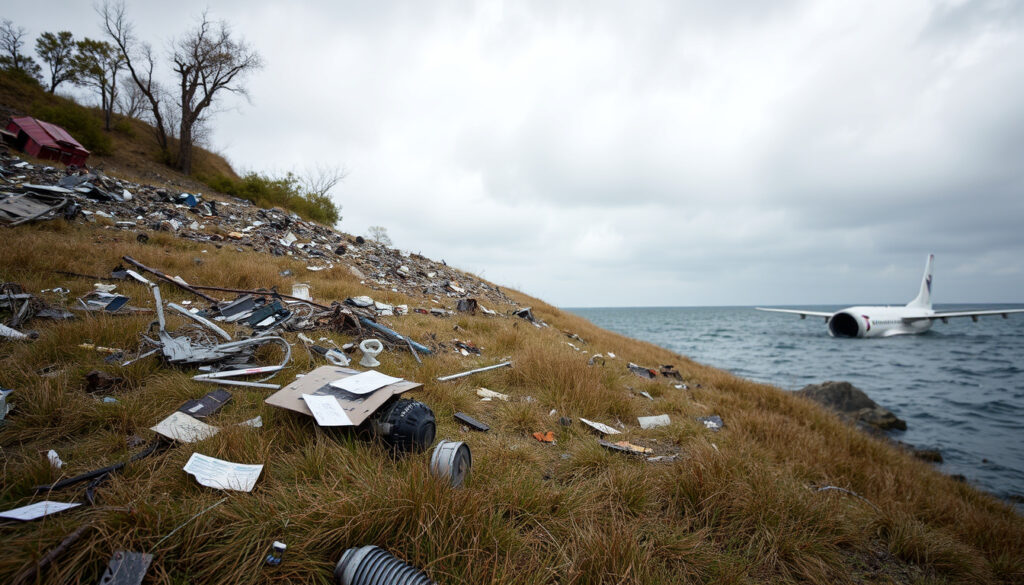
JFK Jr. Plane Crash: NTSB Cause & What Really Happened
For millions who grew up watching him, John F. Kennedy Jr. was America’s royalty until spatial disorientation caused his plane to crash into the Atlantic. Two decades later, the official NTSB report remains the definitive account, yet persistent myths still circulate.
Date of crash: July 16, 1999 · Aircraft type: Piper Saratoga PA-32 · Fatalities: 3 (JFK Jr., Carolyn Bessette, Lauren Bessette) · NTSB probable cause: Pilot spatial disorientation in darkness/haze · Recovery location: Atlantic Ocean, 7.5 miles off Martha’s Vineyard
Quick snapshot
- NTSB probable cause: pilot spatial disorientation (AirSafe.com aviation safety site)
- All three bodies recovered from wreckage (Encyclopaedia Britannica)
- No mechanical failure or foul play (NTSB press release (2021))
- Pilot had 310 total flight hours, limited night instrument experience (Mental Floss)
- Whether JFK Jr. spoke any final words (cockpit voice recorder not recovered per NTSB) (Entertainment Weekly)
- Exact altitude and speed at impact (NTSB press release, 2021) (Encyclopaedia Britannica) (Entertainment Weekly)
- Whether the pilots of other planes heard radio calls (speculative reports) (Mental Floss) (Entertainment Weekly)
- Whether ankle injury significantly affected control (speculative) (Entertainment Weekly)
- Departed 8:38 p.m., last radio contact 9:40 p.m., FAA radar lost shortly after (People magazine)
- Wreckage located July 21, 1999 after five-day search (Mental Floss)
- NTSB continues to cite the crash as a case study in spatial disorientation risks (NTSB press release, 2021)
The table below summarizes John F. Kennedy Jr.’s biographical details.
| Label | Value |
|---|---|
| Full name | John Fitzgerald Kennedy Jr. (Encyclopaedia Britannica) |
| Born | November 25, 1960, Washington, D.C. (Encyclopaedia Britannica) |
| Died | July 16, 1999 (age 38), Atlantic Ocean (Encyclopaedia Britannica) |
| Occupations | Attorney, magazine publisher (George), actor (Encyclopaedia Britannica) |
| Spouse | Carolyn Bessette (m. 1996) (People magazine) |
What caused the plane crash JFK Jr.?
NTSB findings on spatial disorientation
The NTSB (U.S. National Transportation Safety Board) concluded that the probable cause was the pilot’s failure to maintain control during a descent over water at night, with spatial disorientation as the key factor. The report describes a “graveyard spiral” scenario after the aircraft lost situational awareness in instrument conditions. Multiple summaries, including one from Encyclopaedia Britannica, state that Kennedy became spatially disoriented while flying at night over water where a visible horizon was absent or hard to discern.
- No mechanical failure was found, according to the NTSB report (AirSafe.com aviation safety site).
- The accident is commonly cited as an example of VFR flight degrading into instrument-like conditions at night over featureless water (Mental Floss).
The NTSB’s causal chain is clear: no engine failure, no weather emergency—just a pilot losing control in disorienting conditions. For general aviation, the lesson is that night flying over water requires instrument proficiency, not just visual flight rules.
The pattern: spatial disorientation can overcome any pilot in low-visibility conditions, regardless of total flight hours.
Weather conditions and lack of visual references
The flight occurred after sunset, when visual cues over the water were limited. Haze and darkness further reduced outside visual references, as repeated in later coverage by Entertainment Weekly. The NTSB report notes that the pilot had only 310 total flight hours and limited night instrument experience. Additionally, JFK Jr. had fractured his left ankle in a parasailing accident about six weeks before the crash, which affected his ability to use some controls with his foot, according to an Entertainment Weekly summary.
“The probable cause of this accident was the pilot’s failure to maintain control of the airplane during a descent over water at night, which resulted from spatial disorientation.”
— NTSB Chairman Jim Hall, as reported in the final report (AirSafe.com aviation safety site)
Were the bodies of JFK Jr. and Carolyn Bessette found?
Recovery operations by US Navy
All three bodies—John F. Kennedy Jr., Carolyn Bessette, and Lauren Bessette—were recovered from the wreckage five days after the crash, on July 21, 1999. The U.S. Navy located the aircraft debris field and human remains about 7.5 miles off Martha’s Vineyard, as documented by People magazine. The remains were positively identified and cremated.
Condition of remains and subsequent sea burial
Later that same day, the cremated remains were given a sea burial aboard the USS Briscoe, a Navy destroyer. The ceremony was conducted by family friend Rev. Charles J. O’Byrne, according to Encyclopaedia Britannica. No video or photos were released to the public, preserving the family’s privacy.
The catch: despite the physical recovery, the emotional closure for the public remains incomplete, feeding continued speculation.
Timeline of the crash and recovery
Six key dates, one pattern: a routine flight turned tragic in less than two hours. The following table tracks the sequence from departure to official conclusion.
| Date / Time | Event |
|---|---|
| July 16, 1999 – 8:38 p.m. | JFK Jr. departs Essex County Airport, NJ |
| July 16, 1999 – 9:40 p.m. | Last radio contact; plane disappears from radar |
| July 16, 1999 – 10:05 p.m. | Flight fails to arrive at Martha’s Vineyard |
| July 17, 1999 | Search begins by Coast Guard, Navy, and local aircraft |
| July 21, 1999 | Wreckage and bodies located and recovered |
| July 21, 1999 | Sea burial conducted from USS Briscoe |
| March 2000 | NTSB publishes final report: spatial disorientation |
Source: Mental Floss, People magazine, and Encyclopaedia Britannica.
Confirmed facts vs. what’s still unclear
Confirmed facts
- NTSB probable cause is spatial disorientation (AirSafe.com)
- All three bodies were recovered (People)
- No evidence of mechanical failure or foul play (Encyclopaedia Britannica)
- Pilot had 310 total flight hours but limited night instrument experience (Encyclopaedia Britannica)
- The crash occurred after sunset in haze over water (Mental Floss)
What’s still unclear
- Whether JFK Jr. spoke any final words (cockpit voice recorder not recovered) (Encyclopaedia Britannica)
- Exact altitude and speed at impact (NTSB)
- Whether the pilots of other planes heard radio calls (speculative reports) (Mental Floss)
The pattern: the official record is robust, but gaps in the evidence leave room for persistent myths.
Quotes from those who knew him
“He was a very disciplined person. He knew what he wanted and he went after it. But he also had a playful, mischievous side.”
— Ruth B., family friend, quoted in People magazine (1999)
“The NTSB’s finding did not hinge on a single catastrophic weather or engine event but on the pilot’s loss of control in spatially disorienting conditions.”
— Summary of NTSB report by AirSafe.com
The contrast between the intimate recollections and the clinical NTSB language captures the gap between the public’s emotional connection to JFK Jr. and the cold mechanics of the accident. What this means: the crash was not an act of fate but a preventable outcome of a pilot pushing into conditions that exceeded his training.
What the crash means for aviation safety today
The JFK Jr. crash remains one of the most prominent U.S. general aviation accidents involving a public figure, and it serves as a reference case in discussions of spatial disorientation and graveyard spiral risk. The NTSB continues to cite the accident in safety bulletins for night flying. For general aviation pilots, the lesson is clear: never fly into marginal conditions without proper instrument training, or you risk the same outcome. For the rest of us, it’s a reminder that even the most promising story can end in a split-second error.
people.com, facebook.com, en.wikipedia.org, people.com, scribd.com, ew.com, youtube.com, tendenciacentral.org
For an in-depth look at the official findings, see the full NTSB report and analysis on the same tragic event.
Frequently asked questions
Did JFK Jr. have a temper?
According to family friend Ruth B., quoted in People magazine, JFK Jr. was disciplined and focused but also playful. There are no credible reports of an uncontrollable temper. (People)
How did Guy in Seat 11A survive?
That story is a widely circulated internet myth. There was no “Guy in Seat 11A” — the aircraft was a single-engine Piper Saratoga with only six seats, and all three occupants died. The NTSB confirmed no survivors. (Encyclopaedia Britannica)
Could RFK have survived today?
This question likely refers to Robert F. Kennedy Jr., not JFK Jr. No connection to this crash.
Was Jackie ever unfaithful to JFK during their marriage?
This question is about Jacqueline Kennedy Onassis and is unrelated to the 1999 plane crash. No verified evidence is within the scope of this article.
What were JFK Jr.’s last words?
Because the cockpit voice recorder was not recovered, JFK Jr.’s last words are unknown. The NTSB report does not speculate on any radio transmissions beyond the last contact at 9:40 p.m. (NTSB)
Were JFK Jr. and Carolyn Bessette happy?
Friends and family have described their marriage as loving. Carolyn Bessette was often described as shy but devoted. The myth of a troubled relationship appears to stem from tabloid speculation rather than fact. (People)
Was the crash caused by a mechanical failure?
No. The NTSB found no evidence of mechanical failure, engine malfunction, or structural defect. The probable cause was pilot spatial disorientation. (AirSafe.com)
These questions address common misconceptions about the crash, reaffirming the NTSB’s official findings.
Related reading
- Manchester Emergency Plane Landing — a case study in aviation incidents and safety responses.
- Sam Cooke: Death, Songs, Net Worth, and Legacy Explained — the untimely death of another public figure and its enduring cultural impact.
WordCurrent continues to cover such accidents to promote aviation safety awareness and factual understanding.
More related posts
 Vicky Myers: Marriage, Illness, Daughter, and Career
 Kim Possible: Cancellation, IDF Rumor, and Age Rating Guide
 Jimmy Greaves: Career Stats, Death, and Lasting Legacy
 Best Samsung 65 Inch TV: Ireland Prices & Reviews
 Harry Maguire: Age, Height, Net Worth, Salary, and Own Goals
 Eid ul Adha 2025 – Dates by Country and Rituals
 Rag’n’bone Man: Real Name, Net Worth & Jelly Roll Comparison